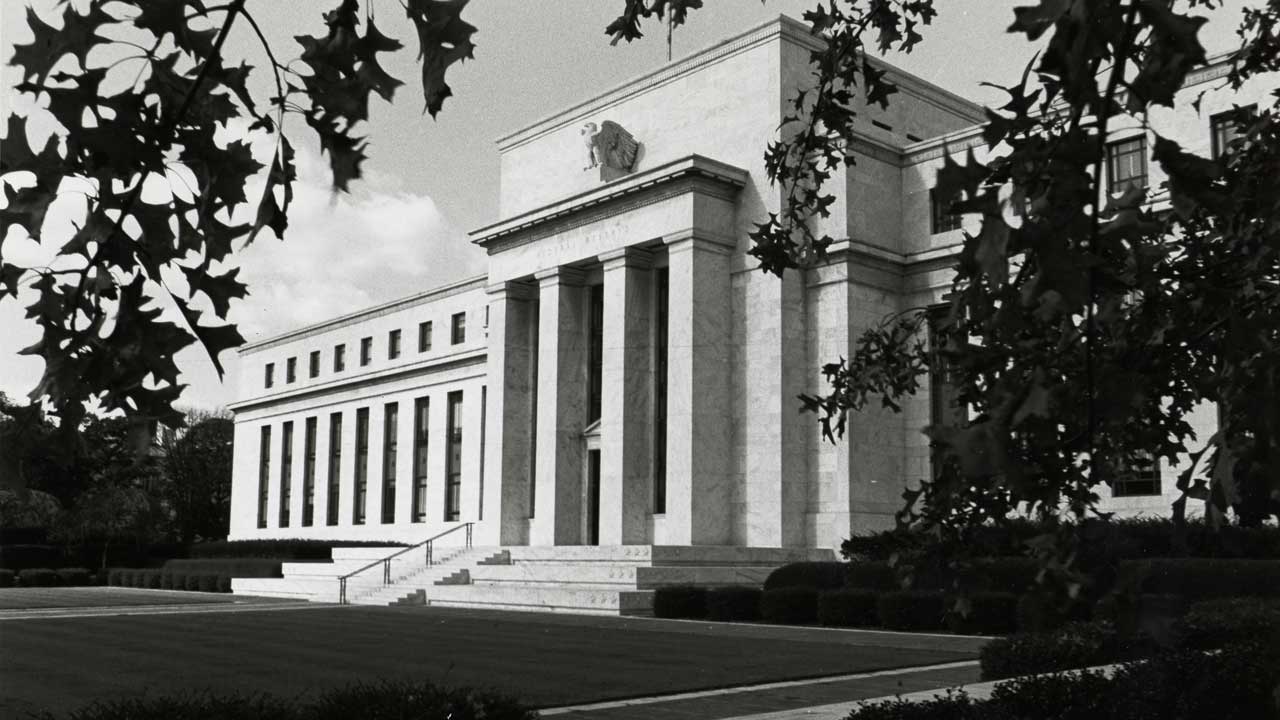
According to a New York Times article I just read, titled “Fed Confronts Why It May Have Acted Too Slowly on Inflation”, Federal Reserve officials are now conceding that the crazy price inflation is at least in part a consequence of the Fed printing too much money.
Of course, the New York Times has also been a top cheerleader of that very Fed policy. So, the trick for the Times is to admit the truth about how the Fed and the government worked together to cause the inflation problem while at the same time trying to maintain that the same policy has nevertheless been reasonable and appropriate.
The Times goes out of its way to defend Fed policy with the narrative that it is only with the benefit of hindsight that we can see that the Fed didn’t have the policy quite dialed in right.
The Times apologetically describes the Fed’s persistent fueling of inflation throughout 2021 as the Fed being “too slow to respond to rapid inflation last year”.
A bunch of people whom we are supposed to think are really smart economists—“Fed policymakers and most private-sector forecasters”—thought the price inflation that began accelerating in the spring of 2021 would be transitory, and it wasn’t until the fall that it started to become apparent that it was not.
The Times quotes a Fed official shrugging off the problem as “a complicated situation with little precedent—people make mistakes”; and for the entirety of the article, the Times takes that excuse seriously and passes it off to us with its narrative as an axiom: it is true, the Times would have us believe, that there was just no way anyone could have known that the Fed creating trillions of new dollars out of thin air would result in such dramatic price inflation. We can’t blame Fed officials, the Times would have us conclude, because, hey, they are just human, and due to their lack of omniscience, they sometimes make “mistakes”!
Similarly, the Times reports as though serious President Biden’s statement that he wants every American to know that he is “taking inflation very seriously”.
Well, silly president, it’s a bit too late now to start taking the problem of inflation seriously! You should have taken it seriously back when those of us who did easily foresee this problem were warning about the harmful consequences of monetary policy under the Biden administration (as it had also been under the Trump administration).
Specifically, it was easily foreseeable that printing trillions of dollars out of thin air to fund government spending, including “stimulus” packages proposed as a “solution” to the devastating consequences of the government’s policy of deliberately shutting down the economy, would inevitably result in consumers being hurt by price inflation.
Drilling its ridiculous false narrative home into the mind of gullible readers, the Times reiterates that it is easy to say “what the Fed should have done in 2021 after the fact”, but that “in the moment, it was difficult to know price increases would last.” It was only “later in the year”, meaning not until the fall, that it became “obvious that price pressures were broadening to food, rent and other areas.”
By way of a quotation from a Fed official, the Times offers what it perceives to be a reasonable explanation for how such a “mistake” could have occurred: “Policy is set by a large committee of up to 12 voting members and a total of 19 participants in our discussions…. This process may lead to more gradual changes in policy as members have to compromise in order to reach a consensus.”
Naturally, there is no point in the article at which the New York Times questions the wisdom of having twelve individuals trying to centrally plan the economy. At no point is there an acknowledgement that the harmful consequences of the policy that the Times advocated were both easily foreseeable and foreseen.
The people at the Times cannot admit that they were wrong to advocate the policy so instead delude themselves into the belief that the resulting price inflation is an unforeseen and unintended consequence that we can only see now with the benefit of hindsight.
To prove that the Times’ narrative is fictional, it suffices to point out my own forecast from early 2021. In this interview with the superb Peter R. Quinones, Pete and I discussed, among numerous other topics, what would be the consequence of the Fed policy that the New York Times was advocating. (This discussion starts at about twenty minutes and thirty seconds into the interview video.)
Pete asked me what I thought about the trillions of newly created-out-of-thin-air dollars that were the government’s “solution” to the problem of the economic harms the government had caused with its authoritarian lockdown responses to the COVID-19 pandemic, including the so-called “stimulus” packages whereby the government sent checks to Americans to help them struggle through the hardships the government was wrongfully imposing on them.
The interview is one example where I foresaw what the Times ridiculously would have us believe was unforeseeable:
This is not helping in the long run. It might seem like a short-term fix, but, you know, the real fix for that was: stop the lockdowns. Stop deliberately shutting down the economy…. Of course, their “solution” to the problem was to implement these extreme authoritarian lockdown measures that of course caused all the more economic pain that they then respond to with more money printing, which just further distorts the market, causes more misallocation of wealth, more transfer of wealth from the poor and middle class upward to the political and financial elites who are able to first receive the money and then use it to buy up assets and capital goods, stocks and bonds, housing, whatever it might be, before the consequent rise in prices that results as the money trickles throughout the economy, you know, with more dollars chasing an equal number of goods — or fewer goods with the loss of productivity as a result of the lockdowns.
In this interview with Buck Johnson from November 2021, we joked about the ridiculous mainstream narrative, which by then was starting to crumble, that the price inflation would be “transitory”. Who would have guessed?! From about the forty-five minute mark, listen to me discuss how price inflation is an inevitable consequence of monetary inflation, and how the Fed’s only recourse would be to allow interest rates to rise, which would bring its own set of problems:
We have a right to the fruits of our labors. When the government takes the fruits of our labors from us by force, that is theft. Taxation is therefore theft. Inflation serves as a hidden tax because it robs us of the purchasing power of our dollars. The resulting upward transfer of wealth benefits the political and financial elite at the expense of the rest of us.
The New York Times pretends to be on our side, the side of We the People, but the reality is that the newspaper’s reporting serves the very class of politically and financially powerful that we are supposed to need protecting from in the form of ever more government intervention into our lives.
To answer the question of why the Times makes excuses for how the Federal Reserve caused this problem if dramatic price inflation, it is simply because the Times from the start was a leading advocate of that Fed policy.
As ever, the Times is confusing policy advocacy with journalism.