

Table of Contents
Introduction
Tom Cowan is one of the leading propagators of the claim that SARS‑CoV‑2, the coronavirus that causes COVID‑19, does not exist. He is an author along with Andrew Kaufman and Sally Fallon Morell of the “Statement on Virus Isolation”, which first purports to explain the “proper” method for virus isolation and then asserts that SARS‑CoV‑2 has never been isolated by this method.
On September 5, I published a video examining their statement and the three sources they cite to support their claims, demonstrating how those sources don’t actually support the claims for which they are cited. On the contrary, the claims made by Cowan and his colleagues are contradicted by their own sources.
Cowan has now responded to that criticism of mine in a video published on September 22, 2022. The video features fellow virus denier Mark Bailey and mostly focuses on a document Bailey has recently published titled “A Farewell to Virology”. By Cowan’s description, Bailey’s paper addresses the claim that SARS‑CoV‑2 originated in the Wuhan Institute of Virology through “gain of function” research by asserting that the virus can’t have originated in the lab since the virus does not exist.
During Cowan’s opening remarks, he responds to my criticism that his claims are contradicted by his own sources. His counterargument is that my criticism referred merely to how study authors draw conclusions that are not supported by their own findings. However, that is a complete mischaracterization of my criticism.
To be clear, I was not referring to a disparity between study findings and authors’ conclusions. What I meant is that the claims made by Cowan et al. are contradicted by the very substance of the sources they cite from the scientific literature. I meant that they disingenuously cherry-pick statements that can be misinterpreted as supportive of their belief while ignoring the whole context of those statements that belies their misinterpretation.
Since Cowan has challenged it, I will demonstrate the validity of my criticism now once again.
Cowan’s Counterclaim
Following is a transcript of the portion of the video in which Cowan responds to my observation of how the sources they cite in their “Statement on Virus Isolation” contradict the claims for which they are cited. You’ll find this at about the 04:45 mark in the video. I have added bold emphasis to particularly salient remarks:
In the past, when we say things like “electron microscope pictures don’t prove the existence”, most of the people we are dealing with don’t know how to know if there’s a virus or not. So we’re talking about people like Meryl Nass and Mercola and Kennedy and Bigtree, and they don’t actually even know how you would find a virus or not. But there’s a few people, in particular Jeremy Hammond, who, I must give him credit, he does actually know something about how virology is done, and it’s very interesting what he’ll say.
He’ll say our conclusions are contradicted by our own papers that we cite. It’s a very interesting comment because I would admit he’s correct. And here’s what I mean by that: for instance, in the electron microscope paper that I referred to from I think the kidney journal, they on the one hand present evidence that you cannot tell the difference between a SARS-CoV-2 photo and a kidney biopsy. And yet in their conclusion, they do acknowledge, or they do state they believe in viruses.
So, Hammond is in a sense correct that the conclusion of the paper is not what I came to or I think Mark would have come to. But we’re not actually looking at the conclusion of the paper because to me, they have to say that, or at least they’re choosing to say that. But what they prove or demonstrate in their paper is that you can’t do that, and so their conclusion doesn’t match their own data.
Now, you could apply that to a lot of the papers that Mark references. Their conclusion is not that SARS‑CoV‑2 doesn’t exist. Just the opposite, they say it does. But . . . I’m not interested in that. I’m interested in . . . what they actually did. And that’s what we’re referring to doesn’t match their conclusion. So you can’t have an argument that, well, the paper that we cite, the conclusion is different than what we say. Of course it is.
And the other thing is there’s this parsing of words that goes on. Let me give you another example. I said that they’d never purified the virus and use that as what they inoculate the cell culture with, right? And Hammond points out that in one of the papers, they did centrifuge the snot. And he says that is a purification step.
Now, actually, he’s correct. That is a type of purification. But it’s pretty obvious that what I meant by that is they didn’t purify it and demonstrate that they were only inoculating with a pure virus. And so just because they did a purification step to get rid of some of the debris, [scoffs] that’s irrelevant!
But that’s his point. You see, “You said they didn’t purify, and they did.” Well, everybody knows that that’s just not true, but those end up being the arguments. So, I just say that because when people are thinking they’re going to criticize or rebut or argue with Mark’s paper, everybody should be aware that those are not real criticisms. Those are semantic tricks.
I will now demonstrate that the only “semantic tricks” here are Cowan’s. He is simply mischaracterizing the whole essence of my argument, just like how he mischaracterizes the sources he cites from the literature.
It’s True That Author Conclusions Often Don’t Follow Study Findings
First, I would like to emphasize that it is true that study authors often draw conclusions that are unsupported or even contradicted by their own findings. This is an observation I make frequently in my own writings.
In fact, an example is provided in the article I published just last week titled “The Alarming Consequences of COVID-19 Vaccines for Children”. In that article, I discuss how the authors of a recently reported study concluded that their findings support full vaccination plus booster doses for all children aged five to eleven years even if they have already acquired natural immunity; and I show how that conclusion is not merely unsupported but contradicted by their own data.
I updated that article on September 22 to address an AP “fact check” article that relied on the lead author’s claims about his own study but failed to actually fact-check those claims against the actual data reported in the study. I addressed the assertions used by the AP by showing once again how they are contradicted by the data.
Point being, I am no stranger to the reality that authors’ conclusions often do not follow from their own findings. I am quite capable of recognizing when this is so, and I very frequently cite examples of this type of scientific fraud in the medical literature.
Now, Cowan’s whole argument is that when I said that they make claims that are contradicted by their own sources, I was referring to how those study authors drew conclusions that were contradicted by their own findings. Cowan is claiming to have accurately characterized the substance of those sources even though the authors drew different conclusions from that information than he does. To set the record straight, that is not the case at all. Not even close.
Instead, when I say that the claims made by Cowan et al. are contradicted by their own cited sources, I am referring specifically and explicitly to how Cowan et al. draw conclusions that are fundamentally contradicted by the substance of the papers that they cite for the purpose of supporting their arguments.
A Review of False Claims in the ‘Statement on Virus Isolation’
Here is the video in which I observe how the claims Cowan et al. make in their “Statement on Virus Isolation” are contradicted by their own sources:
You can find the links to supporting references in my post “Debunking the ‘Statement on Virus Isolation”.
As you can see, it was not at all true that I was referring to a situation in which the study authors’ conclusions contradicted the claims by Cowan et al. even though the study findings supported those claims. On the contrary, Cowan et al. substantively mischaracterized those studies.
To briefly review, the first source they cited was intended to support the claim that the “proper” method of isolating a virus does not involve the use of cell culture. I observed how, in fact, the authors of that study did isolate viruses by using cell culture. Specifically, they isolated bacteriophages, which are viruses that infect bacteria, by using bacteria, which are single-cell organisms, as hosts for culturing the viruses.
This use of bacterial culture to isolate bacteriophages parallels how human/animal viruses are cultured using human/animal cell lines.
Thus, again, I simply was not observing that the study authors drew conclusions that were contradicted by their findings. I was observing how the methodology the researchers actually used is not the methodology that Cowan et al. claimed they used.
Far from supporting their claim that “proper” isolation of a virus does not involve inoculation of cell culture, the very methodology used in Cowan’s own source demonstrates that the proper method is the use of cell culture.
The second source they cite is of no practical relevance as it merely shows how cell death can result in the release of exosomes and other extracellular vesicles, which is not in dispute.
The third source they cite, though, once again illustrates how incapable they are of citing any papers in the scientific literature that actually support their claims about the nonexistence of viruses. The claim they attempted to support with this third source is that scientists have no way to differentiate between viruses and exosomes. However, the whole substance of the paper is a discussion about how scientists can and do differentiate between the two.
Thus, for Cowan to allege that I was merely observing authors’ conclusions that did not follow from their own study findings is just another illustration of how he relies on substantive mischaracterizations to support his position.
The ‘Kidney Journal’ Paper
Instructively, in his response to those observations of mine, Cowan does not mention any of the sources they cite in their “Statement on Virus Isolation”. He makes no effort to substantiate his claim that I was merely referring to authors’ erroneous conclusions, which is understandable since that claim is untenable.
Instead, Cowan mentions a different study that I have never cited as an example of how they mischaracterize their own sources, which is the one he references as having come from “the kidney journal”. Thus, he relies on a strawman argument by falsely claiming that this was one of the studies I had mentioned as having contradicted Cowan’s purpose for citing it. Nevertheless, that study, too, happens to serve as a useful illustration of how Cowan pathologically mischaracterizes others to support his position.
I happen to have a collection of resources including papers I’ve previously seen Cowan et al. reference, so I pulled open my research archival tool and searched for the keyword “exosomes” to pull up my collection of relevant resources. Sure enough, there was one I had previously seen Cowan or one of his colleagues reference titled “Appearances Can Be Deceiving – Viral-like Inclusions in COVID‑19 Negative Renal Biopsies by Electron Microscopy”, published in the journal Kidney360 in August 2020. I presume that this was the “kidney journal” paper to which Cowan was referring in his recent video.

According to Cowan, this paper is an example of how Cowan et al. cite papers whose findings support their claims but whose authors draw conclusions that are directly contradicted by those findings. So, to determine the truth of the matter, all we have to do is examine the paper to see whether Cowan is accurately characterizing his cited source.
It’s a short article that Cowan characterizes as having shown that “you cannot tell the difference between a SARS‑CoV‑2 photo and a kidney biopsy”, even though the authors leapt fallaciously from that finding to the conclusion that you can tell the difference.
And anyone can read the paper for themself to see that this characterization of Cowan’s is fundamentally untrue.
It is simply false that the authors of that study found that scientists cannot differentiate between SARS‑CoV‑2 virus particles and extracellular breakdown products such as exosomes.
There is an element of truth to Cowan’s claim, which is that the authors did caution that electron microscopy alone was insufficient to determine whether images show virus particles or host materials. However, what Cowan omits from his characterization is how the authors also observed how scientists can and do use additional methods to distinguish between SARS‑CoV‑2 and exosomes.
Context matters. The authors were specifically referring to electron microscopy images of particles in samples of kidney tissue obtained from patients who tested negative for the presence of SARS‑CoV‑2 RNA using reverse transcription polymerase chain reaction (RT-PCR) assay. Their whole purpose in writing was to urge “caution for inferring viral tissue infection by morphology alone using electron microscopy images from tissues obtained from biopsies or autopsy material in patients with COVID‑19.” (Emphasis added.)
To be certain that the particles observed are indeed SARS‑CoV‑2 virions, additional steps are required. As the authors stated, “more specific techniques such as immunoelectron microscopy using specific viral antigens, or in situ hybridization for viral RNA, are likely necessary to undoubtedly confirm tissue infection in these cases.” (Bold emphasis added.)
The authors showed “positive SARS‑CoV‑2 RNA” in one patient sample by in situ hybridization, which is described on the website of the National Library of Medicine under the National Institutes for Health (NIH) as follows:
In Situ Hybridization (ISH) is a technique that allows for precise localization of a specific segment of nucleic acid within a histologic section. The underlying basis of ISH is that nucleic acids, if preserved adequately within a histologic specimen, can be detected through the application of a complementary strand of nucleic acid to which a reporter molecule is attached.
Visualization of the reporter molecule allows to localize DNA or RNA sequences in a heterogeneous cell populations including tissue samples and environmental samples.
The National Human Genome Research Institute, also under the NIH, describes it thus:
In situ hybridization is a laboratory technique used to localize a sequence of DNA or RNA in a biological sample. In this technique, a biological sample consisting of tissue sections, cells or chromosomes from an individual is affixed to a glass slide and then exposed to a “probe”—a small piece of single-stranded DNA tagged with a chemical or fluorescent dye. The labeled probe finds and then binds to its matching sequence within the biological sample. The location of the bound probe can then be seen with the use of a microscope.
Immunoelectron microscopy enables scientists to confirm whether the particles they are seeing are virions based on whether antibodies known to bind with the suspected virus do so or not. As described by a paper on the technology published in Current Protocols in Microbiology in 2019:
Immunoelectron microscopy allows for identification and visualization of antigens and their relative positions within a particulate sample. This allows for simple qualitative analysis of samples including whole virus, viral components, and viral‐like particles. . . .
Immunoelectron microscopy uses negative staining techniques while allowing for antigen detection and for determining structural organization of samples. This is especially helpful for ambiguous samples in which the presence of a particular antigen is unknown or if multiple conformations prevent identification and localization. . . .
Not only can these techniques be applied to studying live viruses, but they are also useful for characterizing viral components in vaccines, viral‐like particles, proteins purified from viruses, and other specimen relevant in modern virology applications . . . .
Antigens are labeled first with primary antibody targeting the antigen of interest and then with colloidal gold–conjugated secondary antibodies. . . . Another alternative would be to use a colloidal gold–conjugated primary antibody, in which case no secondary antibody is needed.
The authors of the Kidney360 paper also observed that the Centers for Disease Control and Prevention (CDC) in 2003 had similarly cautioned that “the viral nature of inclusions should be confirmed by immunoelectron microscopy for viral antigens or ultrastructural viral RNA in situ hybridization.”
The article authors further remarked that recognition of the “pitfall” of mistaking “viral-like particles” for virions “actually dates back to the 1970s, when the potential for mistakenly assuming that normal cellular components, such as phagocytic vacuoles, microvesicular bodies, or extracellular breakdown products, could represent viral particles was emphasized”.
It was not an erroneous conclusion but the authors’ whole purpose in writing to “issue a note of caution regarding the use of ultrastructural images as evidence of SARS‑CoV‑2 tissue infection without confirmatory evidence of viral proteins or RNA in the tissue through immunoelectron microscopy or in situ hybridization.” (Italic emphasis added.)
Thus, we can once again see that, far from supporting Cowan’s claim that scientists cannot distinguish between virus particles and exosomes, the whole essence of that paper was to emphasize how scientists can and should do so.
To reiterate, it is simply not true that the study reported findings that support Cowan’s claim only for the authors to draw conclusions contradicted by their own findings. Instead, Cowan has simply taken the statements about how particles like exosomes can be mistaken for virions completely out of their context, which illustrates his perpetual habit of cherry-picking whatever he can misinterpret as supporting his belief while simply disregarding everything else that contradicts it.
Cowan exhibits this type of confirmation bias pathologically. His whole belief system with respect to the existence of viruses is built upon this type of gross misrepresentation of the sources he references. He transparently reads papers not to gain better understanding but to find and pluck out any sentences that when isolated from their context are easily misinterpreted by his lay audience as supporting the claim for which he has cited the paper.
This is how he deceives people into the delusion that viruses have never been proven to exist, which delusion has caused extraordinary harm to the health freedom movement these past few years by distracting attention, effectively eliminating from the war a whole host of activists who could otherwise have spent their labors utilizing effective arguments for reaching those on the fence or on the other side, and by legitimizing accusations from the advocates of medical tyranny that opponents of authoritarian lockdowns and vaccine mandates are spreading misinformation.
It’s also worth noting how their own reasoning must also lead us to the conclusion that exosomes have not been proven to exist, and yet they claim that electron microscopy images show exosomes despite the difficulty in separating exosomes from viruses with centrifugation. The logical inconsistency of their arguments renders them nonsensical.
Mark Bailey’s Similar Mischaracterization of Cited Sources
Tellingly, Cowan presented his mischaracterization of my argument for the purpose of preempting any similar argument that the sources Mark Bailey cites in his “Farewell to Virology” paper contradict the claims for which Bailey cites those sources.
Therefore, we can further investigate whether Cowan’s characterization of my criticism holds up with Bailey’s paper. To do that, I looked through the footnotes to find instances in which Bailey references sources from the scientific literature (as opposed to sources outside of the literature). Here is the first relevant reference I found to examine, which is footnote 20 in the paper:
Jennifer Harcourt, et al., “Severe Acute Respiratory Syndrome Coronavirus 2 from Patient with Coronavirus Disease, United States”, Emerging Infectious Diseases, June 2020: https://wwwnc.cdc.gov/eid/article/26/6/20-0516_article
And here is the argument that Bailey presents for which that paper is cited as support:
When one group attempted to culture SARS-CoV-2, they had no desired result with human adenocarcinoma cells (A549), human liver cells (HUH7.0), human embryonic kidney cells (HEK-293T), and a big brown bat kidney cell line (EFK3B), but then declared they had a “viral isolate” following the observation of CPEs [cytopathic effects] in Vero E6 cells.[20] As is typical, there seemed to be no sense of irony for them that the purported human respiratory virus cannot be shown to “infect” the relevant cell type, let alone the relevant species. And their experiments were once again invalidated by the absence of appropriate control cultures.
This echoes an article that Cowan published on October 15, 2020, titled “Only Poisoned Monkey Kidney Cells ‘Grew’ the ‘Virus’”. Cowan has evidently since removed that article from his site (I’ve linked to an archived page, but trying to access the original URL now returns a “404 Page Not Found” error), but Bailey is here referring to the very same study that Cowan cited as having proven that “the SARS‑CoV‑2 virus is harmless to human beings” and was only capable of infecting monkey kidney cells (the Vero cell line).
I first addressed that mischaracterization of Cowan’s in my December 2020 article “No, the CDC Did Not Admit That SARS-CoV-2 Has Not Been Isolated” (which mainly focused on a different claim made by someone else but also mention’s Cowan’s article). I addressed it again last month in my article “Correcting Misinformation about SARS‑CoV‑2 Whole Genome Sequencing”. I pointed out that the study did not prove that SARS‑CoV‑2 cannot infect human cells and observed how Cowan contradicted his claim that the virus does not exist with his acknowledgment that the virus was shown to infect monkey cells.
Bailey also demonstrably mischaracterizes the same source, which was a study by CDC researchers. (Emerging Infectious Diseases is a CDC journal.) First, note that Bailey asserts that the “desired result” of the CDC researchers was for the human cell lines to become infected with SARS‑CoV‑2 and for cytopathic effects to be observed. The opposite is true.
In fact, the CDC researchers expressed their anticipation that these human cell lines would not be suitable for culturing SARS‑CoV‑2 based on prior research on SARS. Here is the most relevant paragraph from the cited source (bold and italics emphasis added):
Because research has been initiated to study and respond to SARS-CoV-2, information about cell lines and types susceptible to infection is needed. Therefore, we examined the capacity of SARS-CoV-2 to infect and replicate in several common primate and human cell lines, including human adenocarcinoma cells (A549), human liver cells (HUH7.0), and human embryonic kidney cells (HEK-293T), in addition to Vero E6 and Vero CCL81 cells. We also examined an available big brown bat kidney cell line (EFK3B) for SARS-CoV-2 replication capacity. Each cell line was inoculated at high multiplicity of infection and examined 24 h postinfection (Figure 3, panel A). No CPE was observed in any of the cell lines except in Vero cells, which grew to >107 PFU at 24 h postinfection. In contrast, HUH7.0 and 293T cells showed only modest viral replication, and A549 cells were incompatible with SARS-CoV-2 infection. These results are consistent with previous susceptibility findings for SARS-CoV and suggest other common culture systems, including MDCK, HeLa, HEP-2, MRC-5 cells, and embryonated eggs, are unlikely to support SARS-CoV-2 replication (20–22). In addition, SARS-CoV-2 did not replicate in bat EFK3B cells, which are susceptible to MERS-CoV. Together, the results indicate that SARS-CoV-2 maintains a similar profile to SARS-CoV in terms of susceptible cell lines.
Thus, you can see that Bailey’s claim that the CDC authors were expecting that SARS‑CoV‑2 would infect and cause cytopathic effects in those commercially available human cell lines is directly contradicted by the authors’ observation that their contrary findings were consistent with what was already known about how SARS-like coronaviruses infect cells.
Based on that prior research, their anticipation would have been that those cell lines would not be suitable for the purpose, and their findings supported their conclusion that “SARS‑CoV‑2 maintains a similar profile to SARS‑CoV in terms of susceptible cell lines.”
The study findings do not support the conclusion that SARS‑CoV‑2 cannot infect human cells. Rather, the findings simply demonstrate that certain commercially available cell lines are unsuitable for the purpose of culturing SARS‑CoV‑2.
Other studies have in fact cultured SARS‑CoV‑2 using human cell lines. For example, commercially available human airway epithelial cells have been used to isolate SARS‑CoV‑2 from COVID‑19 patient samples.
One of the reasons why Vero cell lines work so well for this purpose is because these cells exhibit high expression of the ACE2 receptor, which is the cell receptor with which the SARS‑CoV‑2 spike protein binds in order to gain access into the cell. Cell lines that do not express or have low expression of ACE2 are generally unsuitable for the purpose simply due to the nature of the mechanism by which the virus infects cells. An explanation for why the A549 lung epithelial cell line, for example, is poorly suited for culturing the virus is their lack of ACE2 expression. Another study by CDC researchers published in Emerging Infectious Diseases described expression of ACE2 as “a critical determinant” in the susceptibility and species specificity of various cell lines.
Second, Bailey claims that the CDC researchers failed to use controls. But that, too, is simply false. As explicitly stated in the paper, the researchers did use controls. As the authors stated, cytopathic effects were “not observed in mock infected cells”. They even provided electron microscopy images comparing the control with virus-infected cells.
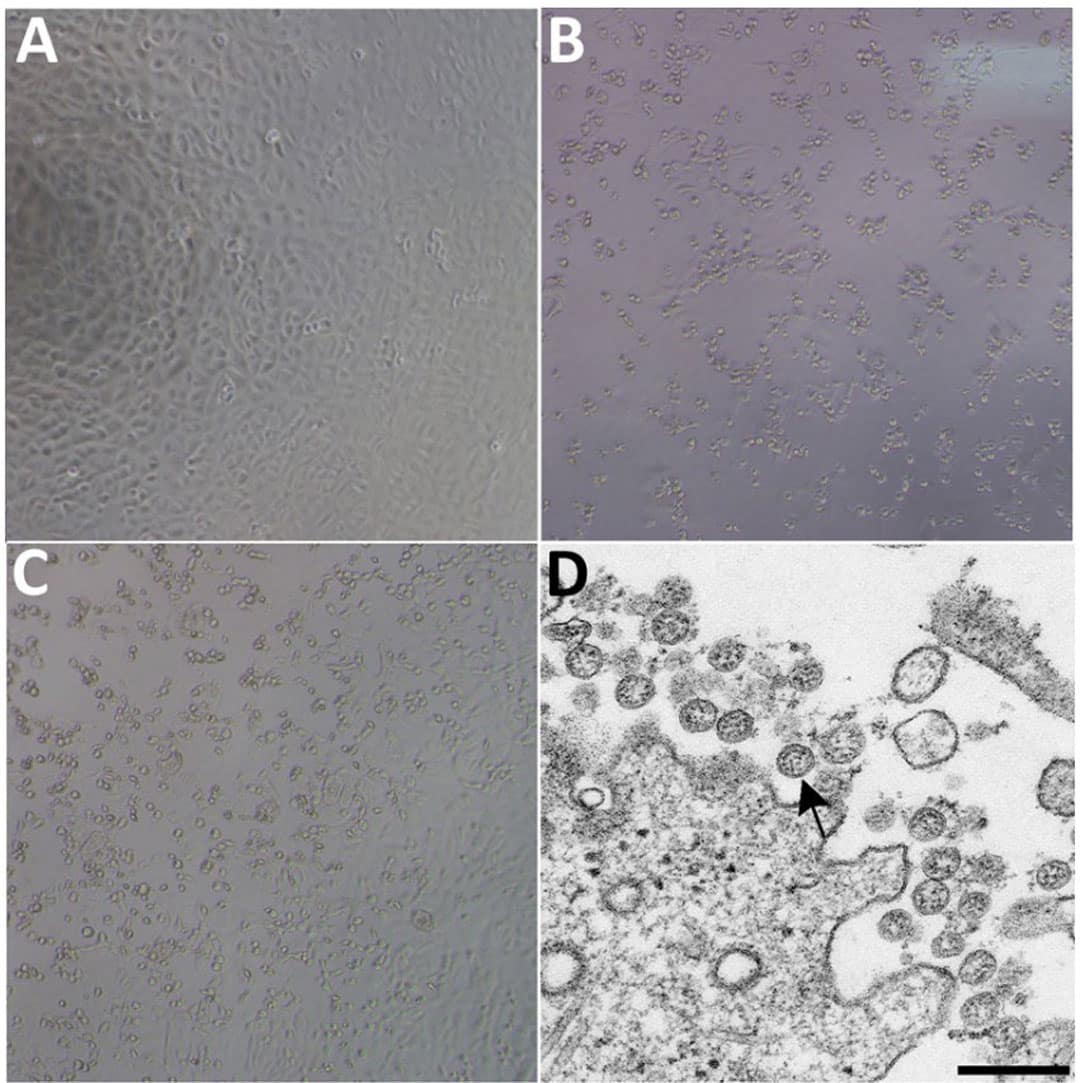
Perhaps Bailey just does not understand that a “mock-infected” cell culture is an uninfected control. Or perhaps he is aware of that fact and so is lying willfully. Either way, his claim that no control was used in the study is false.
This is yet another clear falsification of Cowan’s characterization of my argument: Bailey is not legitimately relying on study findings that belie the conclusions drawn by the study authors; rather, Bailey has simply followed Cowan’s lead in fundamentally mischaracterizing the study’s methodology and findings.
A second illustration of this manifests on the same page of Bailey’s document, where he again echoes Cowan by writing:
A further embarrassment for virology is that alleged viral particles that have been successfully purified have not been shown to be replication-competent or disease-causing by themselves. In other words, what have been physically isolated can only be said to be extracellular vesicles (EVs). In May 2020, a publication appeared in the journal Viruses that claimed, “nowadays, it is an almost impossible mission to separate EVs and viruses by means of canonical vesicle isolation methods, such as differential ultracentrifugation, because they are frequently co-pelleted due to their similar dimension.”[22] ‘Nowadays’ means in contrast to the past and it is unclear how such an observed technical change may be reconciled with biological laws. It appears more likely that the virologists are distancing themselves from their own techniques in order to avoid refutation of their own postulates. They may have to accept that the reason differential ultracentrifugation is not able to separate viruses from other vesicles is because their assertion that viruses are present in the sample is ill-founded.
The footnote cites the following study:
Flavia Giannessi, et al., “The Role of Extracellular Vesicles as Allies of HIV, HCV and SARS Viruses”, Viruses, 22 May 2020: https://www.ncbi.nlm.nih.gov/pmc/articles/PMC7291340/
That is the very same paper I examined in my video debunking the “Statement on Virus Isolation”.
Again, this is simply not a case in which Cowan and Bailey have relied on findings that contradict the study authors’ conclusions. It is a case in which Cowan and Bailey have fundamentally misrepresented the whole essence of the paper, pulling a single statement completely out of its context. It is an illustration of how both Cowan and Bailey disingenuously cherry-pick whatever they can misinterpret as supportive of their belief while disregarding all that contradicts that belief.
As I observed in my prior video, the authors of that paper in fact explained that, despite the difficulty in separating viruses from exosomes with centrifugation, scientists are certainly able to differentiate between the two particles. It is impossible to have attentively read that paper and to have missed that key aspect of it.
By using the word “nowadays”, the authors of the paper were not saying that scientists in the past were able to separate the two particles but now cannot do so, as though there had been a loss of technological capability over time. They simply meant that even with today’s advanced technology, this remains a challenge. This observation by no means contradicts all of the pre-existing literature as Bailey falsely suggests.
Scientists also certainly do not need to “accept” that the reason they cannot separate viruses from exosomes is because viruses don’t exist. The authors of the paper Bailey cites have already provided a perfectly good explanation for it, which is that viruses and exosomes are co-pelleted in centrifugation “due to their similar dimension”, but scientists are nevertheless able to distinguish between viruses and exosomes due to the fundamental differences between these two kinds of particles.
It would be superfluous to examine additional examples; these two are sufficient to demonstrate how Bailey is simply following Cowan’s lead in citing sources from the scientific literature that directly contradict the claims for which the source is being cited.
Cowan’s Mischaracterization of Our Email Exchange
Next, Cowan refers to a private email exchange that we had back in July. By his account, what happened is that he said that scientists never purify a virus prior to inoculation in cell culture, whereas I observed that scientists do in fact use centrifugation to purify a sample prior to inoculation in cell culture. Cowan contends that my observation was essentially a strawman fallacy because when he said that they didn’t purify the virus, he did not mean that there was no purification step involved, only that the scientists were unable to prove 100 percent purity.
But this is just another example of Cowan’s intellectual dishonesty. He is once again simply mischaracterizing our email conversation.
On the face of it, I did not engage in strawman argumentation (which is the logical fallacy of presenting a counterargument to something that your interlocuter never actually argued). Cowan did make the claim that scientists do not purify the virus before inoculation in cell culture. And the source cited in the Lanka paper that Cowan sent me did demonstrate the purification of the virus by centrifugation prior to inoculation of the supernatant in cell culture.
On the face of it, the claim that scientists never purify the virus before inoculation in cell culture is a fundamentally different claim from saying that scientists do use centrifugation to purify the virus but just aren’t able to achieve 100 percent purification with that technology.
The latter claim is accurate whereas the former claim is deliberately deceptive.
Instructively, Cowan contradictorily acknowledges in his “Statement on Virus Isolation” that ultracentrifugation is a step taken by scientists that “purifies the specimen.” (The italic emphasis in that quote is Cowan’s.)
I happen to have pointed out this self-contradiction to Cowan during our email exchange, which I was content to consider a private conversation, but which I must now disclose since Cowan has brought it up publicly. For the record, here is how that conversation went:
On July 7, Cowan emailed me to invite me to sign on to a proposal by Cowan, Kaufman, Bailey, et al. titled “Settling the Virus Debate”. Kaufman subsequently published that document on his website on July 14, and Cowan published it on his own website on July 19. I’ve been seeing people refer to it as “The Virus Challenge”, as it is also described on Kaufman’s site.
Cowan presented “The Viral Challenge” as a good-faith effort to finally resolve the debate within the health freedom movement about whether viruses exist. He also claimed to have done “a series of scientific experiments that demonstrated that the core techniques of virology are fundamentally anti-scientific”, expressing disappointment that this had not settled the debate.
After reviewing the “Virus Challenge” document, I concluded that it did not represent a good-faith effort to reason with those of us who maintain that SARS‑CoV‑2 exists, and I replied to Cowan on July 12 to say so.
I could attempt to summarize the email exchange with selective quotes and paraphrases, but in the interest of providing the full context and to entirely avoid any claim that I have unfairly characterized Cowan’s statements, I have provided the full exchange below, with bold emphasis added for the most directly pertinent excerpts. I have also added paragraph breaks where appropriate to the text more easily consumable. Otherwise, the emails are reproduced here verbatim. Additionally, I have provided editorial notes prefaced with my initials “JRH” for context and clarification where necessary.
As additional context, you will see references to an evidently unpublished paper by Steven Lanka, another prominent virus denier, dated April 2021, which I will leave to the copyright owner(s) to publish. In that paper, Lanka cites as an example of how scientists isolate viruses a 2013 study published in Nature titled “Isolation and characterization of a bat SARS-like coronavirus that uses the ACE2 receptor”.
(The information you will see about whole genome sequencing I have already covered in my article “Correcting Misinformation about SARS-CoV-2 Whole Genome Sequencing”, in which I addressed public statements of Kaufman’s and Cowan’s that parallel certain statements Cowan made in our email exchange. Cowan responded to that article of mine in a video, to which I responded in turn with my video “Tom Cowan’s Misinformation on the Sequencing of SARS-CoV-2”. Since I have already addressed that issue, I will not focus on it here.)
Cowan to Hammond, July 7
Hey Jeremy, Tom Cowan here. I hope you’re doing well these days, crazy stuff happening. As you are well aware there has been a pretty significant and often nasty debate in the medical freedom community these past two years around the issue of whether pathogenic viruses are real, actually exist and act in the way virologists claim they do. For me, far from being a peripheral issue, or “one we can’t win in court”, i see this as THE issue. For if the whole concept of a pathogenic virus is incorrect, then every measure that follows from this flawed assumption is therefore also flawed.
Many people have called for debates on this issue, public commentary, etc but we all know these types of events settle nothing. Almost two years ago we did a series of scientific experiments that demonstrated that the core techniques of virology are fundamentally anti-scientific. This, unfortunately didn’t settle the debate.
Now i have proposed we do a series of experiments which will be the first step in demonstrating whether the core techniques used by all virologists to find pathogenic viruses and prove they cause disease are irrational, illogical and again fundamentally anti-scientific. We have many scientists and doctors who are signing on to this proposal. We have secured a pledge to fully fund these experiments.
It doesn’t mean anyone believes viruses aren’t pathogens or don’t exist, it ONLY says you want clear science to be done so this issue can be settled. I know of your keen interest in this issue and your fundamental commitment to a thorough investigation of real science, this is why i thought you would like to support this initiative. I am attaching what will be likely the final proposal and asking if you would pledge yourself to endorse and sign this proposal as a supporter, so we can finally have the real “debate” we have all been looking forward to. I hope to hear from you soon as we plan to go live with this in about a week.
Hammond to Cowan, July 12
Hi Tom,
Sorry for my delayed reply. I was out of town and without internet for several days. I would be interested to review the experiments you mention having done a couple years ago if you could please direct me to where I can find the published methodology and findings.
I have reviewed your proposal but do not agree with its premises that cell culture is an invalid method for isolating viruses and that neither SARS-CoV-2 nor any other virus has been proven to exist. Beyond that, a discussion of the role of viral infection in the pathogenesis of disease would be pointless in light of this denial of their existence.
Your proposal also contains the assertion that it is an “agreed-upon fact that no published scientific paper has ever shown that particles fulfilling the definition of viruses have been isolated and purified from any tissues or bodily fluids of any sick human or animal”, which is false. That is certainly not an agreed-upon fact, and there are many scientific papers describing the isolation of viruses from humans and animals.
I do not agree with your premise that we must reject what scientists mean when they describe the “isolation” of a virus in favor of a lay person’s dictionary-definition understanding of the word.
Your proposal also contains the untrue statement, “Particles that have been successfully isolated through purification have not been shown to be replication-competent or infectious, hence cannot be said to be viruses.” For example, SARS-CoV-2 isolated from patient samples has been shown to be replication competent both in cell culture and animal challenge experiments demonstrating pathogenicity. Your own Statement on Virus Isolation cites a paper describing purification and isolation from bacteria of viral particles that were replication-competent, so I don’t understand how you can make that statement unless you accept the use of bacterial culture for isolation of bacteriophages while rejecting the similar use of cell culture for isolation of human/animal viruses.
I do not agree with your additional premise that whole genome sequencing is a scientifically invalid technology, which is the only way I see how to interpret the statement about the genomic evidence being “invalid”, despite you acknowledging the validity of Sanger sequencing in your SOVI, which is another self-contradiction that I am frankly at a loss to reconcile. (I have also noted that to support your claim that scientists have no way to distinguish between viruses and extracellular vesicles, your SOVI cites a paper both acknowledging that viruses exist, including SARS-CoV-2, and that they are distinguishable by scientists from ECVs.)
Also, you use the words “purification” and “isolation” synonymously in the proposal when they refer to two different things, with purification of the patient sample being one step in the process of isolating a virus from a human host.
I appreciate your reaching out to me to invite me to sign onto this proposal. However, inasmuch as the proposal begs the question by presuming that cell culture is an invalid means of virus isolation and contains untruthful statements such as those quoted above, I must respectfully decline.
Cowan to Hammond, July 12
Hey Jeremy, thanks for the reply, just a few points of clarification to hopefully help you to be more comfortable signing on to the proposal. Also i’ve attached the experiments we did this past year.
1. We are not necessarily saying the cell culture is an invalid way to “isolate” a virus. Stefan’s experiments showed that you get the CPE in a culture even when no possible viral sample was added, this means that CPE, which as you know is the proof of the isolation of the virus, is a result of the experimental process and not a virus. These new experiments will determine whether this is correct, that is the point. In other words, we will see whether the cell culture is a valid way of “isolating” a virus.
2. It is a fact that all virologists agree that no paper shows the finding of a virus directly and without culturing in any biological fluid of any sick human or animal. Over 180 institutions agree and unless you can show a paper where this was done, this remains a fact. That also is the point here, we have agreed that for now we will put this on hold since the virologists say this can’t be done and use their method and test their method.
3. Isolation means to separate one thing from all other things, you isolate a frog from a pond and then study the frog and so on. Virologists, inexplicably, changed the meaning to mean remove from the organism. In other words, by removing a sample that allegedly contains a virus from the person you have isolated the virus from the person. This means every time you blow your nose you have isolated the presumed virus because you have separated it from the person, this is nonsense, of course. Again, they use the cell culture to “isolate” this experiment will test the validity of the cell culture.
4. You claim that growing phages in a bacterial culture is akin to growing viruses in a cell culture but this is incorrect. In a bacterial culture, the bacterial culture is growing as they normally do in a lab environment. If stressed, they seem to create these forms we call “phages”. It is similar to the formation of a spore form. All phages are uniform morphology, they are the only thing present in the culture and they all have identical proteins and genetic composition. In a cell culture, unpurified material from a patient is added to a tissue culture, often of cancerous origin. Antibiotics, fetal calf serum, trypsin is added and the nutrient medium is reduced. The culture cells die. They create particles typical of dead and dying tissue, there is never only a uniform morphology particle found in this mixture. These processes are completely dissimilar.
5. Here is the quote from the article you referenced in our SOVI that you claim shows virologists can distinguish dead and dying particles (or exosomes) from contagious viruses:
“However, to date, a reliable method that can actually guarantee a complete separation (of the above two things) does NOT exist”
so, obviously, we are correct in our assertion.
6. As for sequencing, it is not the sequencing per se that is the issue (although it does have issues which i won’t go into right now), it is what you are sequencing. If you start with uniform phages as above, only phages, only the same morphology, then you can sequence and you will find identical (or close) sequences. Virologists never sequence, because they never start with only a pure organism. Rather they “align” or “assemble” pieces of unknown origin (there are papers showing 98.5% of the SARS-CoV2 genome are of human origin) into a theoretical genome, again this is totally different, so our assertion is correct. The idea that you can mix up puzzle pieces from multiple pictures and the color and fit will allow you to reassemble them is also incorrect. This assumes you have previously isolated the mammoth or elephant first and it ignores the fact that the first assembly of SARS-CoV2 came out with almost a million different assembly choices. If you have never seen an elephant how could you possibly know which is the correct assembly.
Hope this clarifies things and you will follow your keen interest in science and support doing these experiments.
Hammond to Cowan, July 12
Tom,
Thank you for the attached document. I didn’t get an answer to my question of whether it is published anywhere. If it is, please direct me to where.
I would point out that scientists already do use controls to differentiate between CPE (or lack thereof) in uninoculated versus inoculated controls, and it is incorrect to say that Lanka’s paper proves that the CPE observed in the process of virus isolation as frequently reported in the published literature is due to the experimentation process and not a virus.
The statement that it is an “agreed-upon fact that no published scientific paper has ever shown that particles fulfilling the definition of viruses have been isolated and purified from any tissues or bodily fluids of any sick human or animal” remains false, but if you’d like to reword this and other parts of the proposal to read accurately, I would be happy to reconsider signing on. I deduce that you are basing this false statement on the hoax FOI emails specifically worded to return no results. Naturally, when you request documentation of the isolation of a virus using methods other than the methods used by scientists to isolate viruses, you will return no results. Documentation of the isolation of SARS-CoV-2 is not hidden away in some secret institutional archives but is published in the peer-reviewed literature and public international genome databases. Contrary to the claim made in the statement, I do not believe you could find any virologist who has published on SARS-CoV-2 in the peer-reviewed literature who would agree with that statement.
Also, it makes sense for scientists to say that the processes they use enable them to “isolate” a virus from a patient, even according to the layperson’s dictionary-definition understanding of the word. It certainly does not follow logically from their use of the word that every time you sneeze you are “isolating” a virus since isolation as scientists use the term entails not only separation of the virus from the patient but also means of observation and characterization of the virus; i.e., it is a means of identifying the virus and not removing it from the patient only.
Your claim that the use of cell culture involves inoculation of cells with unpurified patient sample is also incorrect. Purification is typically done prior to cell culture, as in the example of the 2013 study cited in the attached paper by Lanka, in which cited study the isolation of SARS-like coronavirus capable of binding to ACE2 is described. That study also used controls. [JRH: Again, the study Cowan and I are discussing here is the 2013 paper in Nature titled “Isolation and characterization of a bat SARS-like coronavirus that uses the ACE2 receptor”.]
You are taking the quoted statement from the Giannessi et al. paper out of its context. [JRH: This is one of the three papers cited in their “Statement on Virus Isolation” that I later addressed in my September 5 video.] Here is the full paragraph, which makes it clear that scientists can and do distinguish between EVs and viruses, rendering false your claim from your SOVI that “virologists have no way to determine whether the particles they’re seeing are viruses or just normal break-down products of dead and dying tissues” [JRH: the comments included in brackets below were part of my original email]:
The remarkable resemblance between EVs and viruses [distinguishes between the two] has caused quite a few problems in the studies focused on the analysis of EVs released during viral infections [acknowledges that viruses exist and can be distinguished from EVs]. Nowadays, it is an almost impossible mission to separate [not “to distinguish”] EVs and viruses by means of canonical vesicle isolation methods, such as differential ultracentrifugation, because they are frequently co-pelleted due to their similar dimension. To overcome this problem, different studies have proposed the separation of EVs from virus particles by exploiting their different migration velocity in a density gradient or using the presence of specific markers that distinguish viruses from EVs. [Again acknowledges distinctions between EVs and viruses.] However, to date, a reliable method that can actually guarantee a complete separation does not exist. [Which obviously, in context, does not mean that scientists cannot distinguish between viruses and EVs!]
It is not true that SARS-CoV-2 is 98.5% human in origin (regardless of whether of zoonotic or lab origin, the latter of which I personally favor [JRH: as a hypothesis], the phylogeny of this virus is that of a bat coronavirus), and genomic sequencing of bacteriophages also involves computationally aligning and assembling nucleotide sequences, so it makes no logical sense to accept as valid the application of this process for assembling the genome of bacteriophages while rejecting its validity for assembling the genome of human viruses.
Your belief that scientists cannot de novo reassemble the pieces of multiple “puzzles” (to stick with the analogy) is also incorrect. There is de novo sequencing, in which no reference strain is required (every reference strain had to have first been de novo assembled, obviously), and also metagenomic sequencing, in which multiple organisms or viruses can be whole genome sequenced directly from a patient or environmental sample. I certainly could assemble a puzzle of an elephant without ever having seen what an elephant looks like before, and that aspect of the analogy applies to whole genome sequencing, too.
Frankly, I do not see us establishing any common ground here upon which to fruitfully continue this discussion. I have provided you with numerous legitimate reasons why I cannot in good conscience sign on to your proposal. If my concerns were to be resolved in an updated version, I would be happy to reconsider. However, based on the numerated points of attempted clarification here, I anticipate that not happening, so I feel it’s best for us to remain our separate ways.
Cowan to Hammond, July 13
hi, thanks for this response and i’ve got it, no signatory. I just wanted to clarify a few things here to wrap this up. It seems as if you are saying in the 2013 paper you reference, the virologists purified the virus (I believe SARS 1), then had to show transmission EM pictures of pure virus, then exposed the cell culture to ONLY the purified virus, did a control meaning they did exactly the same conditions in their culture adding everything the same except no purified virus and showed CPE in the virus exposed culture and not in the control. Is this correct?
Finally, if you’ve never seen an elephant and the puzzle computer spits out one million possible solutions (pictures) to the puzzle (as was the case with the first SARS 2 genome) how will you know which is the real elephant and which are not?
Hammond to Cowan, July 15
Tom,
I believe my previous statement about the 2013 paper was sufficiently clear in meaning and feel no need to clarify. If you wish to see how your statement that scientists never purify patient samples before inoculating cell cultures is false, you can look the paper up for yourself, as I did. It’s Lanka’s own source, so I trust you won’t dismiss it on the grounds that it’s not a reliable source.
I don’t need to know what an elephant looks like to piece together a puzzle of an elephant. Give me the pieces to a puzzle of a crazy space alien without showing me the box cover and I’ll assemble the puzzle for you. Whole genome sequencing does not produce a million possible solutions to the puzzle. There is just the one solution to the puzzle. That’s not to say that read and assembly errors can’t or don’t occur, but it’s one thing to suggest that there are errors in the finally published sequence and quite another to suggest that the whole process of whole genome sequencing is essentially fraudulent. It’s a valid technology that has been used, for example, to characterize the gut virome, and the initial sequencing of SARS-CoV-2 was a valid application of the technology, as is the subsequent sequencing of the virus from patient samples done routinely by scientists all over the world.
Cowan to Hammond, July 17
Hey Jeremy, thanks for the response. Let’s examine the claim that as you state “scientists never purify patient samples before inoculating cell cultures is false”
If you wish to see how your statement that scientists never purify patient samples before inoculating cell cultures is false, you can look the paper up for yourself, as I did. It’s Lanka’s own source, so I trust you won’t dismiss it on the grounds that it’s not a reliable source.
You use the attached 2013 study in Nature to demonstrate that these scientists purified the sample (not from a “patient” but from bat feces or NP samples, but that is a minor point) before inoculating the culture. I am assuming when you say purify you obviously mean purify the virus, ie they inoculate ONLY a pure virus on the culture. Let’s examine together what they actually say in the methods section to see the facts.
The relevant methods paragraphs are also attached. As a start, as you know words are important and accuracy and clarity are the essence of communication and science. It is also the case that you may conclude that what any normal person means by “purifying” the virus which is to have only the virus can’t be done. Fair enough, but this only means that science is not able to determine whether its the “virus” that they are testing. As we know, there are many things in life which are very difficult, if not impossible to test, in those cases its best to say we just don’t know. So here goes, what did they do:
summarizing, but see second attachement, they trapped some bats, took feces (and probably there was urine mixed in – do bats urinate? my guess is yes) and NP samples, mixed it with a lot of stuff (antibiotics, antimycotics, serum – which contains genetic material), a salt solution a nutrient base and then froze this at -80C. This certainly is not a pure virus as it contains many, many materials including materials with their own genetic material.
then (attachment 3) – they took this mess, did some centrifugation (which clearly is not purification, it is to separate the soluble part from the “cellular” part), didn’t show any EM pictures which would be absolutely needed to document purification and importantly do NOT claim they purified any virus at this stage. And this is exactly the stage you referred to as purifying the virus BEFORE the culture.
Then, of course, they add more nephrotoxic antibiotics to the culture which now contains everything soluble from bat poop (and urine), antibiotics, serum, the culture is a kidney cell culture, which is relevant to the fact that the drugs used are all nephrotoxic. Then the cells break down, then they attempt purification of the breakdown products, show EM slides of part of the result and go from there.
The question here is did they in fact purify the virus BEFORE the culture and the clear answer is there was no attempt to do this. In that case there is no rational, logical, scientific way to know that a “virus” was the cause of the CPE in the culture.
Hammond to Cowan, July 18
I am sure you are aware that centrifugation is a method of purification. They centrifuged the sample prior to doing cell culture. They centrifuged again prior to doing electron microscopy.
“PCR positive faecal samples (in 200 ml buffer) were gradient centrifuged at 3,000–12,000g and supernatant diluted at 1:10 in DMEM before being added to Vero E6 cells.”
“Virions from a 10-ml culture were collected, fixed and concentrated/purified by sucrose gradient centrifugation.”
“Purified virions displayed typical coronavirus morphology under electron microscopy.”
I understand that you reject the methods that scientists use for virus purification and isolation, but there it is.
Cowan to Hammond, July 18
hi, thanks and they centrifuged initially to separate the supernatant from the cellular component not as a purification step. If this was a purification step then they MUST show EM photos of purified virions.
As for proof that these virions are “typical coronavirus morphology” as i’m also sure you are aware there are many papers (including the kidney 360 paper) that demonstrate identical particles on EM from kidney biopsies and lung cancer specimens from the pre-Covid era. I am attaching what i call my “pumpkin challenge”. This is because i have a kitten named pumpkin who i taught to say yes or no by putting out his paw (he is not that good at it yet). Anyways, he likes virology so i showed him pictures of what are alleged to be SARS-CoV2 or from the biopsies pre-covid. He correctly identified 6 out of 11 of the slides. If you want to try i’ll let you know if you beat pumpkin, so far no one has.
Hammond to Cowan, July 18
Your statement that “they centrifuged initially to separate the supernatant from the cellular component not as a purification step” is nonsensical. Separation of the virus from cellular debris is purification. This is the purpose of centrifugation.
Cowan to Hammond, July 18
pure as in only a virus, so you mean and can prove that the ONLY thing in the supernatant is a virus, correct? What do you mean by “pure”, a whole bunch of things?
Hammond to Cowan, July 18
Tom, I have grown weary of this exchange. In your “Statement on Virus Isolation”, you state that the “proper” way to isolate a virus involves centrifugation to purify the specimen. Thus, when you tell your audience that scientists never purify specimens prior to doing cell culture, you know that they will misinterpret that to mean that they don’t do centrifugation. It is dishonest of you to propagate the false claim that scientists never purify viruses prior to doing cell culture when you know that centrifugation is done for the purpose of purification. It would be one thing for you to argue that such centrifugation is insufficient as a method of purification, but to simply claim that they don’t have any purification process as though they don’t do centrifugation is willful deception.
Cowan to Hammond, July 18
HI, That is incorrect, we are very clear that the proper way to isolate/purify a virus is to filter first, then do ultracentrifugation, then document that the band you extract contains only virus by EM. [JRH: This refers to their “Statement on Virus Isolation”, which cites a study titled “Isolation, characterization and analysis of bacteriophages from the haloalkaline lake of Elementeita, Kenya”. I link to and discuss that paper in my video showing how the sources they cite contradict the claims for which the sources are cited. Notice that while insisting that it was “incorrect”, he actually confirms what I said, which was that they acknowledge in their SOVI that centrifugation is done for the purpose of purification.] Simple centrifugation as was done here is not purification, you know that, which is why you won’t say the only thing in the supernatant is the “virus” because you know that is simply not true. Everything soluble is in the liquid. Therefore, clearly, this is not purification. This means everything here because without exposing the culture to a pure virus one can never know what actually caused the CPE in the cell culture.
Hammond to Cowan, July 18
Centrifugation and filtration are two different methods of purification. They are not both required. So, my observation is correct.
Cowan to Hammond, July 18
then show us the photos of the purified virus from that paper before the culture, should be easy to do.
Hammond to Cowan, July 18
Show me the photos of the purified virus prior to bacterial culture in Akhwale et al., “Isolation, characterization and analysis of bacteriophages from the haloalkaline lake of Elementeita, Kenya”, 2019. Prove to me that after purification there was nothing but virus in the suspension used to inoculate the cultures. Lest you need reminding, the authors of that study did not do electron microscopy until after the incubation of virus in bacterial culture, not before, so I am not asking for those photos.
Your arguments are self-contradictory.
Cowan to Hammond, July 18
Hey Jeremy, a phage growing in bacterial cultures is conceived to be the equivalent of a “virus” growing in its “natural host” ie a human lung in the case of SARS-CoV2, which means that as we say you can purify a phage directly from a culture, likewise you should be able to purify the “virus” directly from the lungs or the bat feces. The proof of this, as everyone agrees, is the photos showing nothing but phages, in that case, viruses in the other. This has been done countless times for phages, never for a pathogenic virus. This is why we are proposing to investigate the cell culture since this is claimed to be the only way to “grow” the virus. But shouldn’t it have grown in the patient’s lungs as well, that is what we are told. You’ll catch on, just stick with it.
Hammond to Cowan, July 18
Please reread my prior email.
Summarization
That was the end of the discussion. Just in case the significance was lost upon any of my own readers, to summarize, Cowan ultimately challenged me to produce a study showing electron microscopy images of a virus purified from a patient sample before inoculation in cell culture. Cowan accompanied this demand with the claim that this is a necessary step in the “proper” isolation of viruses.
I pointed out that his claim was contradicted by the very source he cited as demonstrating the “proper” method of isolating viruses, which study did not show electron microscopy images of bacteriophages purified from a lake sample before inoculation in bacterial culture.
Note also that Cowan acknowledged that his own source did in fact utilize cell culture—bacterial cells, in this case—for virus isolation, which directly contradicts the claim made in the “Statement on Virus Isolation” that the “proper” method of virus isolation does not involve the use of cell culture.
In other words, his claim that the “proper” method of isolating a virus requires electron microscopy to be done after centrifugation and before inoculation in cell culture is contradicted by the study he cites as an example of “proper” isolation, which study did not involve the use of electron microscopy between initial centrifugation and inoculation in bacterial culture.
Thus, Cowan was setting a bar so high for me in terms of “proving” that a virus has been purified that he couldn’t meet it himself with his own cited source despite having cited that source as an example of the “proper” method of purifying and isolating a virus.
This perfectly illustrates what I meant when I said in my prior video that the claims made by Cowan et al. are directly contradicted by their own cited sources.
Conclusion
I stand by my previous observation that the claims made by Tom Cowan and colleagues are contradicted by their own cited sources.
In saying this, I emphatically do not mean that the authors of those cited papers draw conclusions that are contradicted by their own findings while Cowan et al. have accurately characterized those findings. What I rather mean is that Cowan et al. are in the habit of fundamentally mischaracterizing the substance of their own cited sources and lying about the information contained therein.
I hope that clarifies and helps to settle the matter for my own readers. There is much work to be done in the war for health freedom. We need to set this distraction aside and get on with it.


Hi, Jeremy, forgive me if you covered this—it’s a lot of territory—but what about the idea that viruses may exist, but do not attack organisms and cause disease? Isn’t that the thrust of the argument? As I’m sure you know better than me, Dr. Stefan Lanka in fact DID isolate a virus that ‘infects’ algae, thus proving it existed. The only problem was, the virus was actually beneficial to the algae. This is where it gets muddy to me… Thoughts on this?
Reese, to explore the question of whether a virus is pathogenic requires acknowledgment of its existence. We could have that discussion, but the purpose here is to demonstrate how their claims that the virus has never been isolated are grounded in gross mischaracterizations of their own cited sources, and how if we accept what their own sources have to say about it instead of their mischaracterizations, SARS-CoV-2 has been isolated. That said, I did briefly cover the fulfillment of Koch’s Postulates here:
https://www.jeremyrhammond.com/2022/08/26/misinformation-sars-cov-2-whole-genome-sequencing/
I find your explanations understandable and clear, unlike those who try to make a case for the non-existence of the virus. Some arguments seem too convoluted, don’t land and don’t feel right, like the insistence by some that the earth is flat. Maybe somebody can tell me why either argument even exists against observable qualities? Why would someone proceed to insist a virus doesn’t exist or why the earth is flat?
I wish I could answer that question, Chris. I do not understand it myself.
Hello Jeremy,
I hope you can accept that I write to you in an honest effort to move this discussion forward. Let me first provide an insight I have found valuable regarding human nature.
Personal risk is important to good decision making. Most especially when discussing issues of importance. The issues under discussion here are of life and death importance to millions of people
When there is no personal risk, regardless of the decisions made, discussions devolve into acts resembling intellectual masturbation. They feel good, but ultimately give rise to nothing of value. If you want to make better quality decisions on important issues, I suggest you take on personal risk in the outcome of your decisions.
I believe Tom Cowan is attempting to communicate in good faith. That does not mean I believe he is correct in his every particular. But I do believe he intends to convey his beliefs faithfully. I do wish he were more consistent and detailed in his use of language. And I wish he would stay away from making the unfalsifiable claim that “Virus don’t exist” and stick with a falsifiable claim like “no one has used the scientific method to prove that viruses exist”.
But I am less confident that you are communicating in good faith. Perhaps you are. I ask you to take on some personal risk and demonstrate your good faith.
You state that you are satisfied that virologists do in fact isolate viruses from patient samples. Would you engage in a demonstration of that belief?
Let’s add a PCR positive patient sample to a cup of your favorite soup. Using ultracentrifugation we can then isolate the virus particles under investigation into a single band. Everything inside the band is the target virus, everything outside the band is soup. Well soup along with any other material present in the original patient sample
I then ask you to eat the soup with the virus band removed. Cold please. We don’t want to risk the integrity of the experiment by killing off any bacteria, viruses or toxins that might have been present in the original patient sample.
If you believe this experiment puts your health at risk, then I ask you to explain why you hold that belief.
Now there is an obvious flaw in this experiment.
No one has claimed that the virus under discussion is spread in contaminated food. If you decide to eat the soup, with this in mind, then I ask you make that clear. And I ask you to consider your choice had the claim have been made that the virus is spread in contaminated food.
I look forward to your response.
I do not understand your suggestion that I have somehow made a poor quality decision. What are you even talking about?
Under the circumstances, I do not see how one could arrive at that conclusion, unless you just mean that you think he truly believes his own false claims, in which case I have no argument with the conclusion.
I am content to attribute that very position to Cowan. My whole point is that that claim is indeed falsifiable even using their own cited sources.
I do not understand how you can express greater confidence in Cowan on this point given how he pathologically mischaracterizes the sources he cites to support his argument, whereas you can verify for yourself that I have characterized the sources accurately. Your expression of lack of confidence in my good faith defies reason. There is a clear reason to doubt the good faith of Cowan, whereas you have identified no reason whatsoever to doubt my own.
I already have. See above.
I have no idea what you are getting at with this whole “soup” business. If you feel that I’ve erred on some point of fact or logic in my article, you are welcome to point it out to me. Otherwise, what is your point? Your criticism of me lacks any substance.
Hi Jeremy, I think that this on going argument between 2 people clearly against the Big Pharma narrative, is paying into the hands of Big Pharma and going nowhere. Tom Cowan and Sally Fallon have written several interesting and revealing books, that clearly contradict the prevalent wisdom propagated by Big Pharma. Have you read their latest book called Contagion ?? Do you think they are misleading the public in this book ?? I don’t think they are saying that viruses do not exist, they are questioning the whole narrative about viruses and how they supposedly cause diseases. The prevalent wisdom on the Germ Theory of disease is not necessarily correct or valid and as you probably know Big Pharma has been lying to the public for more than 100 years and furthermore you clearly know the the Covid pandemic is a scam. My understanding is that Tom is saying that Big Pharma has never correctly isolated any virus and that viruses are not transmitted from person to person and do not cause disease. Tom is not the only qualified person making this claim, as there are many more. I cannot say that Tom is correct but certainly I welcome the question and hope that we can get to some conclusion regarding this and all the other related questions. So when you support the Big Pharma narrative you are helping the enemy, which goes against your own positions on many other medical related topics. I believe you and Tom are on the same side and you both need to find a way to work together and not against each other.
But they are saying that viruses do not exist. That is their whole claim. And to support it, as I have shown you, they make false claims and grossly mischaracterize their own cited sources.
Correct. They claim to describe “the proper way” to isolate viruses by citing a study that directly contradicts their claims. I have covered that already. See here:
https://www.jeremyrhammond.com/2022/09/05/debunking-the-statement-on-virus-isolation/
I wish I could agree, but as I said in the forum, the only “side” I am on is on the side of truth.
Sorry, but Cowan is correct and even though it took him a while to explain what he means, he did it. You don’t understand the science because you are untrained. Frankly, you come off as an “I’m sooooo smart and a quick study so this is easy” arrogant and ignorant jerk. I don’t care if you post this or not, just wanted to say it because you’re type of knit picking baloney is horrendously detrimental to progress it drives me crazy. Also, I hope you got permission from Cowan to post that exchange. If not, you’re far worse of a jerk than I thought.
No. I have shown you his factual and logical errors, and your willful ignorance is not an argument.
I would merely observe how you do not even attempt to produce an argument to support that assertion, refusing to even attempt to identify any factual or logical errors on my part in my above article and instead simply dismissing everything I wrote offhandedly, which is a violation of the terms of use of this website.
Christine Massey, who you may know for her hoax FOI requests, published this email exchange of ours without my permission, so will you apply the same standard and publicly call Massey a jerk for doing so? Or will you be a hypocrite?
Also, as I explained to you already in the article, it was Cowan, not me, who publicly referenced our private email discussion, and given how he mischaracterized that discussion, I am well within my rights and acting most appropriately to correct the record by publishing the full context. So will you also publicly call Cowan a jerk for publicizing comments I made during that email exchange and grossly mischaracterizing those comments? Or will you be a hypocrite?
So….do viruses cause disease? Or is the terrain (the condition of the “host”) the deciding factor?
In other words, who is correct, Pasteur or Bechamp?
Bill,
That question is beyond the scope of this article and discussion, and given how difficult it is proving to be even just to get people to acknowledge that scientists do purify samples prior to cell culture and do use uninfected controls during cell culture, I do not wish to get into this second question here. Let’s please keep it focused on the first question of whether SARS-CoV-2 has been proven to exist. (It has.)
I do discuss the fulfillment of the modern reiteration of Koch’s Postulates (the original postulates were wrong) here:
https://www.jeremyrhammond.com/2022/08/26/misinformation-sars-cov-2-whole-genome-sequencing/
They do not mischaracterise their sources. When I heard the critiques of virus isolation I went and read the sources. Cowan is correct. Virology is a pseudoscience.
They do mischaracterize their sources, as I’ve demonstrated incontrovertibly in the above article, which I encourage you to read.