When the US Food and Drug Administration (FDA) issued its Emergency Use Authorization (EUA) for bivalent mRNA COVID‑19 booster shots designed to cause the cells to produce the spike protein of the original Wuhan strain of SARS‑CoV‑2 as well as the spike shared by the Omicron BA.4 and BA.5 subvariants, it did so without the guidance of any data on the effect of these shots in humans.
The promise made by the “public health” establishment was that—to quote the FDA—inclusion of “an mRNA component in common between the omicron variant BA.4 and BA.5 lineages” would “provide better protection against COVID‑19 caused by the omicron variant.”
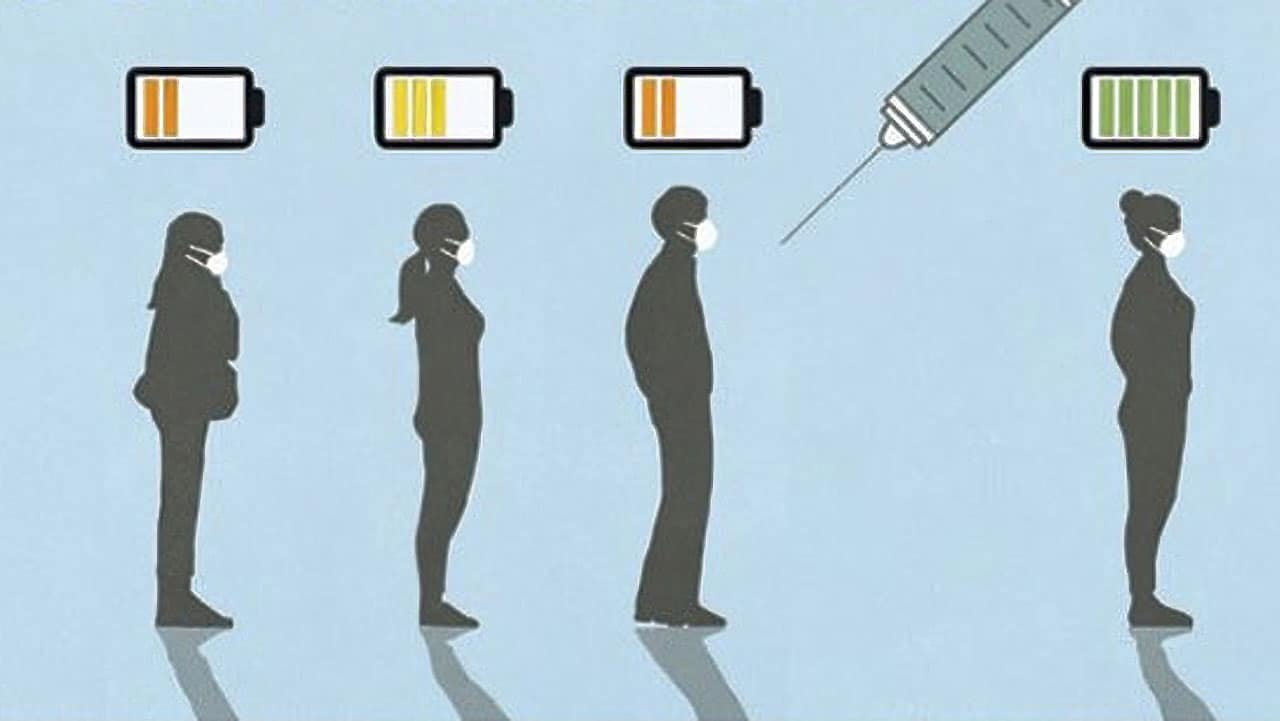
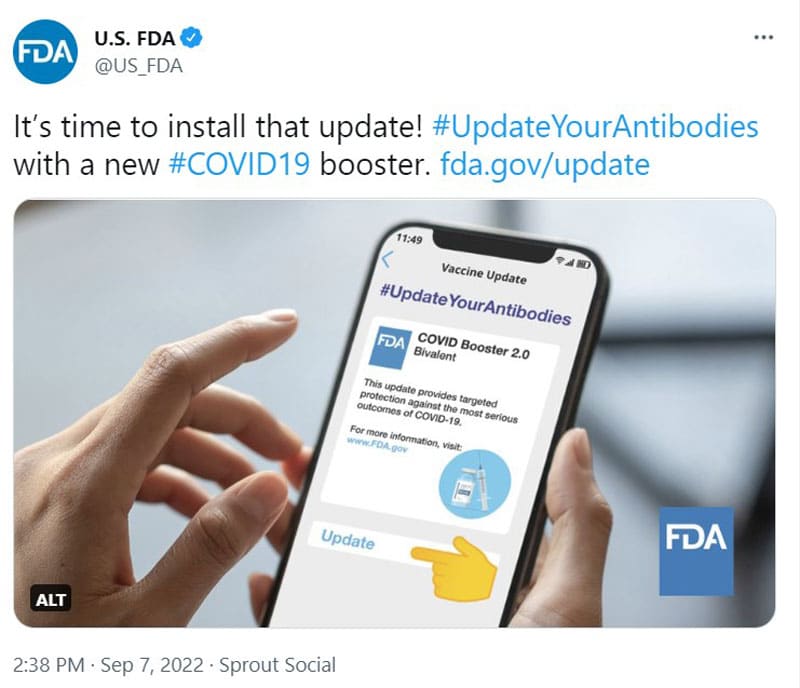
The FDA saved the pharmaceutical companies Pfizer and Moderna the trouble of incurring both the expense and the potential liability by advertising on the industry’s behalf that the new booster shots would “update” people’s antibodies to be more specific to the Omicron subvariants, thus enabling better neutralization of the virus. The FDA advertised graphically that you could “recharge” your immunity up to 100 percent with an Omicron booster shot.

Buying the implicit false message that the promised outcome had been scientifically demonstrated, the mainstream media joined in to help the manufacturers avoid the marketing expense by asserting as fact that the bivalent Omicron booster shots “will provide a better response to the most threatening variants today”, and “probably to future variants, too”. It would to generate “broader” protection overall, assured New York Times columnist Zeynep Tufekci, without having any evidence to support those claims.
Times readers were told to think that the only “bad news” was that the boosters were “getting so little fanfare, and so much unfounded skepticism, that too few people might get them”. Tufekci went on to express her disagreement with the view that “boosters should not have been offered until their specific human trials were complete”, miraculously incognizant of how reasonable it was for people to remain skeptical given the complete lack of supporting evidence for her claims.
Expressing his own faith in the new COVID‑19 booster shots, as well as the seasonal influenza vaccine, the White House’s “Covid Response Coordinator”, Ashish Jha, proclaimed, “I really believe this is why God gave us two arms—one for the flu shot and the other one for the COVID shot.”
Why God gave us opposable thumbs as well, then, surely remains a mystery. Ever the heretic against the vaccine religion, I confess my own sin of having remained skeptical since the beginning that the bivalent mRNA COVID‑19 booster vaccines would do what was being promised.
In August, just a short time before the FDA issued its “emergency use” authorization for the Omicron boosters, I published a freely available e-book titled The FDA, COVID‑19 Vaccines, and Scientific Fraud, in which I explained how the FDA had established a regulatory framework designed to relieve the pharmaceutical companies from having to conduct clinical trials to determine the safety and efficacy of any new formulations of COVID‑19 vaccine.
I also documented in the book how studies had confirmed that an immunological phenomenon known as “original antigenic sin”, sometimes also referred to as “immunological imprinting”, was a real problem with the mRNA COVID‑19 vaccines. This helps to explain repeated observations in the medical literature of statistically significant negative vaccine effectiveness following several months of waning immunity post-vaccination.
Scientists had observed that, whereas reinfection with a SARS‑CoV‑2 variant among unvaccinated people resulted in an adaptation of their immune responses to be more specific to the variant, breakthrough infection among vaccinated people resulted in their immune responses remaining fixated on the spike protein of the original and now extinct (outside of laboratories) Wuhan strain of the coronavirus. Attempts to develop variant-specific COVID‑19 vaccines had been hampered by this problem, as acknowledged by Dr. Paul Offit, a member of the FDA’s Vaccines and Related Biological Products Advisory Committee (VRBPAC).
The observation of original antigenic sin in vaccinated people means that natural immunity is an opportunity cost of vaccination that must be factored into individuals’ risk-benefit analyses. A logical corollary of the observation of original antigenic sin is that vaccinated people will be relatively more susceptible to COVID‑19 throughout their lifetimes.
My book contains the following heresy:
A critical unanswered question the FDA appears uninterested in learning the answer to is whether any increase in neutralizing antibodies from booster shots containing Omicron components would represent antibodies specific to Omicron or whether the antibodies remain specific to the Wuhan strain and merely happen to cross-react with the spike protein of Omicron.
Given what scientists already know about original antigenic sin, we can anticipate that modified booster vaccines will not actually do anything to broaden immune responses to be more specific to any of the Omicron subvariants.
My conclusion that Omicron boosters would not confer better protection is supported by a study published on the preprint server bioRxiv on October 24, 2022, titled “Antibody responses to Omicron BA.4/BA.5 bivalent mRNA vaccine booster shot”.
The paper is short and to the point. The authors prefaced their study by pointing out that, despite widespread use, “little is known about the antibody responses induced in humans” by the bivalent COVID‑19 booster vaccines. Published data on these products was limited to animal studies, and “the impact of a booster shot with a new bivalent vaccine on SARS‑CoV‑2 neutralizing antibody responses in humans remains unknown.”
So, they compared blood levels of neutralizing antibodies at between three and five weeks post-vaccination between people who’d had one booster dose of the original vaccine, people who’d had two booster doses of the original vaccine, and people whose fourth booster dose was with the Omicron booster. They also compared antibody levels among people with BA.4/BA.5 breakthrough infection.
They unfortunately did not compare the results for these cohorts of vaccinated individuals with antibody levels among unvaccinated individuals who had previously acquired natural immunity and then experienced a reinfection with either of these Omicron subvariants. That much-needed comparison would have been most enlightening, which perhaps explains why the researchers didn’t do it.
The result was as I anticipated. As the authors concluded, “When given as a fourth dose, a bivalent mRNA vaccine targeting Omicron BA.4/BA.5 and an ancestral SARS‑CoV‑2 strain did not induce superior neutralizing antibody responses in humans, at the time period tested, compared to the original monovalent vaccine formulation.”
Although the study didn’t further investigate, this finding might be explainable because the antibodies induced by Omicron boosters are still specific to the original Wuhan strain with some cross-reactivity against the Omicron subvariants, as opposed to the shots “updating” the immune responses of vaccinated individuals to be specific to Omicron. Otherwise, it would be expected that neutralizing titers against Omicron would be higher among those receiving the Omicron booster than among those receiving the original formulation.
As the study authors further acknowledged, their findings “may be indicative of immunological imprinting”. They could have confirmed that by also comparing neutralizing antibody levels among unvaccinated people with an Omicron subvariant reinfection, but alas.
They did at least compare antibody levels among those with an Omicron booster shot with those among people experiencing an Omicron subvariant breakthrough infection. The unsurprising result was that infection served as the superior booster (assuming that a higher level of antibodies is the aim), resulting in a slight although statistically significant increase in antibody levels.
Of course, a higher level of neutralizing antibodies does not necessarily translate into greater protection. The “correlates of immunity” for SARS‑CoV‑2 are not scientifically established, meaning that there is no specific level of antibodies known to equate to strong immunity. A consistent observation since the start of the COVID‑19 pandemic is that individuals who produce superior immune responses actually tend to have lower antibody levels, whereas a high level of antibodies is associated with severe disease.
Nevertheless, the FDA has adopted a regulatory framework for the vaccines in which the assumption is made that more antibodies equals better immunity, and inducing a higher level of neutralizing antibodies against Omicron subvariants is therefore the aim of the booster shots. This new study indicates that the shots fail in that aim, which was to be expected given what was already known about the detrimental effect of COVID‑19 vaccines on the human immune system.