

Table of Contents
Out with Pangolins, in with Raccoon Dogs!
On November 18, 2021, a paper published in the journal Science titled “Dissecting the early COVID-19 cases in Wuhan” purported to revise the timeline of the earliest known COVID‑19 cases. Whereas it had previously been reported that the first known case was a man named Mr. Chen who had no connection to the Huanan Seafood Wholesale Market in Wuhan, China, according to the revised timeline, the first known case was a woman named Ms. Wei, who was a seafood vendor at the market.
The finding that the first known case was a market vendor coupled with the known fact that raccoon dogs were being sold at the market at the time of the COVID‑19 outbreak in late 2019, the author argued, strengthened the case for a natural origin of SARS‑CoV‑2, as opposed to the hypothesis that this coronavirus was genetically engineered in a laboratory.
When that paper was published, the New York Times and other major media outlets ran with the story, including the characterization of the revised timeline as strengthening the hypothesis that the coronavirus had a natural origin, making the leap from bats to humans via an intermediary host species being sold at the market. Specifically, the media echoed the paper’s author by identifying the raccoon dog as the most likely culprit.
Numerous major media outlets, including Fox News, TIME, Reuters, and The Guardian, reported that most of the early symptomatic cases were not just linked to the market but specifically to the western section “where raccoon dogs were caged”.
Thus, the media parroted the claim made by the paper’s author that it was a proven fact that raccoon dogs were being sold at the market at the time of the COVID‑19 outbreak.
Evidently, not one major media outlet could be bothered to check the sources cited in the paper to support that claim. In fact, the scientist’s claim that it was a known fact that raccoon dogs were being sold in the southwest corner of the market at the time of the outbreak was also unsupported by his cited sources.
The paper’s author was also publicly rebuked for his revisionary Science paper by Dr. Liang Wannian, the head of the Chinese side of the WHO-China joint mission to investigate the origins of SARS‑CoV‑2, who maintained that Mr. Chen’s symptom onset date was not December 16, 2020, as claimed in the paper, but December 8, as stated in the WHO’s report that the scientist was purporting to correct. Liang said at a press conference that Mr. Chen “started experiencing flu-like symptoms such as headache and dizziness on December 8, followed by fatigue, muscle pain, and shortness of breath, which were later confirmed to be COVID‑19.”
The name of that scientist is Dr. Michael Worobey, who is a member of the same team of researchers who recently published a paper on the preprint server Zenodo reporting that genetic material from a raccoon dog was found in a sample collected from a transport cart in the southwest corner of the market by researchers from the Chinese Center for Disease Control (CCDC), who only recently uploaded the previously unpublished metagenomic sequencing data from samples to the international genomic database GISAID.
The CCDC researchers have also since published their own preprint paper at ChinaXiv discussing this newly released data. They confirmed that raccoon dog DNA was found in the sample but emphasized that this does not show that any raccoon dogs were infected with SARS‑CoV‑2, much less that an infected animal transmitted the virus to humans and not vice versa.
Before their preprint was published, the advocates of the market origin hypothesis sought the media’s help to propagate their finding and conclusion to the public. The news was first reported by The Atlantic on March 16, 2023, under a headline describing it as “The Strongest Evidence Yet That an Animal Started the Pandemic”.
Conspicuously absent from the mainstream media’s reporting, however, is the alternative perspective that, if this is the strongest evidence yet for the zoonotic origin hypothesis, it just makes the case for a lab origin all that much stronger.
Also conspicuously absent from the media’s coverage is an important backstory: four of Worobey’s coauthors—Kristian G. Andersen, Andrew Rambaut, Edward C. Holmes, and Robert F. Garry—were also authors of the infamous paper titled “The proximal origin of SARS‑CoV‑2”, published in Nature on March 17, 2020.
That is one of two influential early articles that the media continually relied upon to dismiss the lab origin hypothesis as a baseless “conspiracy theory”, as we’ll come back to.
Notably, in the “proximal origin” paper, to bolster their case for a zoonotic origin, Andersen et al. pointed to pangolins as the most likely intermediary species.
Another relevant detail conspicuously absent from the mainstream media’s recent coverage of the subject is how the pangolin hypothesis was subsequently abandoned.
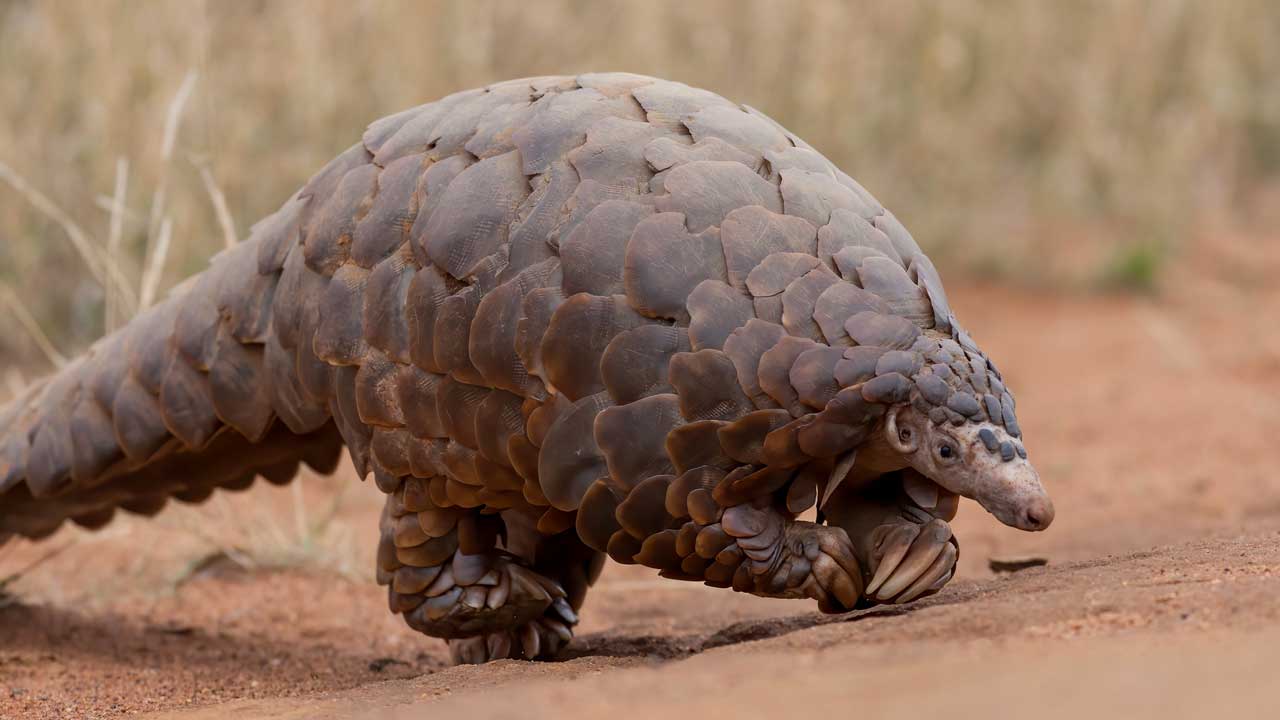
Dr. Worobey was not a coauthor of the “proximal origin” paper, but he subsequently teamed up with those four of its five authors on numerous papers advocating a zoonotic origin for SARS‑CoV‑2.
To support that position, in his paper “Dissecting the early COVID-19 cases in Wuhan”, Worobey made numerous claims that are false or, at best, misleading.
The claim that it was a proven fact that raccoon dogs were being sold in the southwest area of the market in November and December of 2019 was repeated by Worobey and coauthors in several additional papers, but that claim was in every instance unsupported by their cited sources.
Instead, this team of scientists merely created the illusion of their claim having been proven by citing numerous supposedly corroborating sources, including their own prior papers, when in fact there were just three primary sources cited in all those papers, none of which actually provided credible documentary evidence that raccoon dogs were present in the market during the relevant timeframe.
This record of deception is relevant because the same group of scientists have claimed that the DNA evidence of raccoon dogs in the market “corroborates” that earlier claim of theirs.
This is a curious claim since, if it was already a proven fact, there would be no need for corroboration, and the newly published genomic evidence would add absolutely nothing new to the debate.
It is also untrue that the new data corroborates their earlier claim.
As Matt Ridley, coauthor with Dr. Alina Chan of the book Viral: The Search for the Origin of COVID‑19, told The Telegraph, “All this paper proves is that raccoon dogs were in the market, and we already knew that. We just didn’t know they were there at the outbreak, and we still don’t know because that DNA could have been left over from months earlier.” (Emphasis added.)
Michael Imperiale, a virologist at the University of Michigan, similarly told the New York Times that, depending on the stability of genetic material found in the sample from both the raccoon dog and the virus, “they could have been deposited there at potentially widely different times.”(Emphasis added.)
In an email to Worobey requesting comment on the findings of my own investigation into his and his coauthors’ claims, I asked about the possibility that the DNA evidence represented contamination from months earlier and was therefore not inconsistent with the finding reported by the WHO that, while raccoon dogs hadbeen sold at the market in the past, there was no evidence of this occurring at the time of the COVID‑19 outbreak.
Dr. Worobey did not respond to my request for comment.
The Orchestrated Suppression of the Lab-Origin Hypothesis
Since very early into the COVID‑19 pandemic, there has been a concerted effort on the part of interested parties to suppress information about the possible lab origin of SARS‑CoV‑2.

Thank you for this comprehensive and very important analysis.
These erroneous arguments against an iatrogenic origin for SARS-Cov-2 virus closely resemble the arguments proposed against the theory that Koprowski’s experimental oral polio vaccines (OPV) led to the crossover of simian immunodeficiency virus (SIV) from chimpanzees to humans (where it became HIV) in the late 1950’s.
Anyone who has read Edward Hooper’s brilliant book “The River” and his many essays since ( see https://aidsorigins.com) will be very familiar with Michael Worobey, he is one of the ring leader idiots who tried to debunk the OPV theory by publishing studies using computer modeling to time the genetic drift of HIV, and claimed that the proximate beginnings of HIV was well before the experimental OPV vaccines in the early 1900’s. But there was one big problem…HIV is a retrovirus which undergoes mutations much more quickly and not just through point mutations, as Worobey’s modeling assumes.
http://www.aidsorigins.com/the-recent-faria-paper-in-science-more-flimsy-aids-origins-speculations/
And so just like today, Worobey is putting forth incredibly stupid stuff and all it takes is for the media and other “experts” to regurgitate it, and suddenly it becomes the consensus. That’s what happens when you have a public health narrative which must be maintained.
Hi David. Thanks for the positive feedback and links.
Thank you for the work that you are doing to expose the lies. I have attached a link to a podcast on Spotify that is put out by Senator Alex Antic (South Australian Senator) where he interviews Nikolai Petrovsky an immunologist and vaccine developer and clinical researcher. Petrovsky although a world class vaccine developer is scathing in his criticism of health authorities and touches on the impossibility of anything other than a lab leak origin. It is refreshing to hear someone involved in vaccine manufacture being honest and critical of the way the authorities and press have abandoned their obligations to the public to have the right to chose if a vaccine is right for them. Your readers may appreciate his ability to put the science jargon into understandable layman’s terms.
https://open.spotify.com/show/3TGkVz8zTGTUpjEBG4BlvF
I’ve read some of Petrovsky’s insightful stuff on the origin of SARS-CoV-2.
Wow! What a painstaking effort at separating the wheat from the chaff. Quite enlightening.
Glad you found it enlightening!