

Table of Contents
Audio And PDF Versions of This Article
Introduction
We’re supposed to believe that medical licensing exists to protect health care consumers from quack doctors pushing fake remedies and harmful treatments. The purpose, we’re told, is to improve the quality of health care.
Evidence that medical licensing achieves that result is lacking.
Instead of protecting the interests of health care consumers, licensing transparently serves to protect medical trade organizations whose financial interests are inseparable from those of the pharmaceutical industry.
The effective result is a government-enforced medical cartel that masquerades as a “health care” system.
That explains today’s astronomical costs and disastrous health outcomes in the US, with alarming rates of chronic diseases among both the adult and childhood populations.
In my book The War on Informed Consent: The Persecution of Dr. Paul Thomas by the Oregon Medical Board, I provide a case study of how medical licensing is weaponized.
As I document, the state’s policy goal of a high vaccination rate superseded Dr. Thomas’s goal of achieving a healthy patient population.
His approach was to respect parents’ right to make their own informed choice about childhood vaccinations.
Published in a peer-reviewed journal, his patient data clearly showed that this approach was working.[1]
The medical board claimed that Dr. Thomas posed a threat to public health, but the truth is that he posed a threat to the “public health” establishment.
That is sufficiently illustrated by the fact that the board’s “emergency” meeting to suspend his license occurred mere days after the publication of his study showing that his completely unvaccinated patients were far healthier.[2]
Dr. Thomas’s story is not an isolated case of medical licensing being weaponized.
On the contrary, weaponization against physicians who dissent from regime-approved “standard of care” is the very purpose of medical licensing.
These standards are determined by powerful medical trade organizations like the American Medical Association (AMA), American Dental Association (ADA), and American Academy of Pediatrics (AAP).
The AMA played a central role in the establishment of medical licensing in the United States.
It does not issue medical licenses or control state medical boards, yet it wields vast power to determine who does or does not qualify to legally practice medicine.
Since the early twentieth century, state licensing boards have required graduation from an accredited medical school, with accreditation standards heavily shaped by the AMA.
For over a century now, the AMA has had effective control over medical school curriculum, and by this means it also steers the direction of medical research.
It does this, of course, not out of some angelic benevolent intent, but to secure its own financial interests, the interests of its members, and the interests of the pharmaceutical industry with which it has always been allied.
Indeed, the AMA’s whole purpose from the start was to protect the financial interests of practitioners who favored chemical drug treatments over more natural and holistic approaches to health care.
The scarcely concealed aim of the AMA was to establish an effective monopoly over the practice of medicine.
The goal was to reduce the supply of doctors by eliminating competition, thus increasing profits for its own members by limiting consumer choice and increasing the costs for health care.
It’s no great mystery why medical costs are so high today. They are designed to be.
It’s also no mystery why this system doesn’t perform well when it comes to achieving good health outcomes.
It wasn’t designed to do that, either.
My goal with this article is to persuade you to join a movement to end this medical cartel by demanding the elimination of medical licensing.
It starts with the story of how the current regime of medical licensing came into existence.

The Era of Free Trade in Medicine
Early in US history, various medical licensing laws were enacted to restrict the practice of medicine to individuals deemed worthy by the state.[3]
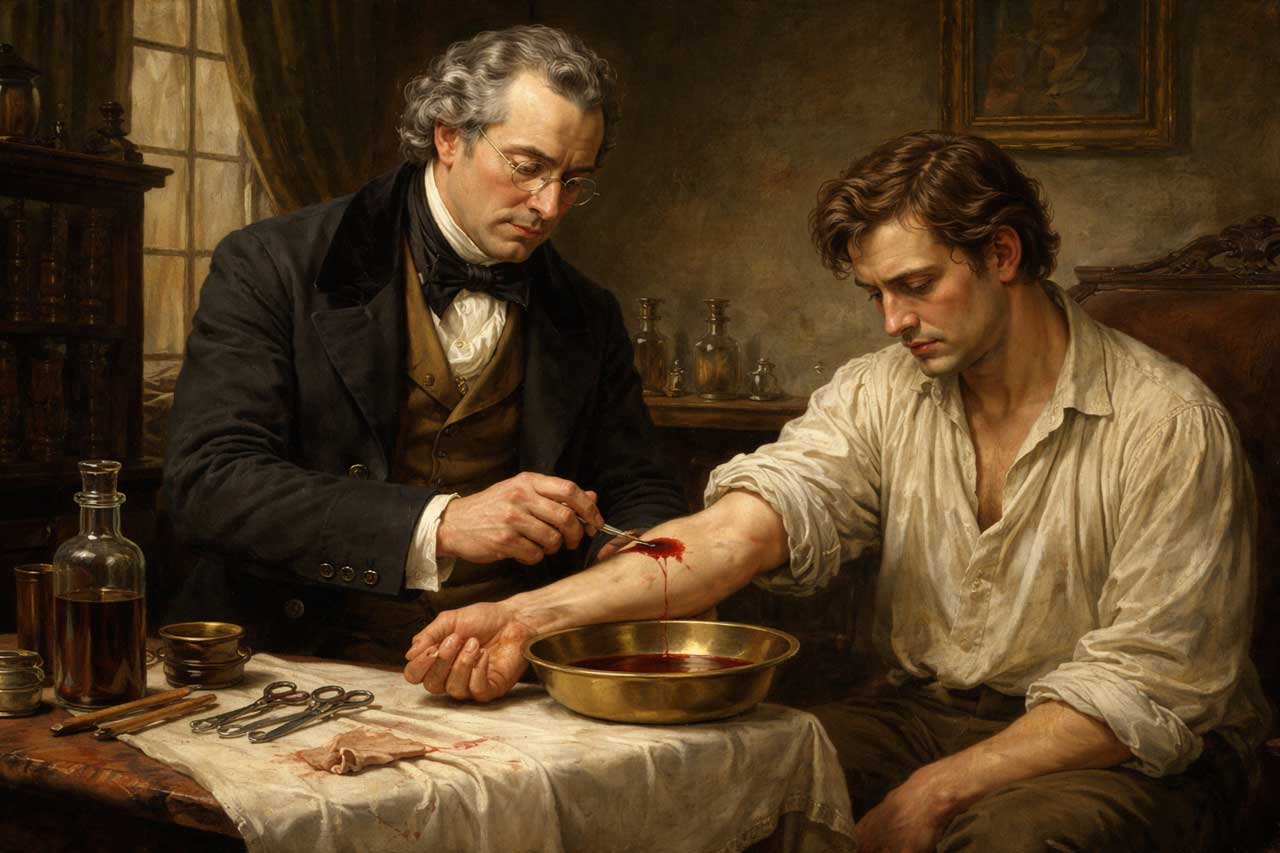
As related by Lester S. King, MD, in an article published in 1982 in the Journal of the American Medical Association (JAMA), the effect of these early licensing laws was largely to restrict “regular medical practice” to treatments like bloodletting and administration of chemical drugs.
While writing in the AMA’s own journal from the perspective of mainstream medicine, King conceded that “medical care that the regular physicians had provided was not strikingly successful”.
He nevertheless lamented what he called “attacks” on mainstream medicine by alternative practitioners who preferred more natural approaches, like herbal remedies and steam baths.
These dissidents criticized “the regular medical profession for their bloodlettings and chemical poisons, for their monopolistic practices, their efforts to hold and retain special privileges, and their rapacity and high fees.”
Such “propaganda”, as King described it, “was remarkably effective”—no doubt because the criticisms were “not without some truth”, he understatedly admitted.
Indeed, King didn’t identify any aspect of that characterization of mainstream medicine that isn’t accurate.
One key truth, King conceded, was that “the regular practitioners had a protective legal umbrella that gave them alone the right to practice medicine”.
Then during the 1820s and 1830s, “the whole concept of special privilege came under heavy political attack.”
As a result, “restrictive regulations that granted privileges to regular medicine” were repealed throughout the US, resulting in an era known as “free trade in medicine.”
It was that turn of events, King informs, that “led directly to the formation of the American Medical Association.”[4]
The central role of the AMA in lobbying state governments to impose legislative and regulatory restrictions on the practice of medicine was detailed by historian Ronald Hamowy in the Journal of Libertarian Studies in 1979.
From the early to mid-1800s, health care practitioners in the US were generally not required to obtain a medical license to diagnose and treat patients.
Medical schools abounded, and the large supply of physicians and market competition between different sects of practitioners kept costs low.
Standard approaches to medicine included a heavy reliance on barbaric practices like bloodletting and administering doses of toxic substances like mercury and arsenic.
Mainstream medicine, Hamowy remarked, “certainly killed large numbers of patients unfortunate enough to undergo treatment at the hands of its practitioners.”
Competing with the mainstream quacks were practitioners of alternative medicine whose approaches included the use of botanical remedies, adequate rest, sunshine and fresh air, a nutritional diet, and personal hygiene.
The focus of alternative practitioners “on the natural healing powers of the organism itself” was gaining in popularity among the public.
But practitioners of “regular medicine” disregarded any methods other than their own and felt threatened by the competition.[5]
The situation during the era of “free trade in medicine” was also summarized by Lawrence D. Wilson in an article titled “The Case against Medical Licensing”, published by The Future of Freedom Foundation in 1994.
The US at the time had one of the healthiest populations on the planet, with the lowest infant mortality rate in the world—whereas today it ranks near the bottom of the list among developed countries.[6]
Costs were low, and health care was widely accessible. Consumers were protected by laws against fraud and negligence.
But then the AMA was formed “to protect the interests of one group of doctors—the drug healers, or allopaths.”[7]
Since the free market posed an obstacle to achieving its financial goals, the AMA set out to eliminate it.
The Rise of the Medical Cartel
In 1847, to put a stop to the dangerous ideas that the human body has an innate ability to heal and that simple natural approaches can be taken to maintain good health and recover from illness, the American Medical Association was founded.
The AMA’s aim was to establish a virtual monopoly over the practice of medicine. Its financial goal was to increase profits for AMA members by strictly limiting the supply of doctors.
This would be done by limiting the number of medical schools, controlling the curriculum, and establishing a licensing regime to restrict the practice of medicine to physicians adhering to the AMA-approved standard of care.
In other words, the goal was for mainstream practitioners to eliminate the competition from physicians taking more natural approaches, and whose care was often more effective and less expensive.
To circumvent the market in pursuit of a monopoly power, the AMA intensely lobbied the government, including by working to get its representatives into Congress.
As Hamowy observed, the AMA “sought medical licensing legislation which established as a precondition for examination by the state boards of examiners, graduation from an approved medical institution.”[8]
What qualified as “approved” curriculum, of course, would be determined by the AMA.
The AMA scarcely concealed its malevolent aim beneath a thin veil of rhetoric about protecting patients from “quacks” and “charlatans”.
In 1887, the first vice-president of the AMA, Dr. Perry Millard, complained how the medical profession had suffered from “a competition that is intolerable to an educated man.”[9]
Millard pleaded for his fellow mainstream practitioners to “cooperate in obtaining at the hands of the legislatures of the different States such regulations of the practice of our profession as will place the standard thereof upon a citadel of greater strength and power.”[10]
The same year, the Journal of the American Medical Association argued that the policies advocated by the AMA would result in increased costs for a medical education.
The journal considered this a good outcome because it would deter individuals from entering the practice and thereby “aid in lessening the evil of overcrowding the professional ranks.”[11]
Of course, racial minorities seeking employment as physicians were disproportionately harmed by that policy.
In 1889, Millard boasted how Minnesota’s state regulations had resulted in “a smaller ratio of physicians to the population than any State in the Union. Instead of one physician to every 750 inhabitants, the last medical census shows but one to every 1,300.”[12]
As Hamowy remarks,
Why the public should applaud a law which effectively cut the availability of physicians by forty percent in two years we are not told, although it is clear why the remaining practitioners would be delighted with this change. [13]
The same “specious identification of the profession’s interests with those of the public at large” was evident again in a statement by Millard in 1889, in which he professed market omniscience by claiming to know that “there are twice as many practitioners of medicine in this country as are commensurate with its legitimate wants.”[14]
In 1891, JAMA boasted how effective the organization’s strategy had been in Illinois: the “efficacy” of the state’s laws for regulating medical practice was proven by the fact that “The total number of physicians in the State is less than it was twelve years ago.”[15]
The AMA was successfully solving the problem of free market competition by reducing the supply of doctors and increasing the costs for health care.
