


Table of Contents
Indoctrination into National Mythology

An enduring myth that Americans are indoctrinated into believing is that President Abraham Lincoln “freed the slaves” with his Emancipation Proclamation, and that this just outcome was the purpose for which the so-called “Civil War” was fought.
The claim may not be made explicitly by court historians that Lincoln’s war aim was to free the slaves, because that would be too much of an overt lie. So, we are instead just told that slavery was the cause of the war, with the northern states opposing and southern states supporting slavery, and that to achieve the war’s aim, Lincoln issued his proclamation to free the slaves.
It is therefore reasonable for Americans to draw the conclusion that Lincoln’s purpose in executing the war was to end slavery, even though that is demonstrably false.
That the war was fought for the just cause of ending slavery is certainly the impression I got as a child from the history materials we were presented with in the government school system. Omitted from our textbooks were Lincoln’s own explicit clarifications that ending slavery was not his purpose.
I naturally believed, therefore, that ending slavery was the purpose of the war. It wasn’t an explicit lie. It was lying by omission. I was deceived as a child, and I only later learned the truth, as an adult, by actively searching for it.
As a homeschooling parent, I again saw this deception propagated in one of our chosen history textbooks. When my wife, who is from Taiwan, went through the naturalization process to become a US citizen, we saw the same myth also propagated on the citizenship test: it asked what the Emancipation Proclamation did, with the expected answer being that it “freed the slaves”.
To become a US citizen, you see, it is expected that you demonstrate knowledge of national mythology.
To learn that the proclamation didn’t free the slaves, one needn’t look too deeply. The National Archives website where you can find the full text states explicitly that the Emancipation Proclamation “did not end slavery”.
That webpage nevertheless describes Lincoln’s proclamation as being “among the great documents of human freedom.”
That is certainly arguable, given its true purpose.
But before examining what that was, let’s back up a bit to put the proclamation into proper context.
The Cause of State Sovereignty
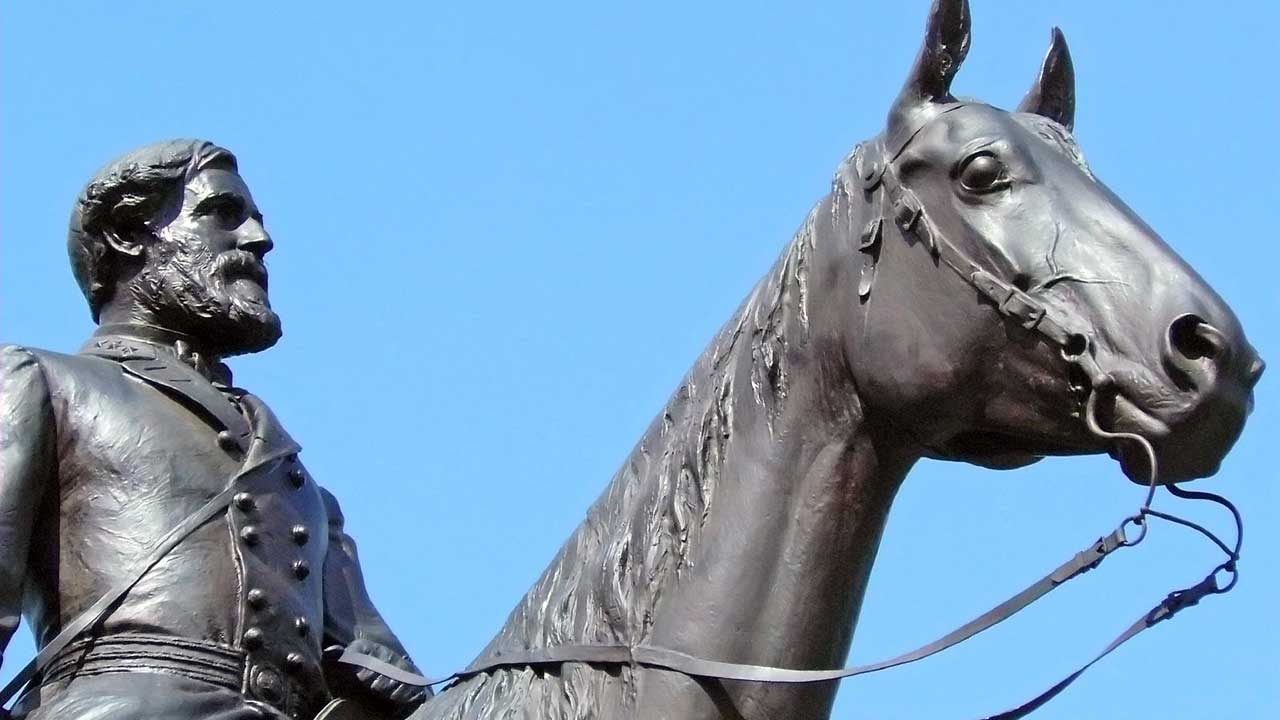
After Lincoln won the presidential election on November 6, 1860, states began seceding. By the time of his inauguration on March 4, 1861, seven states had left the Union and organized the Confederate States of America: South Carolina, Mississippi, Florida, Alabama, Georgia, Louisiana, and Texas.
The first state to secede was South Carolina, which on December 24, 1860, issued a declaration of its grievances with the US federal government, which were summarized as “violations of the Constitution of the United States” that infringed on state sovereignty.
South Carolina cited the Declaration of Independence and the Articles of Confederation, which had said that “each State retains its sovereignty, freedom and independence”.
The declaration of secession complained about non-slaveholding states effectively nullifying the Fugitive Slave Clause of the US Constitution by refusing to capture and return African people who had escaped captivity and fled north.
“We affirm that these ends for which this Government was instituted have been defeated,” the declaration stated, “and the Government itself has been made destructive of them by the action of the non-slaveholding States.”
From the perspective of the southern states, therefore, the war was as much about preserving state sovereignty as about preserving the institution of slavery.
The fact that those states were wrong in the latter aim does not belie the fact that they were correct in the former—and that is the key point that we are not supposed to discern from school textbooks.
An implicit logical corollary of the argument that the southern states had no right to secede, ironically, is also that the northern states had no right to nullify the Fugitive Slave Clause of the US Constitution.
It’s not that any states in the Union had a right to enslave other humans; they obviously did not. But the US Constitution itself was equally at fault on that point, and the southern states did have a right to secede from the Union, just as northern states had a right to effectively nullify unjust “law”.
The southern states’ grievances were also not limited to slavery-related issues. They additionally complained about tariffs enforced by the federal government. This is evident in the Constitution of the Confederate States adopted on March 11, 1861, which provided that “no bounties shall be granted from the Treasury; nor shall any duties or taxes on importations from foreign nations be laid to promote or foster any branch of industry”.
The tariffs favorably protected northern manufacturers, while the southern economy was much more agricultural and export oriented. Consequently, the federal government’s trade protectionism harmed southern plantation owners for the benefit of northern industrialists.
Taxing imports on British-manufactured goods made imports more expensive, which enabled American manufacturers to charge higher prices to consumers for their own goods.
Because American manufacturing industries were predominantly in northern states while the southern states’ economy was based more on agricultural exports, the federal government’s trade protectionism for manufacturers was viewed in the south as an effective transfer of wealth from southern to northern states.
Southerners rightly viewed the tariffs as causing them to pay artificially high prices to confer an economic advantage to manufacturers in northern states.
The tariffs also risked harming the southern states’ foreign trade by diminishing demand for southern exports and potentially leading to retaliatory tariffs from Britain against American exports.
This dispute among the states over tariffs was no small matter. While today the federal government funds itself by directly taxing Americans’ income, at the time, tariffs were the government’s principal source of revenue.
Growing up in the government school system, we were taught that secession was about preserving slavery, while the causes of state sovereignty, including economic independence, were entirely omitted from the story.
Of course, it was extraordinarily hypocritical for southern states to declare their own sovereignty and independence for the primary purpose of preserving the enslavement of people of African descent. But the southern states were also correct to observe that the US Constitution itself effectively treated enslavement of African people as a right belonging to the states.
Notwithstanding that evil purpose for which southern states sought independence from the US federal government, and notwithstanding the inherent existence of that evil within the US Constitution, the southern states were also correct to maintain that they did have a right to secede.
Ironically and regrettably, the misconception that the war was fought to end slavery is suggested by South Carolina’s own declaration of secession, which complained that Lincoln’s Republican party held the view that “a war must be waged against slavery until it shall cease throughout the United States.”
But that was a misrepresentation of Lincoln’s position, as Lincoln himself expressly clarified.
Lincoln’s Inaugural Address
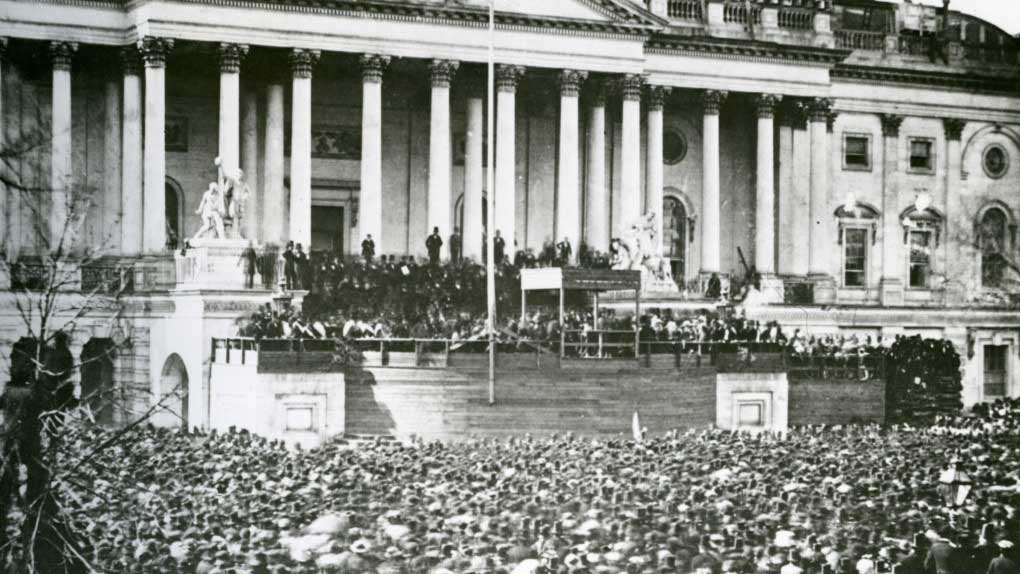
In his Inaugural Address to the nation on March 4, 1861, with the explicit intent of easing the fear among southern states that “their property” would “be endangered” by his presidency, Lincoln assured that there “has never been any reasonable cause for such apprehension.”
He quoted himself from a prior speech saying,
I have no purpose, directly or indirectly, to interfere with the institution of slavery in the States where it exists. I believe I have no lawful right to do so, and I have no inclination to do so.
He also quoted the following reassurance from the Republican Party’s 1860 platform:
Resolved, That the maintenance inviolate of the rights of the States, and especially the right of each State to order and control its own domestic institutions according to its own judgment exclusively, is essential to that balance of power on which the perfection and endurance of our political fabric depend, and we denounce the lawless invasion by armed force of the soil of any State or Territory, no matter under what pretext, as among the gravest of crimes.
In other words, Lincoln reassured the southern states that he would not utilize the military power of the federal government to compel those states to abandon the institution of slavery—a promise that he technically kept because ending slavery wasn’t the reason why he subsequently utilized the military power of the federal government against the southern states.
Additionally, Lincoln cited the “Fugitive Slave Clause” of the US Constitution, found in Article IV, Section 2, Clause 3, which stated:
No Person held to Service or Labour in one State, under the Laws thereof, escaping into another, shall, in Consequence of any Law or Regulation therein, be discharged from such Service or Labour, but shall be delivered up on Claim of the Party to whom such Service or Labour may be due.
Referring to that clause, Lincoln said:
It is scarcely questioned that this provision was intended by those who made it for the reclaiming of what we call fugitive slaves; and the intention of the law-giver is the law. All members of Congress swear their support to the whole Constitution—to this provision as much as to any other.
He didn’t unambiguously promise to use the power of the federal government to return escaped African people to slaveholders because, as he noted, there was “some difference of opinion whether this clause should be enforced by national or by State authority”.
He instead ambiguously vowed as much by dismissing that debate as “a merely unsubstantial controversy”, arguing that it didn’t really matter “how it shall be kept”, whether by “national or State authority”, just that “the slave is to be surrendered” over to slaveholders.
In effect, he was also agreeing with southern states that northern states shouldn’t be able to effectively nullify federal law, or, in this case, the Constitution itself.
On this point, they were both wrong, for any legislative act that defeats the law’s very purpose of protecting individual rights is inherently unjust—and that includes the US Constitution.
The Constitution, in other words, was a doomed experiment from the start, the seeds of its own destruction having been planted within its very text by virtue of its evilness.
Foreshadowing his true reason for subsequently utilizing military power against the southern states, Lincoln continued his inaugural address by saying,
I hold that, in contemplation of universal law, and of the Constitution, the Union of these States is perpetual. Perpetuity is implied, if not expressed, in the fundamental law of all National Governments. It is safe to assert that no Government proper ever had a provision in its organic law for its own termination. Continue to execute all the express provisions of our National Constitution, and the Union will endure forever—it being impossible to destroy it except by some action not provided for in the instrument itself.
. . . The Union is much older than the Constitution. It was formed, in fact, by the Articles of Association in 1774. It was matured and continued by the Declaration of Independence in 1776. It was further matured, and the faith of all the then thirteen States expressly plighted and engaged that it should be perpetual, by the Articles of Confederation in 1778. And, finally, in 1787, one of the declared objects for ordaining and establishing the Constitution was “to form a more perfect union.”
But if destruction of the Union by one, or by a part only, of the States, be lawfully possible, the Union is less perfect than before the Constitution, having lost the vital element of perpetuity.
Lincoln’s perverse view, then, was that the Union was like the Hotel California: you can check out any time you like, but you can never leave.
His argument is self-defeating, however, by virtue of having cited, in support of it, the Articles of Association and the Declaration of Independence.
The Articles of Association, an act of the First Continental Congress, was adopted on October 20, 1774. Basically, with delegates from Georgia not attending, it was an agreement between the other twelve colonies to broadly prohibit trade with Great Britain as an act of protest against the crown.
If Lincoln’s interpretation were correct, then the colonies violated their own declared principles by subsequently declaring independence, since by the Articles of Association they had bound themselves to remain “his majesty’s most loyal subjects” and were “avowing our allegiance to his majesty”.
The Declaration of Independence, adopted by the Continental Congress on July 4, 1776, of course, proclaimed (emphasis added):
The unanimous Declaration of the thirteen united States of America,
When in the Course of human events, it becomes necessary for one people to dissolve the political bands which have connected them with another, and to assume among the powers of the earth, the separate and equal station to which the Laws of Nature and of Nature’s God entitle them, a decent respect to the opinions of mankind requires that they should declare the causes which impel them to the separation.
We hold these truths to be self-evident, that all men are created equal, that they are endowed by their Creator with certain unalienable Rights, that among these are Life, Liberty and the pursuit of Happiness.—That to secure these rights, Governments are instituted among Men, deriving their just powers from the consent of the governed, —That whenever any Form of Government becomes destructive of these ends, it is the Right of the People to alter or to abolish it, and to institute new Government, laying its foundation on such principles and organizing its powers in such form, as to them shall seem most likely to effect their Safety and Happiness.
Lincoln’s argument was thus perfectly self-defeating.
It was not “safe to assert” that the United States government had no provision for its own termination since the right of the people of the several states to terminate that government, or at least to withdraw from its jurisdiction, had already been explicitly defined by the very Declaration of Independence Lincoln vainly cited to support his demented understanding of the law.
In essence, Lincoln was rejecting the whole spirit and intent of the Declaration of Independence. His implicit reasoning was that by voluntarily entering the Union, the States effectively renounced the right of their peoples to self-determination. Upon signing onto the Articles of Confederation, the states were simultaneously exercising and abolishing that right; they were at once consenting to be governed and disavowing the principle that the federal government derived its powers “from the consent of the governed”.
Lincoln’s view was complete nonsense, of course.
It’s true that the Articles of Confederation, adopted by the Continental Congress on November 15, 1777, stated that “the union shall be perpetual”, but that was compatible with the Declaration of Independence only if it meant a union intended to continue indefinitely—not a renunciation by the people of their ultimate right to self-determination.
Lincoln’s attempt to describe these historical documents as links in an inexorable chain toward an indissoluble Union is also inherently self-contradictory since by his own reasoning the States would have violated their own covenant by adopting the US Constitution at the Constitutional Convention on September 17, 1787.
After all, under Article XIII of the Articles of Confederation, the states agreed not to alter the form of their confederation absent unanimous agreement. Yet Article VII of the Constitution vitiated that clause of the Articles of Confederation by providing that ratification by nine States “shall be sufficient for the Establishment of this Constitution between the States so ratifying the Same.”
The Constitution went into effect on June 21, 1788, when New Hampshire became the ninth state to ratify it. Virginia, New York, North Carolina, and Rhode Island did not yet belong to the new Union. And none of the states then in the Union complained that those four were somehow violating the new pact by not yet belonging to it.
Obviously, the prevailing view among the States was not that the word “perpetual” in the Articles of Confederation meant that you could check out but never leave. The new Constitution rather nullified the prior confederation and established a whole new union of states, open to any that wished to join while requiring the participation of none.
The National Archives website clarifies that explicitly:
Through discussion and debate it became clear by mid-June that, rather than amend the existing Articles, the Convention would draft an entirely new frame of government.
It turns out that you can check out and leave the hotel after all.
Lincoln’s position that the southern states had no right to secede from the Union was, in short, logically incoherent.
In his address, Lincoln threatened to use force to prevent states from seceding, saying,
I trust this will not be regarded as a menace, but only as the declared purpose of the Union that it will constitutionally defend and maintain itself.
In doing this there needs to be no bloodshed or violence; and there shall be none, unless it be forced upon the national authority. [Italics in original; bold emphasis added.]
In other words, as long as no state tried to leave the Union, then Lincoln would not need to use military force against them.
“Plainly,” Lincoln nonsensically asserted, “the central idea of secession is the essence of anarchy.”
But that was plainly not so, since “anarchy” meant “Want of government; a state of society, when there is no law or supreme power, or when the laws are not efficient, and individuals do what they please with impunity; political confusion.”
The mere act of seceding from the Union did not dissolve the seceded states’ governments, which continued to exist. The central idea of secession was rather plainly the essence of self-determination and a manifestation of the principles enshrined in the Declaration of Independence.
Lincoln fallaciously equated the act of secession by a minority of states with “rule of a minority”, which he rejected. But by the act of secession, the southern states weren’t trying to rule over the northern states. Far from it! They were instead simply declaring that they were no longer going to be ruled over by the northern states.
As though Lincoln’s viewpoint were well reasoned, we are taught that it was a “Civil War”—but, by definition, it wasn’t one.
The war simply did not occur between opposing parties fighting over control of the same government.
That’s why you’ll hear some people more accurately describing it as “the War of Northern Aggression”.
Lincoln further appealed to the southern states on the grounds that secession would mean that “fugitive slaves, now only partially surrendered, would not be surrendered at all” under the Fugitive Slave Clause of the Constitution.
In other words, he told the southern states that if they wanted him to execute the Fugitive Slave Clause, then they had to remain in the Union.
That was reasonable, from a strictly legal point of view, but obviously incompatible with the idea that ending slavery was among his purposes in waging the war that followed (and the idea that the Fugitive Slave Clause was evil).
Lincoln further reasoned that the states were not like a husband and wife who could divorce and then physically separate from each other; the states must “remain face to face; and intercourse, either amicable or hostile, must continue between them.”
Thus, by Lincoln’s own analogy, he subsequently raped the states who seceded.
And this is a guy whom we are supposed to believe is America’s greatest president—or the second greatest, in Donald Trump’s telling.
Although superfluous by this point in his speech, Lincoln further emphasized that he would not use military force against seceded states to end slavery by saying he would support an Amendment to the Constitution explicitly prohibiting the federal government from interfering in the institution of slavery:
I understand a proposed amendment to the Constitution—which amendment, however, I have not seen—has passed Congress, to the effect that the Federal Government shall never interfere with the domestic institutions of the States, including that of persons held to service. To avoid misconstruction of what I have said, I depart from my purpose not to speak of particular amendments so far as to say that, holding such a provision to now be implied constitutional law, I have no objection to its being made express and irrevocable.
Lincoln was referring to what’s known as the “Corwin Amendment”.
With states leaving the Union, outgoing president James Buchanan, like Lincoln himself, tried to assure that the incoming Republican administration would not threaten the institution of slavery. To that end, a proposed amendment was drafted, which stated,
No amendment shall be made to the Constitution which will authorize or give to Congress the power to abolish or interfere, within any State, with the domestic institutions thereof, including that of persons held to labor or service by the laws of said State.
Thus, it is absolutely clear that Lincoln’s reason for waging war on the Confederate States of America was strictly to force those states to rejoin the Union.
He was explicit in his inaugural address that, as president, he would treat secession as an act of aggression against the Union:
In your hands, my dissatisfied fellow-countrymen, and not in mine, is the momentous issue of civil war. The Government will not assail you. You can have no conflict without being yourselves the aggressors.
Of course, it is a common feature of wars throughout history that aggressors justify their violence by blaming the victims of their aggression. Every act of criminal violence is, in the aggressor’s own framing, an act of self-defense.
The Library of Congress summarizes the main purpose of Lincoln’s inaugural address succinctly:
The address also denied any plan on the part of the Lincoln administration to interfere with the institution of slavery in states where it existed. To Lincoln, the Union, which he saw as older even than the Constitution, was perpetual and unbroken, and made secession legally impossible.
The historical record is absolutely clear: Lincoln did not wage war on the southern states for the purpose, either in whole or in part, of ending slavery.
Lincoln may have disfavored slavery, but that doesn’t mean he wasn’t also racist; he also disfavored blacks co-existing in the United States as equals. “My first impulse,” Lincoln said during a speech in 1854, “would be to free all the slaves, and send them to Liberia, to their own native land.”
The Emancipation Proclamation
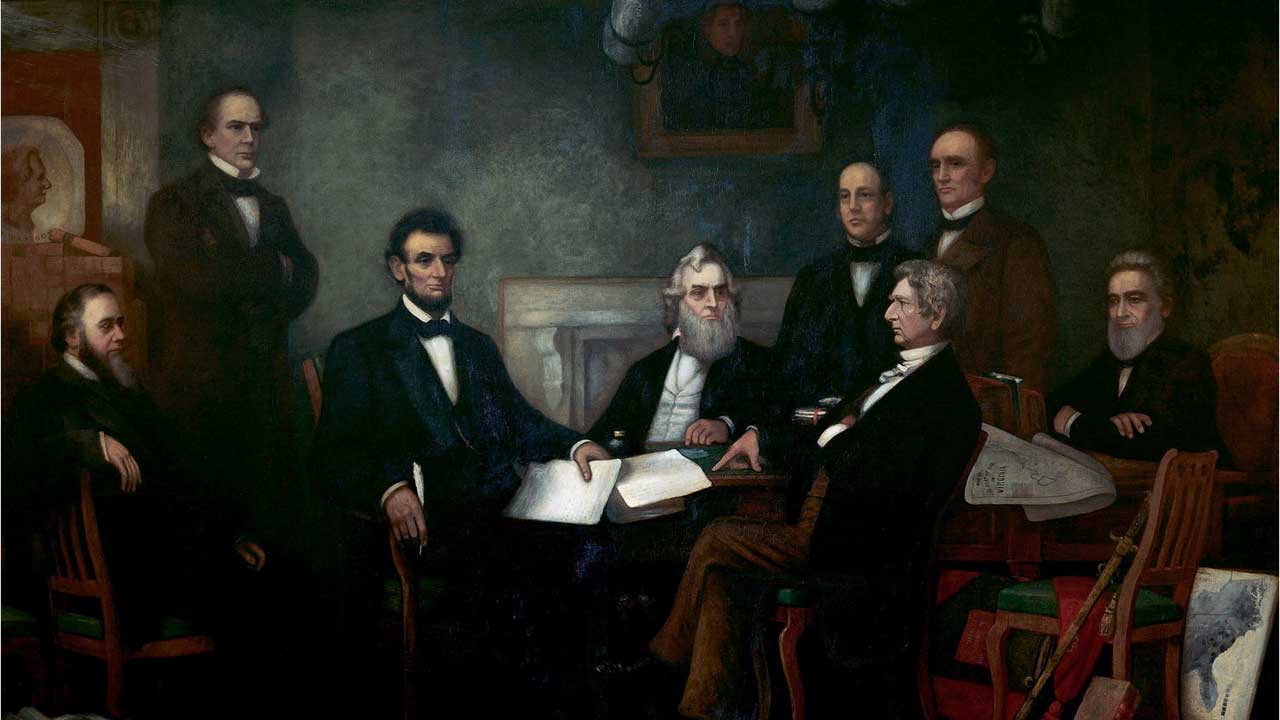
So, let’s fast forward now to the Emancipation Proclamation that we’re supposed to believe “freed the slaves”.
A first clue that it did no such thing is the explicit acknowledgement on the National Archives website that it “did not end slavery in the nation”; instead, “it captured the hearts and imagination of millions of Americans and fundamentally transformed the character of the war.”
The latter is obviously quite different from the former, and it also wipes from the historical record criticism of Lincoln’s Proclamation among northern abolitionists.
The government’s own summary at the National Archives also admits that the Proclamation “applied only to states that had seceded from the United States, leaving slavery untouched in the loyal border states”; and it also exempted “parts of the Confederacy (the Southern secessionist states) that had already come under Northern control.”
Obviously, if the purpose were to free the slaves, then such exemptions would not have been included in the document. Declaring slaves to be freed was instead merely a means to the end, and the proclamation served another purpose entirely, which the National Archives also succinctly summarizes by saying, “It added moral force to the Union cause and strengthened the Union both militarily and politically.”
In other words, the Emancipation Proclamation functioned as political propaganda to encourage slave uprisings and to try to gain support for the war effort among people morally opposed to slavery.
That function of the proclamation was made obvious by Lincoln’s message that he would not attempt to utilize his executive authority to free slaves in northern slave states or southern states that surrendered.
On August 23, 1862, the Daily National Intelligencer published a letter from Lincoln in which he explicitly clarified,
My paramount object in this struggle is to save the Union, and is not either to save or to destroy slavery. If I could save the Union without freeing any slave I would do it, and if I could save it by freeing all the slaves I would do it; and if I could save it by freeing some and leaving others alone, I would also do that.
Lincoln proceeded along the lines of the morally compromised third option.
After the Battle of Antietam, on September 22, 1862, Lincoln issued his preliminary Emancipation Proclamation, which explicitly stated the singular purpose of the war as being “prosecuted for the object of practically restoring the constitutional relation between the United States, and each of the States, and the people thereof”.
Far from being an anti-slavery document, it was instead an ultimatum from Lincoln to the southern states to surrender, in which case they could keep their slaves.
Lincoln proclaimed,
That on the first day of January in the year of our Lord, one thousand eight hundred and sixty-three, all persons held as slaves within any State, or designated part of a State, the people whereof shall then be in rebellion against the United States shall be then, thenceforward, and forever free; and the executive government of the United States, including the military and naval authority thereof, will recognize and maintain the freedom of such persons, and will do no act or acts to repress such persons, or any of them, in any efforts they may make for their actual freedom. [Emphasis added.]
Read that carefully. He was saying that he’d use the power of the federal government to free slaves only in states that refused to surrender by the first of January 1863.
In other words, surrender now to preserve the institution of slavery within your state borders.
When that day came, with the War of Northern Aggression still ongoing due to the Confederate states’ refusal to surrender, Lincoln issued the final Emancipation Proclamation.
After reminding of his ultimatum of September 22, Lincoln named the states still acting in what he called “armed rebellion against the authority and government of the United States”. Then came the key passage:
And by virtue of the power, and for the purpose aforesaid, I do order and declare that all persons held as slaves within said designated States, and parts of States, are, and henceforward shall be free; and that the Executive government of the United States, including the military and naval authorities thereof, will recognize and maintain the freedom of said persons.
Of course, merely declaring the freedom of people held in servitude didn’t actually accomplish their emancipation.
The Union was already no longer constitutionally obligated to return “fugitive slaves” to servitude by virtue of the southern states’ withdrawal from that contract, so the proclamation did nothing to alter that.
That left the actual execution of the proclamation limited to emancipating slaves in conquered southern territory, with the tricky questions left deferred about the constitutionality of the federal government waging war against seceded states and then proclaiming emancipation of slaves only in states still considered in “rebellion” against federal authority.
Obviously, that question wasn’t resolved until the ratification of the Thirteenth Amendment on December 6, 1865, after General Robert E. Lee’s surrender of the Confederate army on April 9, and also after Lincoln’s assassination on April 14.
The fact that the Emancipation Proclamation was primarily a public relations effort was astutely observed in the New York Herald on January 3, 1863:
In round numbers we may say that the slaves declared free by the proclamation are three millions, while those continued in bondage are a million. It is a curious fact, too, that while with a few exceptions, President Lincoln [continues to] subject to slavery those parts of the rebellious States wherein his decree can be enforced, he emancipates the slaves in those States and districts which are at present beyond his reach. Thus, excepting a few hundred slaves, here and there within the lines of our armies, not excluded by the proclamation, it is practically a dead letter, and for the present, at least, amounts to nothing as a measure of emancipation. The advocates of “human rights” upon the basis of negro equality will be sorely puzzled to comprehend the humanity, justice or consistency of these remarkable discriminations of Mr. Lincoln in favor of slavery where he may practically proclaim freedom, and in favor of liberty where he has no power to enforce it; but it must be remembered that this edict is a war measure, and that negro philanthropy has nothing to do with it. [Emphasis added.]
Secession and Nullification Are the Answer
Question 75 of the current US Citizenship test asks, “What was one important thing that Abraham Lincoln did?”
One of the three acceptable answers specified is “freed the slaves (Emancipation Proclamation)”.
Question 76 asks more directly, “What did the Emancipation Proclamation do?”
The expected answer is “freed the slaves”, with contextual nuance allowed for “in the Confederacy”, “in the Confederate states”, or “in most Southern states”, consistent with Lincoln’s exemptions.
Consequently, the only answers considered “correct” for this question on the test are all false.
We may again recall the acknowledgment from the National Archives that the Emancipation Proclamation in fact “did not end slavery”; nor was that Lincoln’s purpose in issuing his proclamation, as explicitly clarified by Lincoln himself.
We are supposed to consider Abraham Lincoln “the Great Emancipator”, but he was no friend of liberty.
It’s true that he opposed slavery, but that wasn’t why he waged war on the southern states. The sole purpose of his aggression was rather to prevent the people of those states from exercising their right to self-determination.
Of course, it was grandly hypocritical for any southerner to insist on their own right to independence while supporting the enslavement of their fellow man, but the fact that slavery is evil doesn’t negate the fact that the states had—and have—a right to secede from the Union.
Far from “saving” the Union, Lincoln destroyed its very foundations.
His purpose was to establish the federal government as sovereign over the states, instead of each state being its own sovereign power, in direct violation of the very Constitution he absurdly claimed to be upholding.
Lincoln manifestly rejected the self-evident truth that governments derive just powers only from the consent of the governed; he denied that when it becomes necessary for political bands to be dissolved, people have a right to declare their independence.
A more appropriate response by northern states to the southern states’ insistence on slavery would have been to say, fine, you can keep the Union, and we will secede from it and form our own confederation with a new constitution explicitly applying the principles expressed in the Declaration of Independence to all human beings, without exceptions for inhabitants native to the continent or with African ancestry.
But that’s not what happened.
The perversely misnamed “Civil War” was the key event in US history whereby the very concept of state sovereignty was effectively destroyed.
To restore state sovereignty, as a means toward decentralization of power and greater local autonomy, secession remains an open route.
Short of that, it was the non-slaveholding northern states who had the right idea by effectively nullifying the unjust Fugitive Slave Clause of the US Constitution.


