

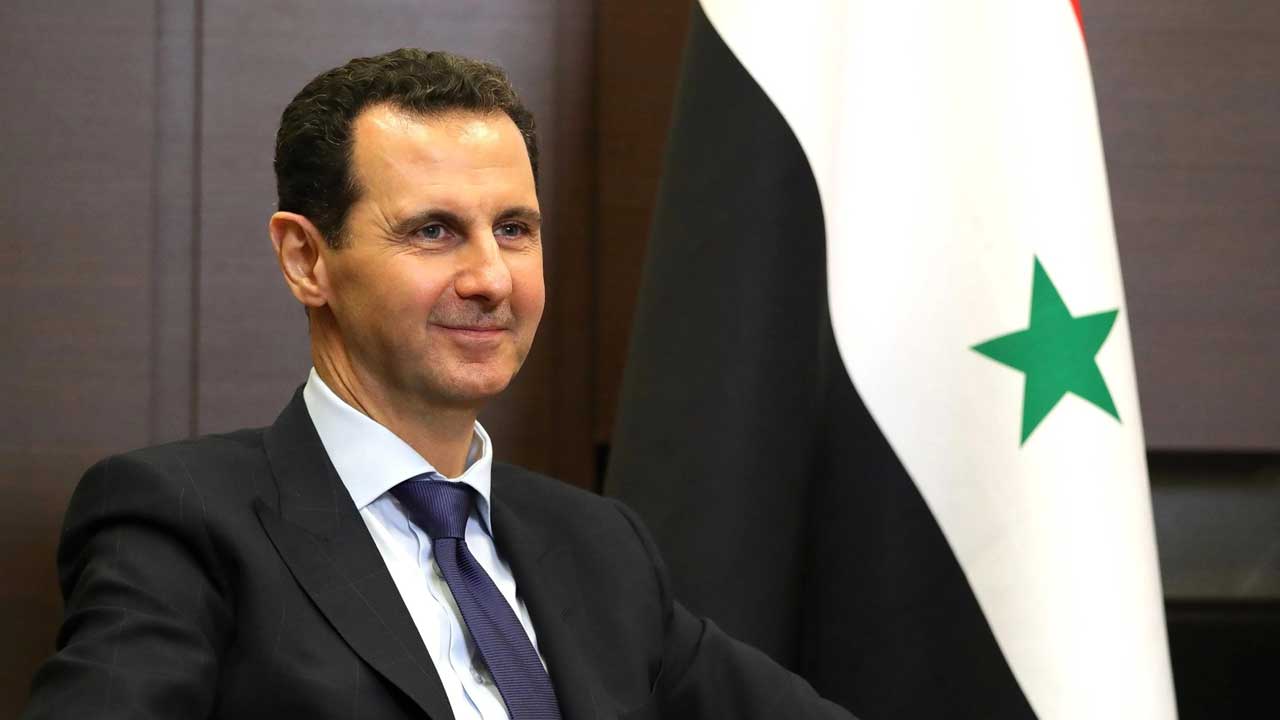
There has been a growing narrative in the media that it is necessary for the U.S. to act with a full-scale military intervention in Syria to topple the government of President Bashar al-Assad, with the usual myopic and willfully dishonest arguments.
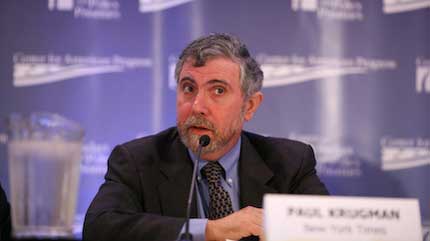
Thomas L. Friedman, for example, in the New York Times opines that to simply directly arm the rebels to topple the Assad regime would be a mistake, because doing that would result in yet another chaotic war in Syria between Sunnis, Alawites, and Kurds. His suggestion is that “we not only need to arm the rebels but we need to organize an international peacekeeping force to enter Syria as soon as the regime falls to help manage the transition.”
Friedman naturally does not mention the fact that the U.S. has already been intervening to prolong and escalate the violence, such as by coordinating the flow of arms to the rebels, or that most of these arms have ended up in the hands of Islamic extremists, such as the al-Nusra Front, which is essentially an extension of al-Qaeda in Iraq. The willful omission of these facts is a key element of the current propaganda campaign to manufacture consent for yet another war in the Middle East.
In an even grosser example of warmongering, Ray Takeyh makes the argument in a Times op-ed that the U.S. needs a full-scale military intervention in Syria in order to maintain its credibility and send a message to Iran that it is serious.
He speaks of the “Iran’s recalcitrant mullahs” and the need to “scale back their nuclear zeal and conform to international nonproliferation agreements”, which is the usual euphemistic way of saying that Iran, which is abiding by its obligations under the Nuclear Non-Proliferation Treaty (NPT), must surrender what the treaty describes as an “inalienable right” to research and develop nuclear technology for peaceful purposes, including uranium enrichment.
What he wants readers to believe is that Iran is working on building nuclear weapons, even though there is no credible evidence for this and the U.S.’s own intelligence community assesses that Iran has no active nuclear weapons program.
Takeyh warns against making a “tentative and halting” intervention in Syria because nothing short of “an overwhelming show of military force” that includes “putting boots on the ground” could “end Syria’s civil war or intimidate Iran’s rulers.” Again, apart from the usual Orwellian logic that to bring peace it is necessary that we make war, the fanciful notion that the U.S. government has a benevolent intent to stop the bloodshed is belied by the fact that it has already intervened to help escalate the civil war.
“America must accept the need for a robust intervention”, Takeyh opines in the Times, which is certainly no stranger to acting as a propaganda outlet by publishing warmongering articles calling on the U.S. government to violate its own Constitution as well as international law in order to manufacture consent for its criminal foreign policies (one may recall, to cite perhaps the most obvious example, how the Times uncritically parroted government officials’ lies about Iraq’s alleged weapons of mass destruction, repeating them as fact to its readers).
Making the case that the U.S. needs to reestablish its credibility, Takeyh argues that America must “convince Iran’s leaders” that it has “an appetite for fighting a major war in the region”.
He throws in the usual appeals to the humanitarian sensibilities of the American public, suggesting that the “vicious Mr. Assad” is someone “who has no qualms about carrying out ethnic cleansing in a struggle to the death.” He thus falls short of actually claiming the Syrian government is presently engaging in ethnic cleansing while nevertheless making the implicit hypothetical argument that a U.S. war on Syria would be a humanitarian intervention to prevent such from occurring. Never mind that, as Thomas L. Friedman warned, overthrowing Assad would likely result in an even more chaotic and violent situation than the one that already exists, with the predictable dire humanitarian consequences.
He also asserts that the “the Assad regime appears to have violated all norms of warfare by using chemical weapons against civilians”, an assertion he has simply parroted from U.S. government officials, whose claims have been called into question by observes, including by a U.N. investigation that found no evidence that the Syrian government had used chemical weapons, but that the U.S.-backed rebels, on the other hand, may have.
And for good measure, he throws in more about “Iran’s mischief and subversion” in the region. Americans are supposed to fear Iran and consider it a threat to the U.S. Thus Takeyh repeats such government propaganda as the old line, constantly asserted without evidence, that “Iranian proxies in Iraq systematically assaulted American troops with I.E.D.’s and helped derail their mission”.
Implicit in such warmongering arguments is the belief that Americans are incapable of learning from the lessons of the past and may yet again be duped into supporting (or at least remaining apathetically indifferent) yet another war. Whether this assumption will hold true this time around or not remains to be seen.
Originally published at Foreign Policy Journal.

The drums were put in position years ago:
https://www.liveleak.com/view?i=6b6_1371812647
I guessed before clicking that this would be the video of Wesley Clark talking about how the neocons planned after 9/11 to overthrow the regimes of seven countries, beginning with Iraq and moving down the line to Syria, etc., but I see its more recent. Yes, interesting comments. Of course, the US mainstream media would never publish comments like this from France’s ex-FM, for the obvious reason that we just aren’t supposed to know the truth.
I agree. And the interview seems to confirm Sibel Edmonds’s posts:
https://www.boilingfrogspost.com/2011/11/21/bfp-exclusive-syria-secret-us-nato-training-support-camp-to-oust-current-syrian-president/
and
https://www.boilingfrogspost.com/2011/12/15/syria-coverage-update-bbc-reporter-was-detained-prevented-from-covering-us-nato-syrian-operations-in-turkey/