

Table of Contents
NBC Deliberately Withholds Knowledge of COVID‑19 Vaccine ‘Original Antigenic Sin’
If you’ve been a member of the health freedom movement for a long time, you are probably familiar with Dr. Paul Offit, who helped develop Merck’s rotavirus vaccine, has sat on both the CDC’s and FDA’s vaccine advisory committees, and heads the Vaccine Information Center out of the Children’s Hospital of Philadelphia.
He once wrote a New York Times article accusing parents of unvaccinated children of child abuse and advocating the use of government force to coerce parents against their will into vaccinating their children on the grounds that if Jesus were here with us on Earth today, that’s what he would do.
Understandably, therefore, he is viewed as a villain within the health freedom community. And when someone as “pro-vaccine” as Offit departs from the official narrative about one of these pharmaceutical products, you know something is up.
That’s exactly what Offit has done with COVID‑19 vaccines. Back in June 2022, he was one of two advisory committee members who voted against recommending COVID‑19 vaccine booster shots redesigned to include an Omicron mRNA component to cause recipients’ cells to produce the shared spike protein of the BA.4 and BA.5 subvariants in addition to the spike of the original Wuhan strain.
And now, NBC reports, Offit has written an article published in the New England Journal of Medicine expressing his dissent about the use of these bivalent shots.
The headline is “Younger, healthy people don’t need another Covid booster, vaccine expert says”, and it’s an excellent example of how the mainstream media keep the public in the dark about the most important information they need to know about whatever topic they are reporting about.
In this case, NBC withholds from the public the knowledge that COVID-19 vaccines have a detrimental effect on people’s immune system known in the literature as “original antigenic sin”.
I was warning about the potential for the vaccines to cause this problem since the start, but the media have almost never mentioned it. Until recently, I could count the number of instances I’d seen it mentioned in the mainstream media on one hand. There has been a spate of articles acknowledging the problem more recently.
On those super rare occasions when it’s mentioned, they typically don’t use the term “original antigenic sin” and instead adopt the uninformative label “immune imprinting”, which is also used in the literature but seems to me to be a label designed to communicate to the public that there is nothing unusual going on here, nothing to see, just an immune system imprinting a response to a virus.
After all, every virus infection imprints an immune response, and it’s a good thing when the immune system retains a memory of that response so it can always react promptly upon reexposure to the same virus. That’s called long-term immunity.
But more often than not, instead of miseducating people about the immunological phenomenon, the media simply ignore it altogether, pretending as though it is not an acknowledged fact in the scientific literature that this is a detrimental effect of the mRNA COVID‑19 vaccines.
NBC quotes Offit saying that, at the time of the FDA’s July vote and August emergency use authorization of the reformulated vaccines, the evidence that the bivalent booster shots would provide better protection against Omicron subvariants was “underwhelming”. Offit is also paraphrased expressing his view that while elderly people at high risk should consider the booster, it “may not be practical” for young healthy people.
The article goes on to challenge Offit’s dissident viewpoint by saying that, while there was no data from human studies at the time of the FDA’s authorization, and while early data from animal studies suggested that the reformulation didn’t generate a better immune response than the original formula, studies have since “found that the new vaccines did offer increased protection against the omicron subvariants”.
That’s a deception, though, too. NBC supports that claim by citing a single source, the CDC. The primary source is a CDC study that did not even compare the effectiveness of the bivalent booster compared to a booster shot with the original formulation. Instead, the CDC researchers only asked the question of whether the shot actually boosted the protection afforded by circulating antibodies compared to prior receipt of vaccines after months of waning.
NBC’s claim is false. It is citing an irrelevant study in the context of the question of whether the bivalent booster provides more protection against currently circulating strains than a monovalent booster. Since the study didn’t ask that question, logically, it can’t possibly have answered it.
The transparent purpose of that deception is to characterize Offit’s dissident position as being wrong. But contrary to NBC’s false narrative, the CDC’s finding that a bivalent booster shot restores some protection against symptomatic infection is not at odds with Offit’s observation that the evidence that these reformulated boosters provide significantly greater protection against Omicron than the original formulation is “underwhelming”.
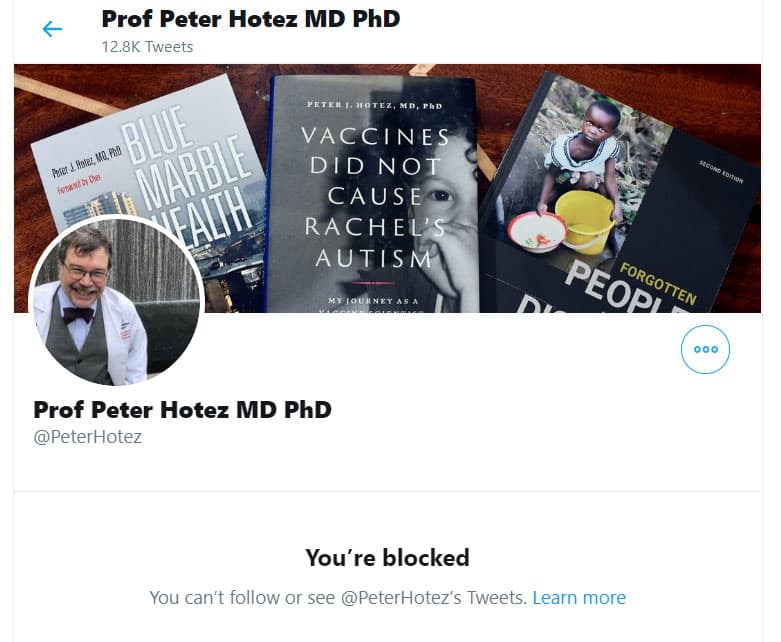
In furtherance of its aim, NBC also paraphrases the co-director of the Center for Vaccine Development at Texas Children’s Hospital, Dr. Peter Hotez, objecting to Offit’s view on the grounds that “the boosters still lower the risk of Covid infections and severe illness—and in turn lower the risk of getting long Covid.”
Further, NBC quoted Dr. Ofer Levy, another member of the FDA’s advisory committee, saying that the benefit of a bivalent booster for younger people may be lower than for older adults, but “It is not zero.”
Curiously, NBC managed to withhold from the public the single most salient fact contained in Offit’s New England Journal of Medicine article.
Offit’s article, titled “Bivalent Covid-19 Vaccines — A Cautionary Tale”, does not just say that the data do not support the use of a bivalent booster instead of a monovalent booster, and it does not just say that the bivalent booster might not be a practical solution for preventing COVID‑19 in younger, healthier people.
One interesting remark Offit makes is that, “For vaccines against SARS‑CoV‑2, a mucosal infection with a short incubation period, protection from severe disease is the only reasonable and attainable goal.”
That is a very diplomatic admission that these vaccines were never designed to prevent infection and transmission and cannot do so.
But the key piece of information that NBC withholds is Offit’s acknowledgment that original antigenic sin is a real problem with these vaccines—an acknowledgment that they can have a detrimental effect on people’s immune systems.
Whereas NBC wants us to reason that since the effectiveness of the bivalent booster “is not zero”, therefore it’s a good idea for everyone who is eligible to get it, in truth, numerous studies have found that, after low initial effectiveness against more recently circulating variants and several months of waning protection, vaccinated effectiveness becomes significantly negative. This increased risk of SARS‑CoV‑2 infection among vaccinated people is explainable by the immunologic phenomenon of original antigenic sin.
I have written much about negative effectiveness and original antigenic sin. Indeed, I was warning from the start of the risk that COVID‑19 vaccines could have this detrimental effect on people’s immune systems. Most recently, I wrote about negative effectiveness and original antigenic sin, respectively, in my articles “Moderna Study Shows Negative Vaccine Effectiveness within 5 Months after a Booster Shot” (November 7, 2022) and “Another Omicron Booster Shot Study Reveals Original Antigenic Sin” (November 19, 2022).
Offit doesn’t mention the fact that numerous studies have found negative vaccine effectiveness after a period of rapid waning, but he does admit that original antigenic sin is a problem, although he opts for the “immune imprinting” label.
“Why did the strategy for significantly increasing BA.4 and BA.5 neutralizing antibodies using a bivalent vaccine fail?” Offit reasonably asks.
Note that he does not suggest that the bivalent boosters have failed in their stated aim. He states it as a known fact.
That’s because, contrary to NBC’s deceitful propaganda narrative that studies have since found these boosters to be superior to a monovalent booster, studies have in fact found that the reformulated shots result in antibodies still directed at the ancestral Wuhan strain, and the modest neutralization of Omicron subvariants that occurs is not due to the shot “updating” the immune response to be specific to Omicron, as falsely advertised by the FDA; rather, the low initial effectiveness is simply due to a certain level of cross-reactivity of these antibodies to the spike protein of Omicron subvariants.
That is original antigenic sin. What it means is that natural immunity, which is broader and more adaptive than vaccine-induced immunity, must be considered an opportunity cost of vaccination.
Indeed, Offit’s own answer to the question is that “The most likely explanation is imprinting. The immune systems of people immunized with the bivalent vaccine, all of whom had previously been vaccinated, were primed to respond to the ancestral strain of SARS‑CoV‑2.”
It is not only due to the lackluster performance of the bivalent boosters but also because of the detrimental effect of repeated vaccinations on the immune system that Offit expressed his view that “we should stop trying to prevent all symptomatic infections in healthy, young people by boosting them with vaccines containing mRNA from strains that might disappear a few months later.”
Yet, the NBC report about Offit’s article completely omits that critical detail.
So, not only does NBC mischaracterize the nature of scientific findings in the literature with respect to the question of whether the bivalent vaccines have lived up to the FDA’s promise that they would “update” the immune response to be specific to Omicron subvariants, but it willfully withholds from the public the knowledge of the scientifically demonstrated fact that these vaccines have a detrimental effect on people’s immune systems.
That is a perfect example of how the mainstream media fulfill a propaganda function. Instead of doing journalism, NBC is doing policy advocacy by misinforming the public and deliberately withholding key knowledge that is absolutely required for individuals to be able to make a truly informed choice about whether to get a bivalent booster shot.
The Additional Problem of Antibody Class-Switching to IgG4
The detrimental effect of the mRNA COVID‑19 vaccines on the immune system is not limited to the phenomenon of original antigenic sin. On July 10, 2022, a study was published to the preprint server medRxiv titled “Class switch towards non-inflammatory IgG isotypes after repeated SARS-CoV-2 mRNA vaccination”. That study has since been peer-reviewed and on December 12, 2022, was published in the journal Science Immunology under the slightly modified title “Class switch towards non-inflammatory, spike-specific IgG4 antibodies after repeated SARS-CoV-2 mRNA vaccination”.
Contrary to the false claim from the mainstream media’s faux “fact checkers” that the mRNA from COVID‑19 vaccines and the spike protein the mRNA causes the cells to produce disappear from the body “within days” of vaccination, that study noted both vaccine mRNA and spike protein could be found in people “several weeks after vaccination”.
Other studies have measured the duration of persistence of mRNA and spike protein in some vaccinated individuals in terms of months, not mere weeks, as I review in my article “Fact Check: COVID‑19 Vaccine mRNA and Spike Protein Are Not Cleared ‘Within Days’”.
More salient for our purpose here, the study also found that two doses of Pfizer’s mRNA COVID‑19 vaccine resulted in a switching of the class of antibodies generated by the immune system from types that neutralize the virus to a type that can also bind with spike protein of SARS‑CoV‑2, but which instead of messaging the immune system to attack and destroy might tell the immune system that there’s nothing to see here.
As the study authors wrote:
Here, we report on the analysis of two independent cohorts of vaccinated health-care workers, who developed an increase in anti-spike IgG4 antibodies and IgG4-switched memory B cells five to seven months after the second mRNA immunization with Comirnaty. This response was further boosted by a third mRNA vaccination and/or by breakthrough infections with SARS‑CoV‑2 VOC [variants of concern]. . . .
Intriguingly, 210 days after the second immunization, the levels of spike-specific IgG4 antibodies exceeded the lower limit of quantification in the sera of about half of the vaccinees. . . .
Notably, a marked increase in IgG4 antibody levels was observed after the booster immunization in nearly all vaccinees. Until this time point, none of the participants reported an episode of SARS‑CoV‑2 infection and we could also not detect anti-nucleoprotein antibodies in any of the serum samples.
. . . Notably, the relative contribution of IgG4 antibodies to the total pool of anti-S IgG increased over time, arguing against a transient expansion of short-lived plasmablasts after the third immunization. In four individuals IgG4 even became the most prominent IgG subclass after the third immunization. Specifically in individuals having experienced an additional infection, IgG4 antibodies accounted for 40–80% of all anti-S [spike protein] antibodies.
Further into the paper, the researchers comment on the impact of “breakthrough” infections on the antibody response of vaccinated individuals: “The fact that individuals who experienced a breakthrough infection after being three times vaccinated with mRNA, showed the highest IgG4 levels in cohort 1”, which was comprised of people who had received the two primary doses plus a booster shot with the original formulation of Pfizer’s vaccine, “suggested that infections with SARS‑CoV‑2 can also activate IgG4-switched memory B cells.”
There is no evidence that I know of that this occurs in naturally immune people, so that would also be a consequence of the detrimental effect of original antigenic sin on vaccinated people’s immune systems.
As the study authors further comment:
Consistent with our previous findings, IgG4 levels were generally higher in individuals having received three compared to two mRNA vaccinations. Interestingly, in the cohort that had two mRNA vaccinations before breakthrough infections, only three individuals developed IgG4 antibodies that were above the lower limit of quantification. These three individuals experienced the infection with the largest time difference to the last vaccination, at 95, 201 or 257 days after the second vaccination, while in the other nine patients the infection took place between 25 and 78 days after the second mRNA shot. This supports the hypothesis that the switch to IgG4 is a consequence of ongoing GC [germinal center] maturation and that it takes several months until IgG4-switched memory B cells appear.
A key point to take away from these comments is that receipt of a booster shot worsened this problem of IgG class-switching.
The authors stated that their data “are consistent with the hypothesis of a slowly developing pool of IgG4-switched memory B cells after two doses of mRNA vaccines”, but this result was significantly less notable in people who received a booster shot from a vaccine that instead of delivering mRNA to instruct the cells to produce the spike protein delivers the spike engineered onto an adenovirus backbone, or a so-called “vector-based” vaccine.
They argued that this contradicted “the hypothesis that repeated exposure to the spike protein itself triggers the unusual IgG4 response.” Instead, it favored the hypothesis that the cause is “a prolonged presence of vaccine mRNA or antigen [i.e., spike protein] in the lymph node”.
As the authors remarked, “Independent of the underlying mechanism, the induction of antiviral IgG4 antibodies is a phenomenon infrequently described and raises important questions about its functional consequences.”
Indeed.
Like Offit, they also pointed out that these vaccines “do not confer sterilizing protection”, meaning that they do not prevent infection and transmission of SARS‑CoV‑2. Returning to the observed class-switching, they hint at how this is not only an unexpected but an undesirable effect of vaccination:
High levels of antigen-specific IgG4 have been reported to correlate with successful allergen-specific immunotherapy by blocking IgE-mediated effects. In addition, increasing levels of bee venom-specific IgG4 have been detected in beekeepers over several beekeeping seasons and finally even became the dominant IgG subclass for the specific antigen . . . .
In other words, IgG4 antibodies are associated not with neutralization of pathogens but of immune tolerance toward foreign entities in the body.
The observed “increase in IgG4 subclasses might result in longer viral persistence in case of infection”, the authors note (emphasis added).
Their concluding words are worth quoting at length:
In a cohort of vaccinees with breakthrough infections, we did not obtain any evidence for an alteration of disease severity, which was mild in almost all of our cases. Larger cohorts with differential disease severities will be needed to address this aspect in the future. However, our results clearly demonstrate that a subsequent infection can further boost IgG4 antibody levels, with IgG4 becoming the most dominant among all anti-spike IgG subclasses in some individuals.
In summary, our study demonstrates an mRNA vaccine-induced antiviral IgG4 antibody response appearing late after secondary immunization. Further investigations are needed to clarify the precise immunological mechanisms driving this response and to evaluate whether an IgG4-driven antibody response affects subsequent viral infections and booster vaccinations. This is not only relevant for potential future vaccine campaigns against SARS‑CoV‑2, but also for new mRNA-based vaccine developments against other pathogens.
The implication of these findings is that in some individuals, mRNA COVID‑19 vaccination results eventually in the production of predominantly IgG4 antibodies, which are associated not with virus neutralization but the phenomenon of “immune tolerance”.
For example, a narrative review in the journal Acta Medica Academica in 2020 explained that “Non-responsiveness to self- or to harmless foreign antigens with means of multiple mechanisms is known as immune tolerance; a non-inflammatory, non-proliferative and suppressive response . . . . Allergic diseases, autoimmunity and transplant rejection are the best illustrations of immune tolerance loss.”
In other words, immune tolerance is a good thing if we are talking about harmless foreign allergens like food or pollen, but when we are talking about a pathogenic virus, obviously, immune tolerance is not good.
As the narrative review concludes, “As both excessive and deficient immune tolerance lead to a number of disorders, evaluation of the tolerance intensity is important. Development of biomarkers that will reveal tolerance status is of great importance. In a peremptory way, a ‘balanced tolerance’ is essential for the survival.
A review published in the International Journal of Molecular Sciences in 2020 similarly explains (bold emphasis added):
Among the four immunoglobulin G (IgG) subclasses, IgG4 is the least represented in serum of a healthy human and it is considered an “odd” antibody. . . . Altogether, these characteristics support anti-inflammatory roles of IgG4 leading to immune tolerance. Under conditions of chronic antigenic stimulation and Th2-type inflammation, both tissue and serum IgG4 levels are increased. This review seeks to highlight how in allergen immunotherapy IgG4 can confer a protective role as a “blocking” antibody and safeguard from subsequent allergen exposure, while IgG4 can confer immunomodulatory functions to support malignancy.
In keeping with the hypothesis that it is the persistence of vaccine mRNA in addition to the spike protein in the body that is driving the class-switching observed with Pfizer’s product, the review states that “chronic antigen stimulation drives B cell class switching to IgG4”.
As the review authors further explain:
As outlined above, IgG4 serum levels increase, mostly following repeated or chronic exposure to the antigen. On one side, elevated tissue and serum levels of IgG4 are associated with chronic inflammation in several pathological conditions, such as rheumatoid arthritis, IgG4-related diseases (IgG4-RD), and pemphigus vulgaris. On the other side, elevated levels of IgG4 are also associated with immune tolerance. In fact, antigen exposure can also induce specific immune tolerance, for instance to bee venom after allergen-specific immunotherapy (AIT) in beekeepers. However, elevated IgG4 is also associated with immune escape in helminthic and filarial parasitosis, and is observed in malignancies, such as melanoma, extrahepatic cholangiocarcinoma, pancreatic cancer, gastric cancer, colorectal cancer, and glioblastoma, potentially associated with unfavorable prognosis.
In sum, the scientific evidence indicates that vaccination has a detrimental effect on the immune system, resulting in a fixation of antibody responses to remain specific to the antigen of original exposure, which is the spike protein of the ancestral strain of SARS‑CoV‑2, which compares to the adaptive immune responses associated with natural immunity, whereby the immune system is able to update itself so that its responses are more appropriate for the newly infecting variant.
Additionally, the persistence of vaccine mRNA along with persistence of spike protein in vaccinated individuals appears to be driving a class-switching of antibodies from the type that are at least somewhat capable of neutralizing SARS‑CoV‑2 to a type of antibody, IgG4, that is instead associated with “immune tolerance”. While this type of antibody can still bind with the spike protein, instead of telling the immune system to attack and destroy the virus, it might instruct the immune system to ignore the pathogen and treat it as self, or as a harmless foreign antigen.
One would think that the scientific findings reported in the Science Immunology study would be considered newsworthy by the media. But have you seen any headlines about it in the New York Times, Washington Post, CNN, ABC, NBC, CBS, or any other mainstream media outlets? I sure haven’t.
The article from NBC reporting Dr. Paul Offit’s dissenting view about the bivalent mRNA COVID‑19 booster shots is a perfect example of how the legacy media serve to manufacture consent for public vaccine policy rather than properly informing individuals to be able to make an informed choice about whether to accept these risk-carrying pharmaceutical products.


This is an amazing article that should be shared everywhere. Thank You.
Thank you for the feedback and for sharing!