Table of Contents
[Retraction, June 6, 2023: I am retracting the main conclusion I presented in this article, which is that the video report from The Paper cited by Dr. Michael Worobey in his Science paper contradicts a symptom onset date for Mr. Chen of December 16, 2020. I maintain my secondary conclusions that the evidence remains consistent with an onset date of December 8 as reported by the WHO and that the question of whether the first known COVID‑19 case was Mr. Chen or Ms. Wei is practically irrelevant since everyone agrees neither of these individuals were the first ever infected with SARS‑CoV‑2. I also maintain my conclusion that the whole “racoon dog” story was a hoax, as elaborated in my April 11 follow-up article “The Origin of SARS-CoV-2 and the Raccoon Dog Deception”.
The reason I’m retracting my primary conclusion is that I have since learned that I made a major error of my own, which discovery was a result of additional information being provided to me by TheEngineer2, a member of DRASTIC, a team of researchers dedicated to investigating the origins of SARS‑CoV‑2. In a Twitter thread, TheEngineer2 discussed my article, and I was also presented privately with additional details, including a key piece of information that I had gotten wrong. Specifically, had placed Mr. Chen in Jinyintan Hospital on December 22, 2020, based on my reading of the paper in the Chinese Medical Journal.
That comparatively minor error resulted in me making a much more critical error in my analysis. After conducting a reanalysis of the timeline, I have concluded that the main conclusion I originally presented in this article is wrong, and I have therefore stricken some of my prior statements and otherwise made corrections and clarifications to the text below (added with italicized text in square brackets). I regret my error and am grateful to TheEngineer2 for reviewing my work and providing me with the additional information that helped me to see how I had erred.
Notably, while I was unaware of it at the time I wrote this article, DRASTIC team member Francisco de Asis had identified the symptom onset date of Mr. Chen as December 16, 2020, long before Dr. Worobey’s revisionary paper was published in Science, and it now appears to me that Worobey was essentially taking credit for discrepancies in the timeline that were first identified by others; the mainstream media certainly credited Worobey for this timeline revision even though the DRASTIC team had publicly drawn the same conclusion months earlier.]
Introduction
On November 18, 2021, a New York Times headline declared, “First Known Covid Case Was Vendor at Wuhan Market, Scientist Says”. The scientist had pieced together his own timeline of early cases and found what he said was a mistake in a report from the World Health Organization (WHO): the symptom onset date of December 8, 2019, for an accountant identified as Mr. Chen, was wrong; sources show that his symptoms didn’t first appear until December 16.
According to the corrected timeline, the Times reported, the significance of that ostensible error is that it made the first known case a woman named Wei Guixian, who developed symptoms around December 11. This revised timeline, the Times and the paper’s author asserted, thus strengthened the argument that SARS‑CoV‑2, the coronavirus that causes COVID‑19, was not created in a laboratory through genetic experimentation but first leapt to humans from an animal in the Huanan Seafood Wholesale Market in Wuhan, China.
The name of that scientist was Dr. Michael Worobey, a member of the same team of researchers who recently published a paper on the preprint server Zenodo claiming that new genomic data reveal that one or more raccoon dogs were present in the Huanan market at the time of the outbreak of COVID‑19 in Wuhan in late 2019.
Their new analysis, which is based on metagenomic sequence data from samples taken at the market in January and February of 2020 by researchers from the Chinese Center for Disease Control (CCDC), was first reported by The Atlantic on March 16, 2023,under a headline describing their finding as “The Strongest Evidence Yet That an Animal Started the Pandemic”. It has since been making the rounds in other media headlines.
Concealed from the mainstream media’s coverage of this new evidence, though, is the alternative perspective that, if this is the strongest evidence yet for the zoonotic origin hypothesis, it just makes the case for a lab origin all that much stronger.
In addition to Michael Worobey, coauthors of the new analysis include Angela L. Rasmussen, Kristian G. Andersen, Andrew Rambaut, Edward C. Holmes, and Robert F. Garry, the latter four of whom were also the authors of the influential paper published in Nature on March 17, 2020, titled “The proximal origin of SARS‑CoV‑2”.
That is the early paper that was aimed, in the words of lead author Kristian Andersen, at “trying to disprove any type of lab theory”.
The team drafted the paper after participating in a conference call with Dr. Anthony Fauci, the Director of the National Institute of Allergy and Infectious Diseases (NIAID) under the National Institutes of Health (NIH), and Dr. Francis Collins, Director of the NIH.
In an email to the editors of Nature on February 12 requesting publication of the paper they were working on, Andersen admitted to having been “Prompted by Jeremy Farrah [sic], Tony Fauci, and Francis Collins” to “provide agnostic and scientifically informed hypothesis around the origins of the virus.”
Misspelling his last name, Andersen was referring to Jeremy Farrar, director of the Wellcome Trust from 2013 until February 25, 2023. Farrar recently stepped down from that role to take up the position of Chief Scientist of the WHO. Farrar was also a participant of the teleconference and email exchanges with Fauci and others that preceded the publication of the “Proximal Origins” paper.
Fauci was sent a draft of the paper for his review prior to its publication.
In the “Proximal Origins” paper, Andersen and colleagues pointed to pangolins as the most likely intermediary host species through which SARS‑CoV‑2 made the leap from bats to humans. The pangolin hypothesis has since been abandoned—another detail omitted in the Atlantic article and other mainstream media reports headlining the new chief suspect, the raccoon dog.
Fauci and Collins had a good reason to organize this effort to try to quash the lab origin hypothesis: the NIAID and NIH had funded an organization called EcoHealth Alliance that in turn funneled money to researchers from the Wuhan Institute of Virology who were conducting genetic experimentation with coronaviruses, including engineering spike proteins from various bat coronaviruses onto the backbone of a SARS-like coronavirus named WIV1 and testing whether it was capable of infecting human cells using mice genetically engineered to express the human ACE2 cell receptor.
The president of EcoHealth Alliance is Dr. Peter Daszak, who was also the sole American member of the WHO mission tasked with “investigating” the origin of the virus.
According to proponents of the zoonotic origin hypothesis, the most likely explanation for the COVID‑19 outbreak in Wuhan is a natural spillover event. SARS‑CoV‑2, they argue, first leapt to humans from a live mammal being sold at the Huanan market.
To date, however, there remains no evidence of any live animals at the market being infected with SARS‑CoV‑2.
Another hole in the natural origin story is the fact that some of the earliest known COVID‑19 cases—including, reportedly, the very first known case—lacked a connection to the market. That is the hole that Worobey aimed to fill in the paper referenced by the New York Times on November 18, 2021.
The paper, published that same day in Science, is titled “Dissecting the early COVID-19 cases in Wuhan”. In it, Worobey presented a revised timeline of early cases and concluded that the first known COVID‑19 patient did have a connection to the Huanan market after all.
Upon publication of his paper, his colleague Dr. Angela Rasmussen promoted it on Twitter with the mocking remark, “There’s been a lot of hand waving and water-muddying from random ‘internet sleuths’ who do this as a hobby, but this is what happens when a brilliant scientist specializing in pandemic pathogens and viral evolution decides to apply actual expertise to the sleuthing.”
By contrast, Dr. Richard Ebright, a longtime critic of “gain-of-function” research who is among the prominent scientists who have been instrumental in getting the mainstream media to finally drop the preposterous propaganda narrative that the idea of a lab origin is a “conspiracy theory”, dismissed the significance of Worobey’s paper with the remark, “No serious person claims the first cases occurred only in mid-December 2019.”
While Worobey purports to have identified what he characterizes as a crucial mistake in the WHO report, his paper contains false and misleading claims of his own, including a significant error that undermines the whole premise of his argument that the first known COVID‑19 case was a female market vendor rather than a man with no connection to the market. [Author’s note, June 6, 2023: I’ve stricken this due to a critical error of my own, explained further below.]
In fact, the paper serves to illustrate how the natural origin hypothesis has been pushed by a team of scientists attempting to create the illusion of a strong evidentiary basis for their conclusions by repeatedly making false or deceptive claims.
Among the claims made by Worobey in his paper is that the WHO report was also mistaken to say that there was no evidence of any live mammals being sold at the market at the time of the outbreak; according to Worobey, it was a proven fact that raccoon dogs were in the market at that time.
That is a claim that Worobey and colleagues had repeatedly made in various scientific papers aimed at building the case for a natural origin of SARS‑CoV‑2.
The pre-March 2023 claim that it was a publicly documented fact that raccoon dogs were being sold in the Huanan market in late 2019, however, is demonstrably false, as can be demonstrated by simply examining the primary sources this team have cited to support their argument.
This record of deception is relevant to the ongoing debate about whether SARS‑CoV‑2 evolved in nature or was created in a lab.
I will address those earlier claims about the presence of raccoon dogs in the market in a future article. In this article, I will focus more narrowly on the claim that the first known case was a market vendor.
The Key Claims in the Revisionary Science Paper
In his Science paper “Dissecting the early COVID‑19 cases in Wuhan”, Worobey acknowledges support from the Bill and Melinda Gates Foundation and thanks, among others, Edward Holmes, Kristian Andersen, and Andrew Rambaut—three of the authors of the “Proximal Origins” paper—“for assistance and discussions”.
In the paper, Worobey sought to address the question asked by skeptics of the natural origin hypothesis, “If Huanan Market was the source, why were ‘only’ one- to two-thirds of early cases linked to the market?”
He pointed out that the index case, meaning the very first human infected with SARS‑CoV‑2, may have been among the majority who never required hospitalization and therefore whose cases were never recorded, which could potentially explain, under the natural origin hypothesis, why the earliest recorded cases had no link to the market.
Nevertheless, he described his finding of the alleged mistake in the WHO report as being crucial to the debate. His revised timeline of early cases together with the alleged presence of raccoon dogs in the market at the end of 2019, by his account, strongly supported a natural spillover event.
The argument that Worobey presents that the symptom onset date shown in the WHO report for Mr. Chen was incorrect appears compelling at first. However, the significance of the WHO report’s ostensible error is not to weigh the evidence in favor of a natural origin. Furthermore, Worobey’s paper contains false and misleading statements.
“Unfortunately,” Worobey stated, “no live mammal collected at Huanan Market or any other live-animal market in Wuhan has been screened for SARS‑CoV‑2-related viruses.”
This makes it sounds like there were live mammals being sold at the Huanan market and that samples were collected from these mammals, but that Chinese authorities failed to test them for infection.
However, that is untrue on multiple counts.
Worobey also stated that “most early symptomatic cases were linked to Huanan Market—specifically to the western section where raccoon dogs were caged”, which together “provides strong evidence of a live-animal market origin of the pandemic.”
This makes it sound as though it was a known fact that raccoon dogs were being sold at the market at the time of the initial outbreak of COVID‑19, prior to the market being closed and the authorities arriving to take samples.
But that, again, is untrue, as I will document in a separate article. [Update, June 6, 2023: I published that follow-up article on April 11, titled “The Origin of SARS-CoV-2 and the Raccoon Dog Deception”.] For the time being, I will highlight the discrepancies in the claim that the first known case did have a link to the market after all.
Early Cases with No Connection to the Wet Market
On January 24, 2020, a study was published in The Lancet titled “Clinical features of patients infected with 2019 novel coronavirus in Wuhan, China”. In it, Chinese researchers reported findings from analyzing data from all forty-one COVID‑19 patients admitted by January 2, 2020, to Jinyintan Hospital in Wuhan, which had become a designated medical facility for patients presenting with the new disease.
The authors reported that “27 (66%) of 41 patients had been exposed to Huanan seafood market”. Thus, one-third of patients had no known connection to the market, suggesting that, while the market may have been the location of an early superspreader event, the outbreak may not have originated there.
“The symptom onset date of the first patient identified was Dec 1, 2019,” the paper stated. The following graph from the paper shows that this patient had no connection to the wet market. On December 10, three additional cases experienced symptom onset, two of whom similarly had no connection to the wet market. Thus, three of the first four known cases of COVID‑19, according to this study, had no link to the market.
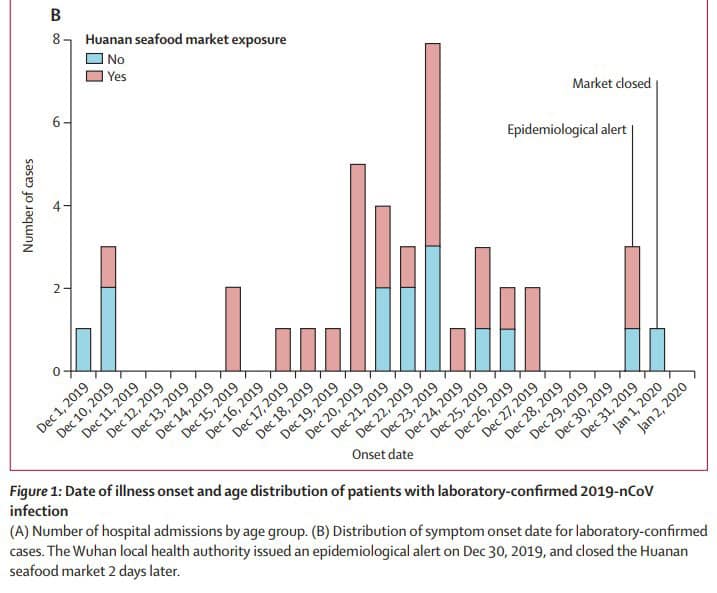
However, the WHO report includes a clinical review of early cases that revises this timeline. Some early cases were deemed to be incompatible with COVID‑19, and the date of symptom onset for other cases appears to have also been modified as a result of this review. According to the WHO report, the earliest known COVID‑19 case from the Lancet study had developed a different respiratory illness, possibly bacterial since the patient responded well to antibiotic treatment. He subsequently developed COVID‑19 with a symptom onset date of December 26. Thus, the December 1 case was removed by the WHO.
In a study titled “Early Transmission Dynamics in Wuhan, China, of Novel Coronavirus-Infected Pneumonia”, published in the New England Journal of Medicine in March 26, 2020, Chinese researchers analyzed data on the first 425 confirmed COVID‑19 cases in Wuhan and reported that “The majority of cases (55%) with onset before January 1, 2020, were linked to the Huanan Seafood Wholesale Market”—leaving a bit less than half with no known connection.
In fact, according to their data, four of the first five documented cases of COVID‑19 were not linked to the Huanan market, as shown in the following graph that appears in the study, which indicates that the very first case began experiencing symptoms on December 8.
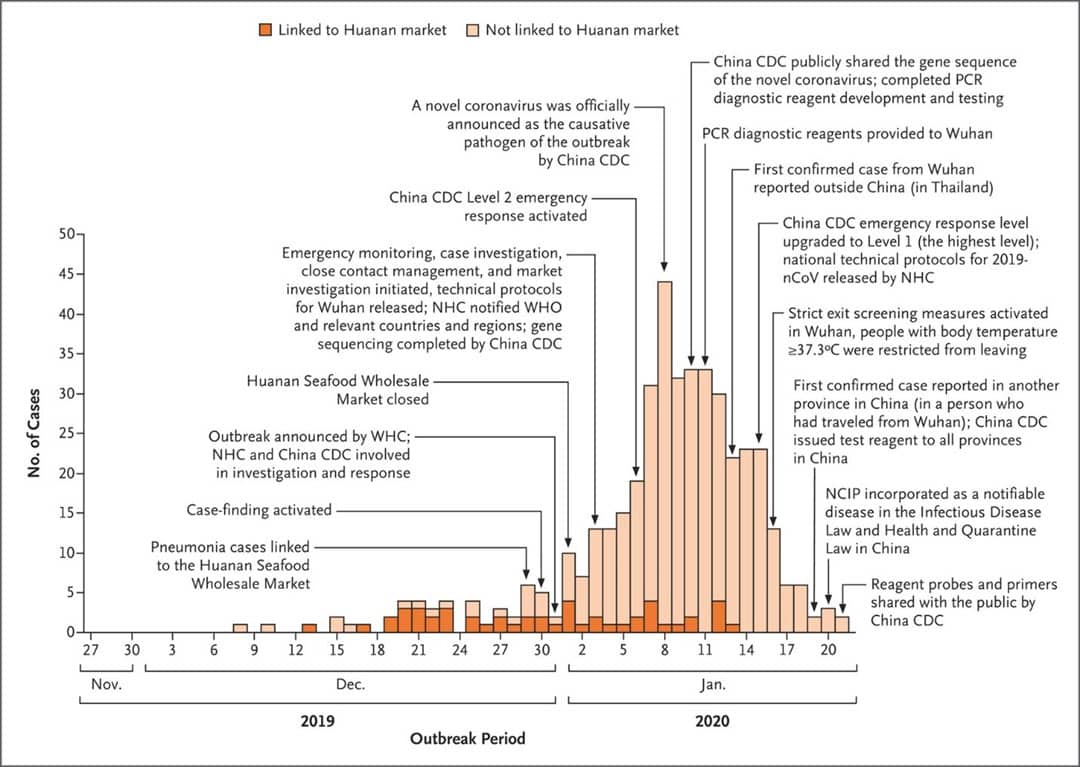
While the symptom onset dates for COVID‑19 cases from this study differ from those shown in the graph from the Lancet study, importantly, these two studies were in agreement that market exposure was not a distinguishing characteristic of the first handful of cases.
On March 30, 2021, the World Health Organization (WHO) published its report from an ostensible investigation into the origins of SARS‑CoV‑2. In fact, the WHO had prejudged that the virus was of zoonotic origin, thus committing the logical fallacy of begging the question by dismissing the lab origin hypothesis at the outset. This is clear right from the mission’s mandate “to identify the zoonotic source of the virus and the route of introduction to the human population”.
Indeed, on page 131 of the report, the lab origin hypothesis is absurdly described as a “conspiracy theory”—a clear illustration of the WHO’s prejudicial approach to the question of SARS‑CoV‑2’s origin.
The investigation also lacked credibility due to the conflicting interests of task force member Peter Daszak, the president of EcoHealth Alliance, the organization that funneled funding from the NIAID/NIH to researchers at the Wuhan Institute of Virology.
Despite the WHO’s mission being disgracefully prejudiced against the lab origin hypothesis, the report acknowledged that the Huanan seafood market may not have been the location where the virus first infected humans. As the report states:
Many of the early cases were reported to have a link to the Huanan market, a place where animals and animal products were sold to the public. Some reports have suggested the zoonotic spread of SARS‑CoV‑2 through this market, although the role of the market, as either the source of the initial transmission of the virus to humans or as an amplifier of the early epidemic, was unclear, as several early cases reported no link to the Huanan market or any other market in Wuhan.
As noted in an annex to the report, among the 174 reported COVID‑19 cases whose symptoms appeared in December, 113 had no history of exposure to the Huanan market. Thus, most cases—65 percent—had no known connection.
This included the very first known case of COVID‑19, an accountant who had a reported symptom onset date of December 8. Among the first ten known cases, only three were linked to the market.
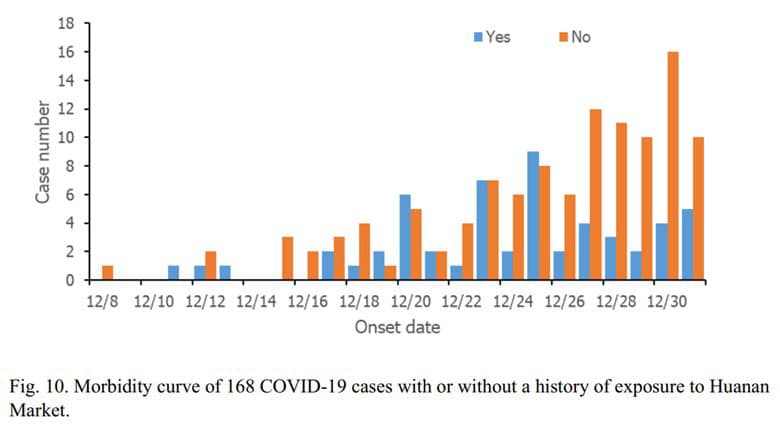
As noted in the WHO report, the observation that many early cases, including the earliest known case, had no known connection to the market is not necessarily incompatible with the natural origin hypothesis. It is possible that those early cases were infected by other even earlier cases who remained unrecorded but who did have a connection to the market. Nobody knows who the “index” case was, meaning the very first human infected with SARS‑CoV‑2.
However, the disconnection between the earliest known cases and the Huanan market is also not what one would expect to find if SARS‑CoV‑2 first leapt into humans from an animal being sold there.
Enter Michael Worobey and his Science paper “Dissecting the early COVID-19 cases in Wuhan”.
The Case for the First COVID‑19 Case Being a Market Vendor
Worobey presented his revised timeline in a supplement to the Science paper. In it, he asserts that the date reported by the WHO for the symptom onset of the first case is contradicted by an interview with Mr. Chen and by his medical records.
To support that assertion, Worobey cites a video report from the Chinese language news outlet The Paper, which interviewed Mr. Chen and obtained his records, as well as a paper published in the Chinese Medical Journal describing a man of the same age with no known history of exposure to the Huanan market and whose symptom onset date was reported as December 16.
However, there are discrepancies in Worobey’s own account that call into question his conclusion that therefore the first known patient was the seafood vendor at the Huanan market, Ms. Wei, whose symptom onset date was December 10, according to the timeline Worobey presents in a supplement to his Science paper. [Author’s note, June 6, 2023: I have not stricken this paragraph because, indeed, there are discrepancies that I found that led me to reasonably call into question the timing of symptom onset of Mr. Chen; however, as noted above, I have since identified a critical error of my own that undermines my own conclusion that the video report contradicts Worobey’s argument.] That date for the start of Ms. Wei’s illness came from a Wall Street Journal article published on March 6, 2020. But that same article reported that “Wuhan’s government announced last month that the first confirmed case was a person surnamed Chen who fell sick on Dec. 8.” (Emphasis added.)
Worobey relied on the Wall Street Journal article for Ms. Wei’s symptom onset date in his timeline even though the video report from The Paper puts the date on December 11, whereas he relied on The Paper’s report to put Mr. Chen’s onset date on December 16 while omitting mention of how the Journal reported the date as December 8.
Worobey’s timeline additionally shows December 10 as the date of “[symptom] onset for some cases” that were reported in the early Lancet study; “but”, he added, “this conflicts with WHO-China report”. This wording suggests that, with the exception of Mr. Chen’s symptom onset date, he was willing to accept the accuracy of the case history revisions from WHO’s clinical review, including the removal of the December 1 case.
The Chinese Medical Journal report describes a 41 year-old patient, presumably Mr. Chen, as having been admitted to Wuhan Jinyintan Hospital on December 22, with an illness onset date of December 16. [Author’s note, June 6, 2023: I have stricken the name of the hospital since this was the key error in my own analysis. It is true that the journal report describes patients including Mr. Chen as having been admitted to the Wuhan Jinyintan Hospital. The report does not refer to admission to or transfer from any other hospitals and cites an admission date of December 22. Consequently, I originally took this to mean the date of his admission to the Jinyintan Hospital. However, it has since been clarified for me that the hospital Mr. Chen was admitted to on that date was the Jiangxia People’s Hospital, and that he was later transferred to Wuhan Central Hospital and then Jinyintan Hospital. This may seem like a relatively minor error, but it is central to the main conclusion that I am now retracting, as further explained below.]
Citing both The Paper and the Chinese Medical Journal, Worobey’s timeline incorrectly states that this patient was admitted to Jiangxia People’s Hospital on December 22. The journal paper, again, looked at data from patients admitted to the Jinyintan Hospital. The news report did say that Mr. Chen was admitted to Jiangxia People’s Hospital, but that was evidently an earlier hospital visit, possibly for dental surgery (as explained in more detail below). [Author’s note, June 6, 2023: I have stricken the word “incorrectly” in this paragraph because, again, my own conclusion based on the journal paper that Mr. Chen was admitted to Jinyintan Hospital on December 22 was incorrect, as I’ve since learned based on additional sources I have since reviewed.]
Associated with that journal paper is genome information about the virus obtained from the patient and published by the National Genomics Data Center in Beijing, China. That document also says his symptoms began on December 16 and he was hospitalized on December 22. It adds the additional details that he presented with “High fever (39°C) and dry cough at the onset of the illness. He developed acute respiratory distress syndrome 7 days later”. (Emphasis added.)
Thus, another symptom that Mr. Chen had at the time his fever developed was a cough. This is a key detail. [Author’s note, June 6, 2023: I have stricken this sentence because this turns out not to be such a significant detail as I had originally judged, as elucidated below.]
The video report, contrary to Worobey’s characterization, does not corroborate that symptom onset date. On the contrary, the source indicates that the fever that started on December 16 was not Mr. Chen’s first symptom. [Author’s note, June 6, 2023: Having since reviewed additional sources and reanalyzed the details I covered originally in this article, I have concluded that the video report does corroborate a symptom onset date of December 16 for Mr. Chen for reasons elucidated further below.]
Correcting the Record
Published in The Paper on March 25, 2020, the report was an investigation into the first person infected with SARS‑CoV‑2. The video has Chinese subtitles without narration, and at certain points, medical records are shown on the screen. At some points, a recording of a woman’s voice is also heard.
Since I’m not fluent in Chinese and cannot read the language, I could not verify Worobey’s characterization of this source. However, my wife, Joanne Mei Hammond, is a Taiwanese American fluent in Mandarin Chinese and Taiwanese as well as English, so I enlisted her help to watch the video and translate for me.
Because the quality of the video at the link provided in the Science paper made it difficult for her to make out text shown on the screen when Mr. Chen’s medical records are presented, Mrs. Hammond also searched for an alternative source and found the same video in a slightly sharper quality published on the Chinese news website SINA, which video is also helpfully accompanied by an article summarizing information contained in the video report. (I have archived the article in Chinese here and uploaded a Google translation in a Word document here. Additionally, for archival purposes, I have downloaded the video using the same method I described here for downloading Bitchute videos.) [Author’s note, June 6, 2023: I have since been helpfully provided with a full English transcript of the video from DRASTIC that is annotated with additional details that have helped to clarify for me which hospitals Mr. Chen as admitted to on which dates.]
The report discusses both Ms. Wei and Mr. Chen. It starts with Ms. Wei describing how she started feeling unwell on December 11. According to the report, she was the first case identified among those with a connection to the Huanan wet market. After her symptoms developed, she first went to a clinic and then, on December 16, to a hospital. Further into the video, details about Mr. Chen appear. Here is a screenshot showing the first of the medical records shown in the report, on which document I have highlighted several details in yellow:
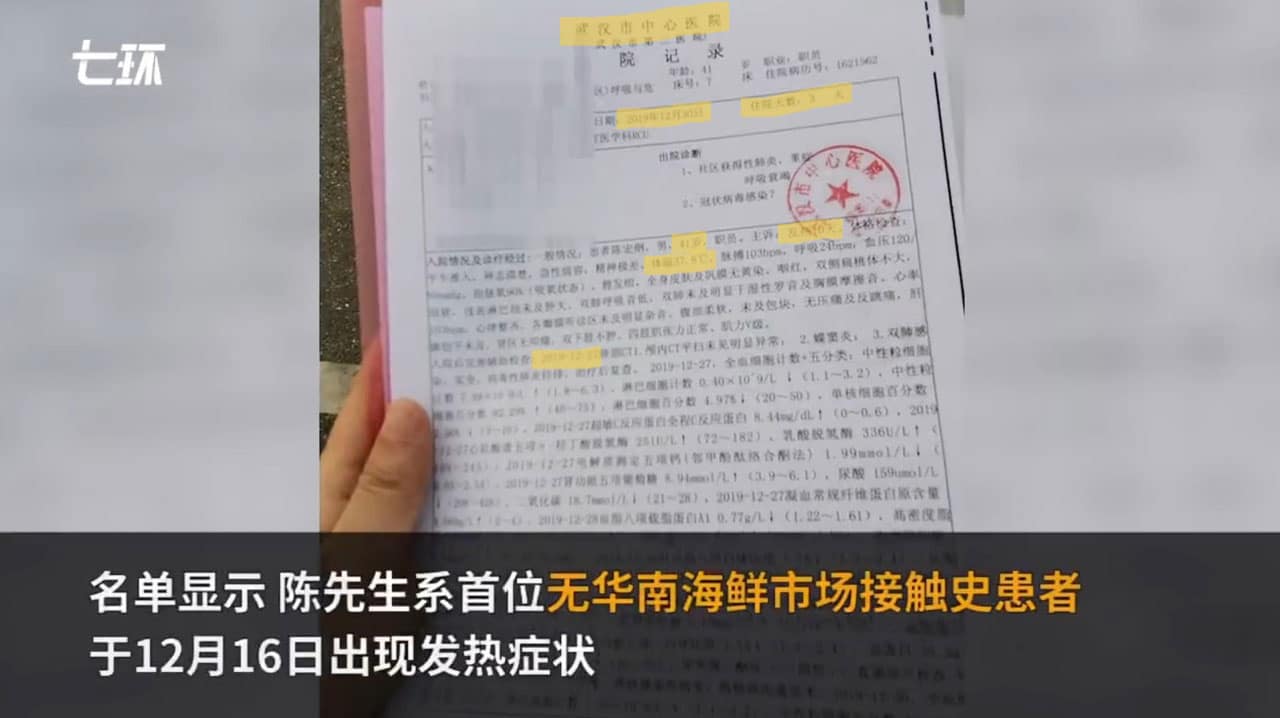
The text on the screen describes Mr. Chen as the first known case with no connection to the market and says that he developed a fever on December 16. The record is from Wuhan Central Hospital (武汉市中心医院). It is dated December 30 and says Mr. Chen, age forty-one, was in the hospital for three days (住院天數:3天), having checked in on December 27. He presented with a fever of 37.8°C, and his fever lasted for ten days (發熱10天).
Evidently, Mr. Chen was first admitted to the Wuhan Jinyintan Hospital on December 22 and then admitted to the Wuhan Central Hospital on December 27. It’s unclear whether he checked out of the first visit in between or was directly transferred from the first to the second hospital. [Author’s note, June 6, 2023: Here again I erred by concluding from the journal paper that the date of December 22 referred to his admission to Jinyintan Hospital. Additional information provided to me by DRASTIC has clarified that he was admitted to Jiangxia People’s Hospital on that date, and he was indeed transferred to Wuhan Central Hospital on December 27.]
Prior to both of those visits, he was also evidently at yet another hospital. [Author’s note, June 6, 2023: Actually, it was an earlier visit to the same hospital, Jiangxia.] Next, the video shows a medical record related to a dental surgery that Mr. Chen underwent [Author’s note, June 6, 2023: actually, it appears from DRASTIC’s analysis that the dental work was for Mr. Chen’s son]:
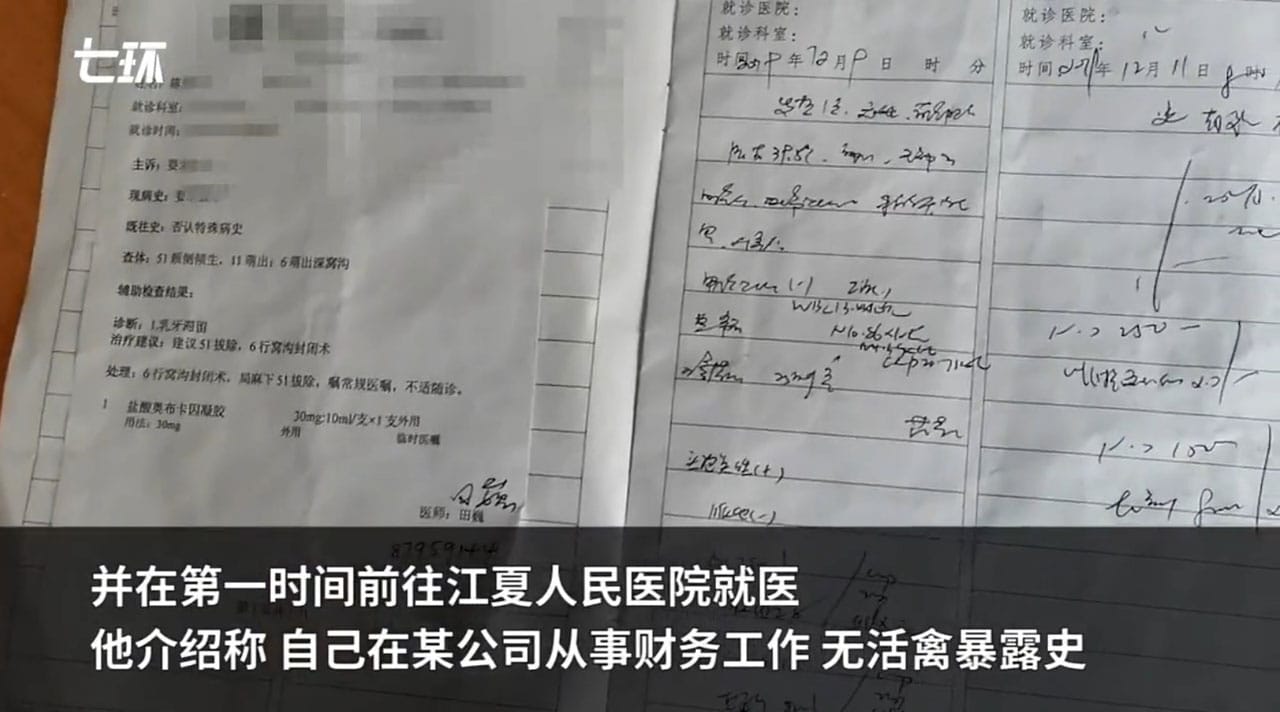
The text overlaid on the screen at this point says he went to Jiangxia People’s Hospital (江夏人民医院). On the left is a doctor’s note that says if he continues to feel discomfort (presumably from the dental surgery) to go see a doctor. (Mrs. Hammond explained that the Chinese word used could mean either “doctor” or “dentist”.) On the right side is shown a prescription note dated December 9. (Mrs. Hammond also informed me that it is common for people in China to write number nine like the letter “P”, and you can see that the “9” in “2019” also is written that way.)
The next document shown contains the most crucial detail. Here is a screenshot:
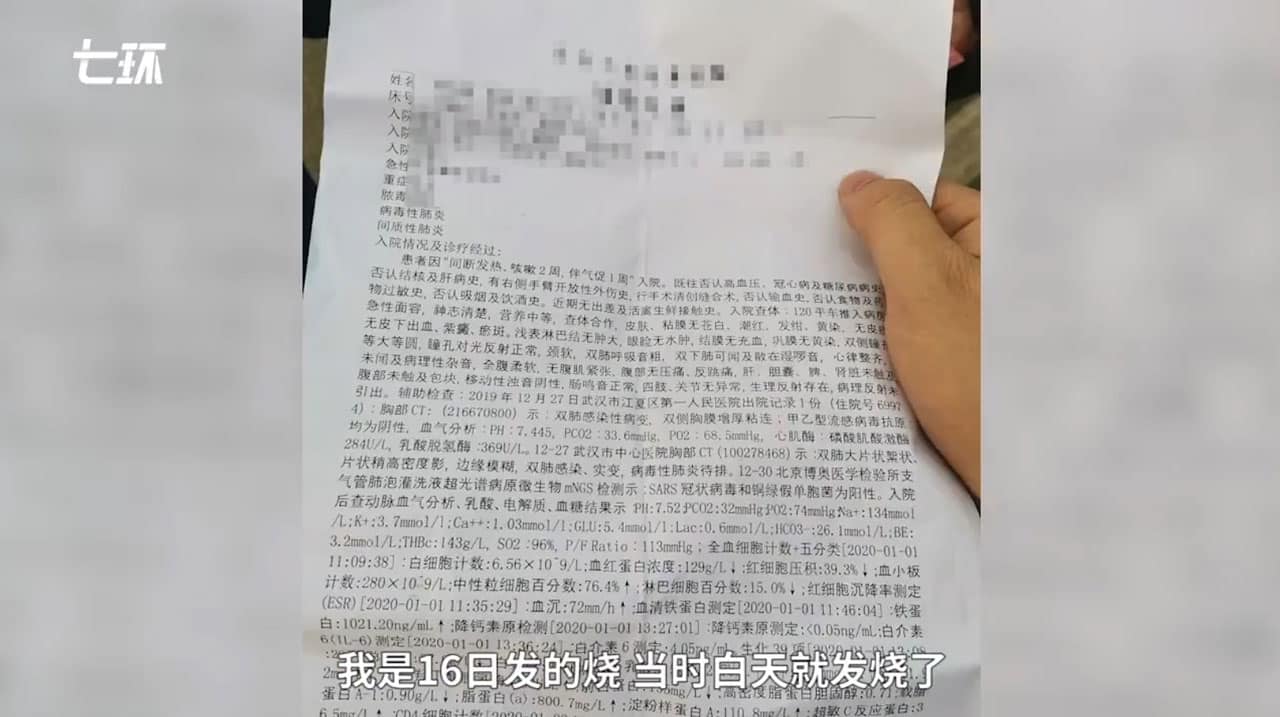
Here is a closer look with the key information highlighted:
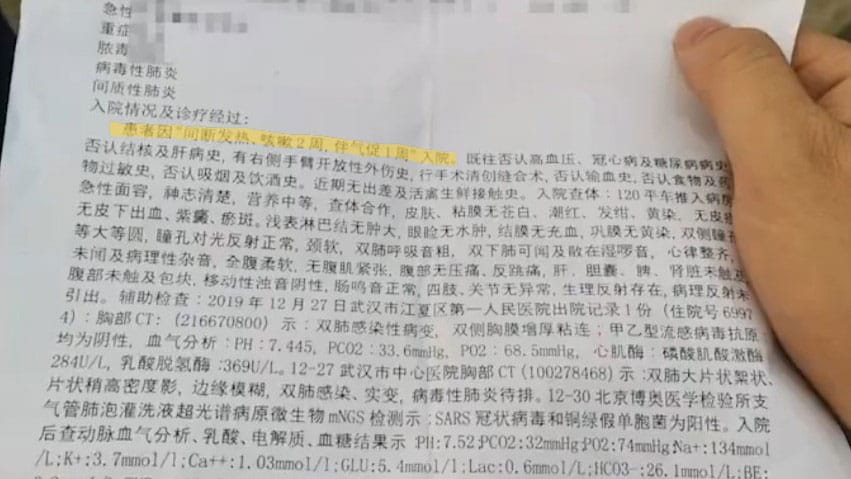
The document states that the reason for Mr. Chen’s admission to the hospital was that he’d had an intermittent fever (間斷發熱), had been coughing for two weeks (咳嗽2周), and had had trouble breathing for one week (伴氣促1周).
Consequently, Worobey’s claim that Mr. Chen’s symptoms did not first appear until December 16, when he developed a fever, is contradicted by his own cited source, which suggests that the fever was not his first symptom. If he’d been coughing for two weeks prior to his admission to Wuhan Central Hospital, then that would place his symptom onset date on about December 13.
That’s still two days later than Ms. Wei’s symptom onset, but just as the video report does not establish that the fever was Mr. Chen’s first symptom, it is also possible that he’d had one or more other symptoms besides the cough. Therefore, the medical records are not necessarily inconsistent with a symptom onset date of December 8, which might be supported by other medical records to which we are not privy.
[Author’s note, June 6, 2023: I have stricken the above two paragraphs because, after reanalyzing the timeline with additional information I’ve since been provided, I realized that my original conclusion that the document must have been from the Wuhan Central Hospital is incorrect; the document could also be from Jinyintan Hospital, where Mr. Chen was later transferred for intensive care. The consequences of this error on my analysis are elaborated further below.]
Mr. Worobey’s interpretation, as reported by the New York Times, is that December 8 must refer to the date of his dental surgery, and Wuhan health authorities must have mistaken that as the date of his first COVID‑19 symptoms.
However, the date of December 8 is not apparent on the documents, and the prescription is dated December 9. While Mrs. Hammond was unable to make out the details of the prescription, according to the Times, it was a “prescription for antibiotics to a fever from the day before”, which the Times likewise speculated was “possibly the day of the dental surgery.”
Thus, the Times acknowledged that Mr. Chen had also had a fever on December 8, but we are evidently intended to believe that this was due to a bacterial infection possibly related to his oral health or the dental surgery, not an early symptom of COVID‑19.
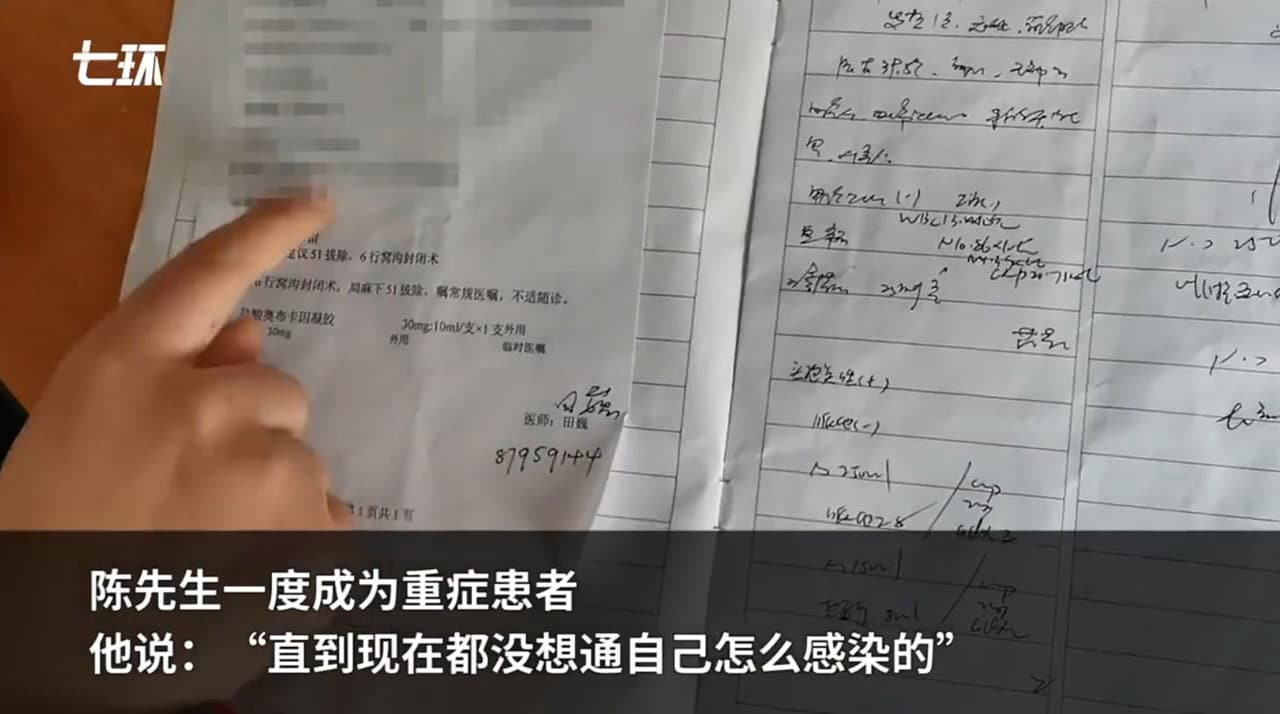
However, if the documents relating to Mr. Chen’s dental work have nothing to do with his COVID‑19 illness, then why would The Paper present them as though relevant to his case of the disease? Indeed, while those documents are being shown, a finger, perhaps Mr. Chen’s own, is seen pointing to a blurred-out portion of the document, which would seem to indicate its relevance.
[Author’s note, June 6, 2023: According to a translation and analysis of the document provided by DRASTIC, the record shown on the left page wasn’t even for Mr. Chen but for a child with the same surname. See this Twitter post for an annotated screenshot.]
Additionally, recall that Mr. Chen had been admitted to Wuhan Jinyintan Hospital on December 22, four days before checking in to Wuhan Central Hospital. The documentary record shows that he’d presented with both a fever and a cough at that earlier date, and it’s possible that the medical record indicating that he’d been coughing for two weeks prior to hospital admission was referring to that initial admission on December 22, which would place his symptom onset date on December 8. [Author’s note, June 6, 2023: I’ve stricken this sentence because it was based on my mistaken conclusion that the document in question referred to his admission to Wuhan Central Hospital, whereas I now believe the document was from Jinyintan Hospital where he was later admitted. My April 5 update below is therefore mistaken in its premise.]
[Update, April 5, 2023: Since publishing this article, it occurred to me that if Mr. Chen had a fever starting on December 16 that lasted for ten days, then by the time he checked into Wuhan Central Hospital on December 27, he would no longer have been presenting with fever. Since the document from that hospital states that fever was among the reasons for his admission to the hospital, it must be referring to his initial admission to Jinyintan Hospital on December 22, which would mean that the December 8 date for onset of his cough is correct, being exactly two weeks prior to his admission there.]
[Author’s note, June 6, 2023: Since my April 5 update was premised on my questionable conclusion that the document was from Wuhan Central Hospital (it may be from Jinyintan Hospital), my conclusion does not follow, so I have stricken that fallacy from the above paragraph.]
In sum, the documentary record does not show that Mr. Chen never developed COVID‑19 symptoms until December 16. On the contrary, the evidence publicly available, while incomplete, is not inconsistent with a symptom onset date of December 8.[Author’s note, June 6, 2023: While I maintain that the evidence remains consistent with a December 8 onset, I withdraw my conclusion that the video from The Paper contradicts an onset date December 16.]
Here is how the details of Mr. Chen’s case were mistranslated by The Guardian in an article declaring that the first known COVID‑19 case was a market vendor: “In an interview with a Chinese news outlet, Chen described attending a clinic with a dental problem on 8 December, saying he only developed Covid symptoms around 16 December.”
The extent to which that summary mangled the facts is a useful illustration of the propaganda function typically served by the mainstream media.
And while the New York Times would likewise have us believe that Mr. Worobey’s timeline is the correct one, another plausible scenario is that Mr. Chen’s fever on December 8 was an early symptom of COVID‑19, and that he had at the same time developed a cough. Eight days later, the fever came back and persisted intermittently until he checked into the Wuhan Jinyintan Hospital on December 22, at which time he also reported having had a cough for two weeks and shortness of breath for one week. These symptom details were then passed on to the Wuhan Central Hospital, where he was admitted for three days starting on December 27. The study in the Chinese journal reporting his symptom onset date as December 16 was mistaken since the fever that returned that day and resulted in his hospitalization was not his first symptom.
[Update, June 6, 2023: Again, on December 22, Mr. Chen was admitted to Jiangxia People’s Hospital, not Jinyintan Hospital as I presumed based on the Chinese Medical Journal paper, so I’ve stricken that aspect of my alternative interpretation of the evidence. Here is a revised timeline according to my current understanding:
- December 8: Mr. Chen’s son had dental work done. Mr. Chen has a fever.
- December 9: Mr. Chen visits Jiangxia People’s Hospital and receives a prescription for an antibiotic due to a fever he’d had the day before.
- December 16: Mr. Chen suffers a fever that lasts for ten days.
- December 22: Mr. Chen is admitted to Jiangxia People’s Hospital.
- December 23: Mr. Chen develops acute respiratory distress syndrome (ARDS).
- December 26: Mr. Chen’s fever lets up.
- December 27: Mr. Chen is transferred to Wuhan Central Hospital.
- December 30: Mr. Chen is transferred to Jinyintan Hospital for intensive care.
As a reminder, the medical document in question states that the reason for Mr. Chen’s admission to the hospital was that he’d had an intermittent fever, had been coughing for two weeks, and had had trouble breathing for one week.
As TheEngineer2 noted in the Twitter thread discussing my article and the medical form stating that Mr. Chen had been coughing for two weeks prior to admission, “If this medical form is from Jiangxia hospital, then ‘intermittent cough and fever for two weeks’ would confirm his earlier 8 Dec 2019 onset date.”
However, due to my mistake about the order of his hospital visits, it didn’t occur to me that the document could be from Jinyintan Hospital. In this case, the mention of him having trouble breathing for one week would match up with the onset of ARDS according to the Chinese Medical Journal paper. If he’d been coughing for exactly two weeks prior to admission to Jinyintan, then his cough would have started the same day as the fever on December 16.
Another consideration is that if his fever lasted for ten days, as also reported in his medical records, then it would have been resolved for a week by the time of his admission to Jinyintan hospital for intensive care for his respiratory symptoms. So, one possibility is that the reasons stated on the document for his admission refer to his original admission at Jiangxia hospital, which, again, would confirm the onset date of December 8. It’s also possible, though, that his fever starting December 16 did let up after ten days, as stated on the document from Wuhan Central Hospital, but that fever returned intermittently thereafter.
All in all, the conclusion I have now come to is that the document is most likely from Jinyintan Hospital and that it therefore does not contradict the argument that Mr. Chen’s symptoms began on December 16, which is why I’ve now retracted that faulty conclusion from this article.
I maintain that the evidence is consistent with an onset date of December 8 for several reasons. First, even the New York Times in its article endorsing the December 16 date acknowledged that Mr. Chen had a fever on December 8. Second, although Worobey cites it, he does not acknowledge that the New England Journal of Medicine study also placed the onset date of the first known case on December 8.
Third, the leadership of the WHO mission has maintained that Worobey is incorrect. Prior to publication of this article, I corresponded with a scientist who has extensively researched SARS‑CoV‑2’s origins and who told me that the lead investigator of the Chinese half of the WHO-China joint mission publicly censured Worobey for his claim. I did not include that information in this article originally because I did not receive a response to my request for a source, and I could not verify it.
However, during my communications with TheEngineer2 from the DRASTIC team, without my having mentioned that correspondence with the other researcher, TheEngineer2 did some further digging and remarkably found and shared with me a primary for that information.
On this page of the website of China’s National Health Commission (archived here) is a transcript of a press conference on December 11, 2021, in which Liang Wannian, the former head of the Commission’s COVID Response Team and the team leader of the Chinese side of the WHO joint mission, responded to a reporter’s question about Worobey’s revisionary Science paper.
The reporter, from the China Global Television Network (CGTN), referenced the conclusion of the Science paper that the first known patient was a seafood vendor at the market and asked for a response.
I used the Google Translate tool as well as ChatGPT to translate the relevant section of the transcript into English. The translations show that Dr. Liang responded by explaining that the dental work referenced in the document was not, as presumed by Worobey, for Mr. Chen; rather, Mr. Chen had taken in a family member for a tooth extraction. To quote the ChatGPT translation, Mr. Chen himself “started experiencing flu-like symptoms such as headache and dizziness on December 8, followed by fatigue, muscle pain, and shortness of breath, which were later confirmed to be COVID‑19.”]
In the End, What Does It Matter?
Regardless of the answer to the question of when Mr. Chen first developed symptoms of COVID‑19, it is clear is that Worobey’s key source does not support the claim for which he cited it. [Author’s note, June 6, 2023: retracted, for the reason explained.]
Perhaps the first documented COVID‑19 case had a connection to the Huanan seafood market, and perhaps not. Either way, it is probable that the index case was never recorded, and there were likely many undocumented cases predating the onset of either Mr. Chen’s or Ms. Wei’s symptoms.
Indeed, it is curious why Worobey characterized the question of whether Mr. Chen’s or Ms. Wei’s symptoms developed first as a crucial point in the debate given his own observation in the paper that even if the first recorded case had no connection to the market, the possibility remained of an even earlier unrecorded index case who did.
That logic works both ways.
That is to say, even if the first recorded case was a seafood vendor at the market, the possibility remains of an even earlier unrecorded case who had no connection to the market whatsoever.
The video report cited by Worobey, incidentally, also reports Mr. Chen’s puzzlement over how he’d become infected. Mr. Chen thought the most likely explanation for his illness was that he’d gotten infected with SARS‑CoV‑2 commuting to work on the subway. Another possibility, he thought, is that he’d gotten it while at the hospital, which might be a reference to his earlier visit for dental surgery (which could also have occurred prior to his fever on December 8).
It’s possible that both Worobey and the WHO got it wrong, but assuming that Ms. Wei was indeed the earliest known case with a symptom onset of December 11, we must also consider the incubation period, or the duration from infection until symptom onset, which was estimated to be about five days on average.
If we assume that Mr. Chen’s first symptom was a cough that appeared on December 13 (as opposed to December 8), then he was likely infected around December 8. It is unlikely that whoever infected Mr. Chen was infected later than Ms. Wei. That is to say, it is unlikely that Ms. Wei was the index case for the COVID‑19 outbreak.
In fact, the improbability of Ms. Wei being the index case is ironically highlighted by Worobey himself in his revisionary Science paper: “Additionally,” he stated, “the earliest known cases should not necessarily be expected to be the first infected or inked to the Huanan Market: They probably postdated the outbreak’s index case by a considerable period.” (Emphasis added.)
The timeline presented in the supplement notably does not begin with December 8 but with November 18, the mean estimated date of the pandemic index case.
The reference for that in both the main paper and the supplement is another paper coauthored by Worobey. In a paper titled “Timing the SARS-CoV-2 index case in Hubei province”, published in Science on April 23, 2021, Worobey and colleagues reported their finding from a modeling study that the data on reported cases suggested that “SARS‑CoV‑2 was actively circulating for at least a month before it was discovered.”
As they concluded, it was “highly probable that SARS‑CoV‑2 was circulating in Hubei province at low levels in November 2019”.
“Our estimates for the timing of the Hubei index case”, the authors of that paper acknowledged, “further distance this individual from the outbreak at the Huanan Seafood Wholesale Market.” (Emphasis added.)
That acknowledgment deprives his whole argument about a market vendor being the first reported case of its practical significance, inasmuch as his transparent purpose in revising the case timeline was to try to lend greater weight to the hypothesis that the COVID‑19 pandemic resulted from a natural spillover event whereby SARS‑CoV‑2 made the leap from bats to humans through the intermediary host species of raccoon dogs being sold at the Huanan seafood market.
In sum, even if we accept his revised timeline at face value, it does not weight the evidence in favor of a market origin; the evidence remains consistent with a lab origin either way.
In another ironic twist, Worobey also put his name on a letter published in Science on May 14, 2021, distancing himself from the transparent bias of the WHO “investigation” and calling on the WHO, the US, and other countries to “take hypotheses about both natural and laboratory spillovers seriously until we have sufficient data.”
Titled “Investigate the origins of COVID‑19”, the letter stated that “Theories of accidental release from a lab and zoonotic spillover both remain viable.”
Also signing that statement was none other than Ralph Baric, an American scientist known for “gain of function” research who collaborated with researchers from the Wuhan Institute of Virology on the creation of chimeric coronavirus.
The publication of that letter marked something of an official end to the mainstream media’s ridiculous dismissal of the lab origin hypothesis as a “conspiracy theory”.
Conclusion
At this point in time, there is evidence for the presence of genetic material from a raccoon dog in a sample collected by CCDC researchers from a transport cart located at a stall in the southwest corner of the Huanan seafood market.
The mainstream media, like the authors of the preprint study on Zenodo, havetouted this newly released data as corroborating their earlier claims. This is curious since Worobey and colleagues had already been claiming that it was a documented fact that raccoon dogs were present in the market in November and December of 2019.
If that were so, then the data would add absolutely nothing new to the debate.
In fact, though, as I will document in a future article, they had never produced proof of that claim. Instead, they created an illusion that this was a known fact even though the primary sources they cited failed to demonstrate the presence of raccoon dogs in the market in late 2019.
At present, the fact remains that there is no evidence that a raccoon dog or (any other animal) at the market in late 2019 was infected with SARS-CoV‑2, much less that such an animal transmitted the virus to humans and not vice versa.
The accompanying argument presented by Worobey that the first known COVID‑19 case was a seafood vendor at the Huanan market is premised upon the assumption that the fever that Mr. Chen developed on December 16 was his first symptom. To support that assumption, Worobey cites medical records shown in the video report from the Chinese language news outlet The Paper.
However, one of those records instead indicates that Mr. Chen had started coughing before the onset of the fever that, along with shortness of breath, resulted in him being hospitalized on December 22. The document states that at the time of admission, he’d already been coughing for two weeks, which would make his symptom onset date December 8. [Author’s note, June 6, 2023: retracted, for the reason explained.]
That interpretation happens to agree with the first known case reported in the New England Journal of Medicine study, with the Wall Street Journal article cited by Worobey, and with the WHO report.
Furthermore, even if the first known COVID‑19 case were to have a connection to the market, it would not weight the evidence in favor of a natural origin since it is probable that there were even earlier cases that were simply never documented. As Dr. Richard Ebright rightly observed, “No serious person claims the first cases occurred only in mid-December 2019.” Either way, the evidence remains consistent with a lab origin, with the market merely serving as an early superspreader event.
On March 27, I sent an email to the address provided by Science for correspondence with the author, requesting him to comment for this story. As of the date of publication of this article, I have received no response from Dr. Worobey.