

Table of Contents
The Gulf of Tonkin
In Glen Greenwald’s recent interview with presidential candidate Robert F. Kennedy, Jr., Greenwald asked Kennedy about the role of his uncle, President John F. Kennedy, in the Vietnam War and whether he felt that the United States entered that war under false pretexts.
Kennedy candidly responded “of course” and then proceeded to provide historical context for his answer and to clarify his uncle’s role. Far from being a war to save democracy, he explained, the US waged the war to prevent democracy in Vietnam (since that would have resulted in Ho Chi Minh leading a united and independent Vietnam).
It’s true that JFK sent “advisers” over, about 16,000 in total, and some of them engaged in combat. But, RFK Jr. said, the Joint Chiefs of Staff had been pressing him to send the far greater number of 250,000 Americans, including combat troops, to support the puppet regime in southern Vietnam against Ho Chi Minh’s forces in the north. JFK resisted the Joint Chiefs’ efforts to escalate the US’s role, and before he was assassinated, he had signed an order for American forces to be brought home that was subsequently rescinded by President Lyndon B. Johnson.
Johnson proceeded to fully involve the US in the Vietnam War by gaining Congressional approval to send combat troops on the false pretext that US ships were attacked by North Vietnamese boats in August 1964—the infamous “Gulf of Tonkin” incident.
That was “a false flag event”, RFK Jr. rightly explained. “It was a non-event that was, you know, pretended to be a military attack on our navy in the Gulf of Tonkin that never took place. You know, Johnson himself said, ‘Those boys were shooting against flying fish.’”
To add to Kennedy’s remarks during the interview, National Security Agency (NSA) historian Robert J. Hanyok concluded in an article for the Cryptologic Quarterly that the August 4 attack by the Vietnamese on the USS Maddox, which was cited as the pretext for the Congressional “Gulf of Tonkin Resolution” authorizing Johnson to expand the war, never happened.
The Gulf of Tonkin incident was far from the only false pretext that the US government has cited for the purpose of waging war. So, let’s briefly review several other historical examples in which the US government grossly deceived the public in order to garner public support for war.
The Mexican-American War
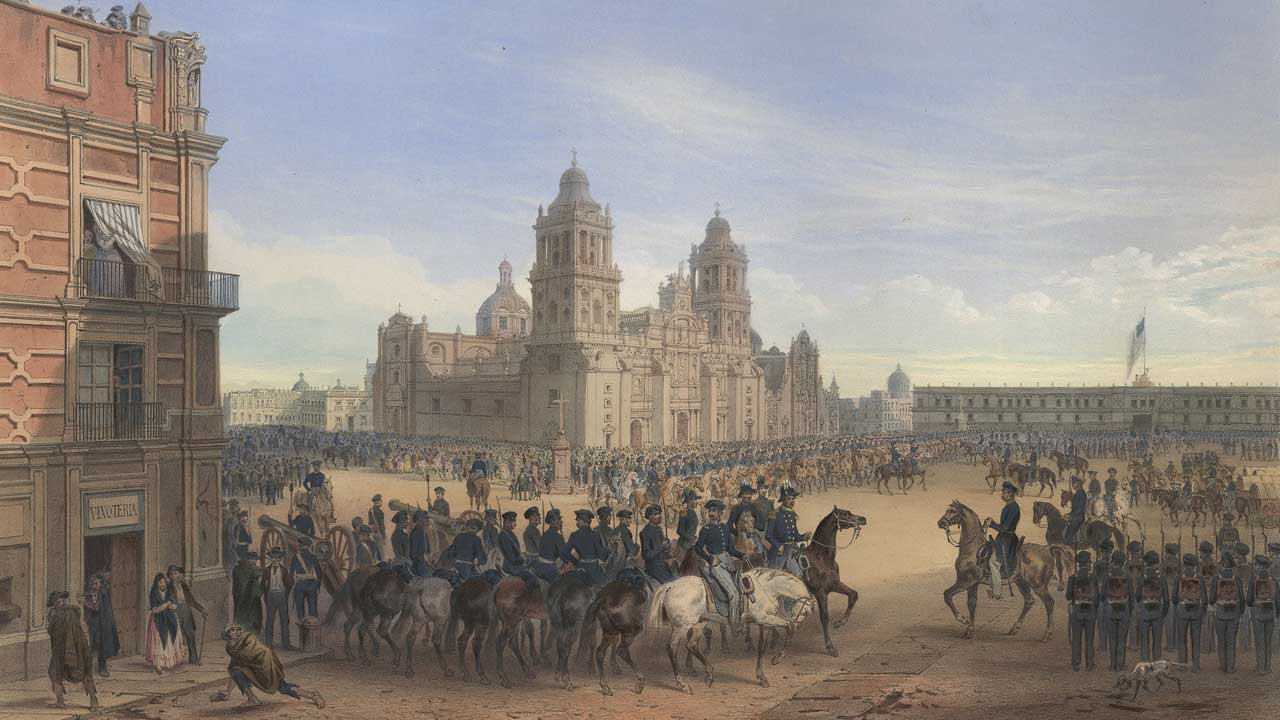
The US in fact has a long history of citing false pretexts for war, with one early example being the Mexican-American War of 1845. In seeking a Congressional declaration for that conflict, President James Polk said that “Mexico has passed the boundary of the United States, has invaded our territory and shed American blood upon the American soil.” The war was thus, as Polk presented it, an act of self-defense.
In truth, Polk had deliberately provoked the attack to which he was referring by sending American soldiers to the Rio Grande into what Mexico regarded as its territory, inhabited by Mexicans.
Setting aside the thin veil of a pretext, the true reason for that war is better understood by recalling journalist John O’Sullivan’s famous remark that it was the “manifest destiny” of the US “to overspread the continent allotted by Providence for the free development of our yearly multiplying millions.”
In other words, Polk deliberately provoked the war for the purpose of territorial conquest.
The Spanish-American War
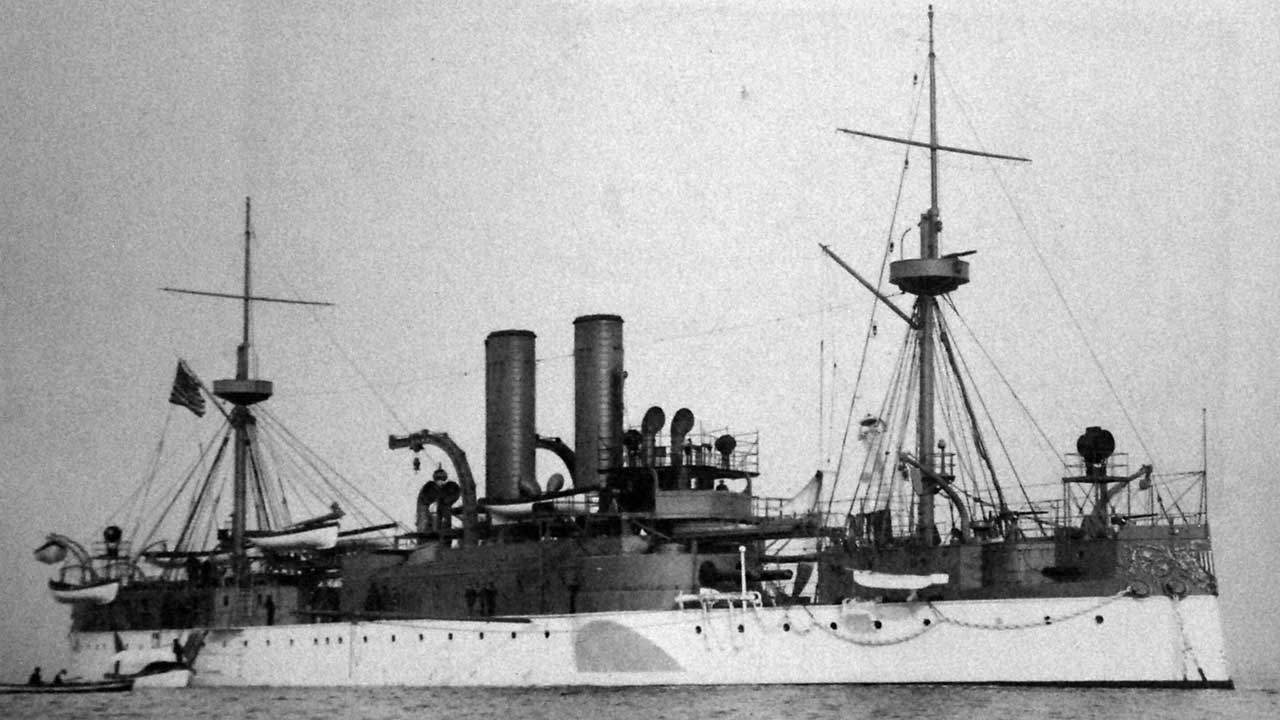
On February 15, 1898, an explosion sank the USS Maine in Havana Harbor, Cuba, killing 260 sailors aboard. This event was grasped upon as a pretext to intervene in Cuba, where Spain was fighting to prevent the Cubans from gaining their independence.
A naval court of inquiry concluded the month after the sinking of the USS Maine that there had been an external explosion that had ignited the forward magazines, but the investigation was “unable to obtain evidence fixing responsibility for the destruction of the Maine upon any person or persons.”
Spain obviously had no motive to bomb the ship and every reason not to, but Congress nevertheless affirmed President William McKinley’s request for a declaration of war against Spain. The US thus went to war based on an unlikely conspiracy theory.
A subsequent investigation in 1911 similarly concluded that the ship sank due to an external explosion, but a third investigation in 1975 headed up by Admiral Hyman G. Rickover concluded that “the available evidence is consistent with an internal explosion alone. . . . The most likely source was heat from a fire in the coal bunker adjacent to the 6-inch reserve magazine.” The National Geographic Society commissioned an analysis of the explosion in 1998 and concluded that the evidence indicated an external explosion since the hull plate was bent inwardly, not outwardly. The most likely explanation was that a mine was used to blow up the ship.
The question remained of who had the motive to do this. While it would obviously have been against Spain’s interest to commit an act of war against the US, one equally obvious motive would be to create a false pretext for US intervention.
The media back then served the same typical role that it serves today, which was to manufacture consent for the US involvement in the war. The rallying cry across the country was “Remember the Maine! To hell with Spain!”
William Randolph Hearst, publisher of the New York Journal, openly called for intervention. When Hearst sent the artist Frederick Remington to Cuba, Remington cabled back, “There is no war. Request to be recalled.” Hearst replied, “Please remain. You furnish the pictures, I’ll furnish the war.”
The media were flooded with imperialist calls echoing the “manifest destiny”. An editorial in the Washington Post on the eve of the war epitomized the imperialist mindset:
A new consciousness seems to have come upon us—the consciousness of strength—and with it a new appetite, the yearning to show our strength. . . . Ambition, interest, land hunger, pride, the mere joy of fighting, whatever it may be, we are animated by a new sensation. We are face to face with a strange destiny. The taste of Empire is in the mouth of the people even as the taste of blood in the jungle.
Indeed, the media’s colonialist warmongering predated the sinking of the Maine. An article in The Saturday Review in 1896 opined that, although Spanish rule in the Caribbean was bad, Cuban independence was worse: “A grave danger represents itself. Two-fifths of the insurgents in the field are negroes. These men . . . would, in the event of success, demand a predominant share in the government of the country . . . the result being, after years of fighting, another black republic.” (The adjective “another” was referencing Haiti.)
The public bought into it, and the government got its war, the true purpose of which was once again territorial expansion—all in the name of “liberating” Cuba, of course.
The farcical nature of that propaganda line was revealed at the time of Spain’s surrender, the negotiations for which the US did not allow Cubans to participate in. One result of those negotiations was that the Spanish authorities would remain in charge. The Cuban revolutionary leader General Calixto Garcia protested, “I cannot see but with the deepest regret that such authorities are not elected by the Cuban people, but are the same ones selected by the Queen of Spain.”
The US military base at Guantanamo Bay, where prisoners detained during the so-called “war on terrorism” following the 9/11 attacks were tortured, is a legacy of that war.
As a result of the Spanish-American War, the US took possession of not only Cuba but also Puerto Rico, Wake Island, Guam, and the Philippines.
It was a “splendid little war”, said McKinley’s Secretary of State, John Hay.
McKinley justified his subsequent decision to send US forces to the Philippines to prevent the Filipinos from gaining their independence by saying that God had comforted him that the US could not leave the Philippines to be ruled by Spain, France, or Germany, and that the people of the island country “were unfit for self-government”. There was therefore “nothing left for us to do but to take them all and to educate the Filipinos, and uplift and civilize and Christianize them”. And after receiving that counsel from the Almighty, McKinley added, “I went to bed and went to sleep and slept soundly.”
Pearl Harbor
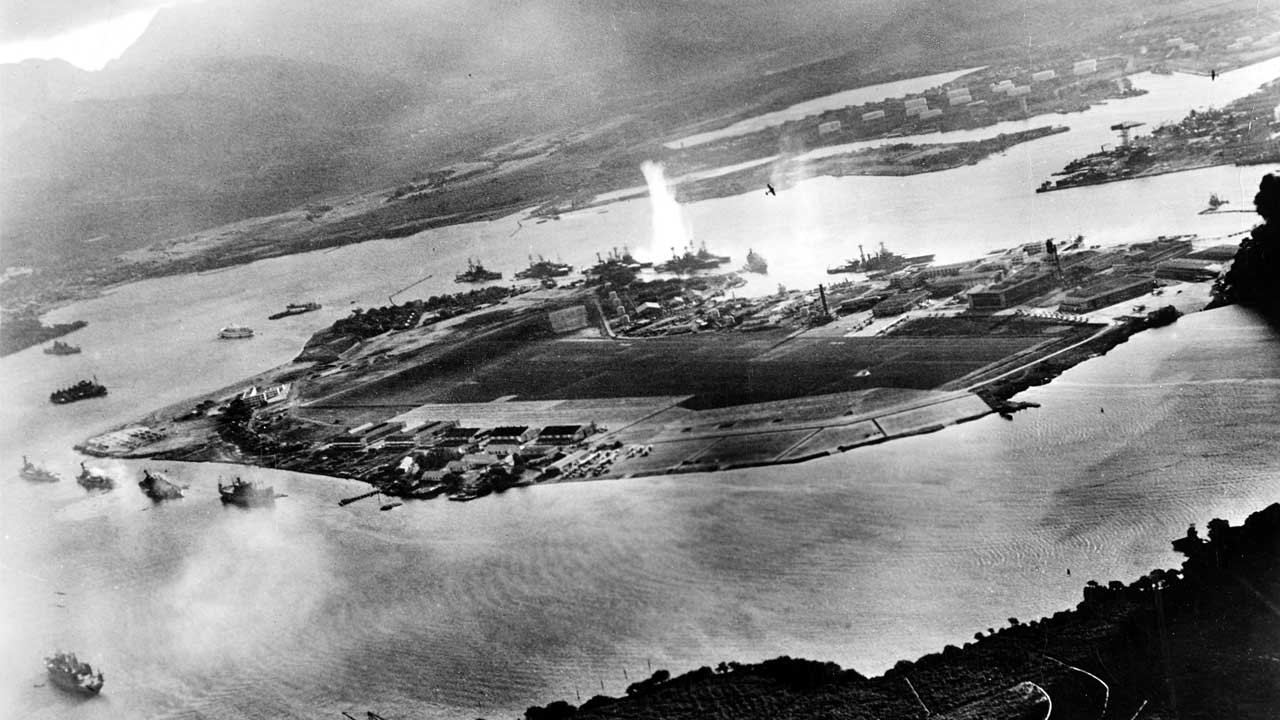
Our history books in the government school system taught us that the Japanese assault on Pearl Harbor on December 7, 1941, was a “surprise” attack. This belief, in my view, is wholly untenable. On the contrary, this attack was not only anticipated but desired.


_starboard_bow_view,_1898_(26510673494).jpg)

Hello Jeremy,
Regarding 9/11 and Afghanistan, you write:
It also goes to show how the attacks were used as an “opportunity” to implement a preexisting plan for regime change in Afghanistan, which related to plans for a gas pipeline from Turkmenistan through Afghanistan to Pakistan.
Can you clarify what you mean by this?
The Turkmenistan-Afghanistan-Pakistan-India (TAPI) pipeline still remains unbuilt after over twenty (20) years of US occupation of Afghanistan and even by official figures, almost $1 Trillion spent in that country. The Taliban supported and continue to support construction of the pipeline. They sent a team to Unocal in the US in the 1990’s to pursue construction of the pipeline. This was when highly negative publicity about the then obscure Taliban started to appear in the US. The US abruptly broke off the plan in August 1998 ostensibly over the bombing of US embassies in Africa by al-Qaeda.
TAPI was projected to cost a mere $10 billion in 2014, a tiny fraction of the $1 Trillion admittedly spent in Afghanistan during the war. The historical Tran-Alaska Pipeline System (TAPS) was the world’s largest privately funded construction project when it was built, at a cost of $8 billion. Indigenous support in Alaska was secured by the age old expedient of spreading some of the money around with an annual check to every Alaskan that continues to this day. Major oil pipelines clearly cost in the ballpark of tens of billions of dollars, much less than the money spent on the Afghanistan war and remarkably ineffective nation building projects in that country.
While it remains common to explicitly or implicitly blame the US invasion of Afghanistan on a plan to build this never built pipeline, the historical record twenty years on strongly contradicts this theory. Yes, the theory can be salvaged by postulating the world’s most incompetent pirates running the build-the-pipeline operation but this explanation clearly remains a big stretch at this point.
The historical record is much more consistent with the theory that the invasion was motivated in part or in whole by the desire to prevent the construction of the pipeline and thereby maintain the existing highly profitable cost of oil — or perhaps the war had nothing to do with the oil pipeline.
Estimates of cost of Afghan War:
https://watson.brown.edu/costsofwar/figures/2021/human-and-budgetary-costs-date-us-war-afghanistan-2001-2022 ($2.3 Trillion)
https://comptroller.defense.gov/Portals/45/documents/Section1090Reports/Section_1090_FY17_NDAA_Cost_of_Wars_to_Per_Taxpayer-March_2019.pdf ($737 Billion, from FY 2001 – 2019)
https://apnews.com/article/asia-pacific-afghanistan-middle-east-business-5e850e5149ea0a3907cac2f282878dd5 The Defense Department’s latest 2020 report said war-fighting costs totaled $815.7 billion over the years.
Projected Cost of TAPI Pipeline:
https://oilprice.com/Geopolitics/Middle-East/Is-The-TAPI-Pipeline-Finally-Ready-To-Go.html ($10 billion in 2022)
https://jamestown.org/program/revival-of-tapi-pipeline-project-brings-serious-geopolitical-implications-for-russia/ The project was initially conceived in the early 1990s; however, the pipeline consortium was not announced until 2014 with an estimated cost of $10 billion at that time.
Historical Cost of Trans Alaska Pipeline in 1970s
https://alaska.conocophillips.com/who-we-are/alaska-operations/trans-alaska-pipeline-system-taps/
(800 mile pipeline reportedly cost $8 billion in 1970s)
Early (December 2001) Attempt to Debunk the Afghan War for TAPI Theories
https://slate.com/culture/2001/12/is-the-afghan-war-about-an-oil-pipeline.html
Salon article on Taliban and pipeline in 2002
https://www.salon.com/2002/06/05/memo_11/
Taliban Guarantee Safety of TAPI in 2021
https://blog.drillingmaps.com/2021/09/taliban-guarantees-safety-of-tapi-gas.html
Hi John,
You note that the Taliban “sent a team to Unocal in the US in the 1990’s to pursue construction of the pipeline.” Indeed, I link to an article on that very event in my article above. The problem was that dealing with the Taliban for construction of the pipeline was deemed politically infeasible. The Salon article you cite notes that the view was that the project could not proceed without a “stable” government in place in Afghanistan, which accords with what I wrote.
You also argue, “The historical record is much more consistent with the theory that the invasion was motivated in part or in whole by the desire to prevent the construction of the pipeline and thereby maintain the existing highly profitable cost of oil — or perhaps the war had nothing to do with the oil pipeline.” Please note that the proposed pipeline was for natural gas, not oil. Setting that aside, I am open to your interpretation of the historical record. My own interpretation was heavily influenced by Ahmed Rashid’s account in his book “Taliban”.
However, I note that the OilPrice.com article you cite from last year notes that the pipeline project is “finally ” on. This could be interpreted as evidence that the US occupation was aimed at preventing the pipeline were it not for the fact that the regime change goal of the war ultimately failed. As the Jamestown.org article you cite states, “the potential transit revenues could make up as much as 80 or 85 percent of Afghanistan’s central budget”, and serious consideration of a renewal of the project “came into the spotlight following the withdrawal of American forces and the Taliban’s takeover of Kabul in 2021”. The Salon article you cite also contradicts your hypothesis and accords with what I wrote by stating that “”the American government is keen on laying the oil and gas pipelines from Turkmenistan through Afghanistan to Pakistan.”
Hello Jeremy,
My point is that the Taliban were out after 2001, the US had set up a cooperative government in Kabul, and US forces were partially occupying Afghanistan, and remained in the country for twenty years. From 2002 onward there was no issue of purported political difficulties dealing with the Taliban. And yet a pipeline that would have cost a few tens of billions of dollars was never built in twenty years with at least $1 trillion dollars spent out of pocket directly on the war/occupation.
Pipelines can be fortified and protected; they provide a clear position to defend. And the pipeline could provide money to pay off/bribe certainly the people living in proximity to the pipeline, perhaps the entire country. Alaska has a much smaller population than Afghanistan so the annual checks are not a perfect analogy, on the other hand US dollars presumably go much further in a poor country like Afghanistan than Alaska.
Why wasn’t the pipeline built in the twenty years the US occupied Afghanistan. Indeed one would think it would have been one of the top priorities after 2001.
The US government deals with all sorts of dubious and unstable governments all the time. Were they really that concerned about the Taliban in the 1990s? Or was it a pretext?
The US government pays lip service to all sorts of never ending never achieved goals such as for example peace in Israel. Somehow it never happens. The TAPI pipeline seems to fall into this category.
Best wishes,
John
Yes, I see your point. It could also simply be a matter of differing priorities between administrations. What may have been an ulterior war aim for Cheney et al under the Bush administration may simply have not been on the radar for subsequent administrations during the 20 year occupation. It may also be that the country was deemed still too unstable for the project to proceed.
I highly commend your in depth information on the hidden facts behind the U S governments invasion of other countries and their contrived excuses to justify it. Brilliant journalism and research.
Thank you, Margaret! I’m glad you found it informative.
This reminds me of why I became a social studies teacher almost 20 years ago! Thanks for the article.
You are welcome!
My late father in law Frank Barrell was the nephew of General Frank Hines, head of the Veterans Administration. The first week of December, 1941 Barrell was a student at the high school prep school at West Point. A day or two before Pearl Harbor, Hines called by phone and told his nephew that war was coming and that he could not get him into West Point for college, but he could get him into the Naval Academy if he said yes right then and there. Barrell said yes, and spent the war going to school. I am guessing that this was right after the second sighting by Catalina flying boat of the Japanese transport fleet at Cam Rahn Bay preparing for the invasion of Malaysia. In the days before Pearl Harbor two small ships with largely Filipino crews were armed with machine guns and embarked for Cam Rahn. A day after the two ships went to sea the Japanese attacked Hawaii and the war was on, so the two ships turned around and returned to port. My father in law says after graduating from Annapolis he met one of the skippers for that mission in Istanbul while helping plan an early NATO amphibious landing exercise in Turkey. That officer told him his orders were to provoke the Japanese into opening fire. If the war had not started at Pearl Harbor, it would have started a few days later at Cam Rahn Bay.
Hi Larry,
Sorry your comment wasn’t posted initially. For some reason I don’t understand, it was marked as spam, and I hadn’t checked the spam comments for some time until now. Thank you for sharing you personal knowledge of the event.
Jeremy, perhaps you know, or perhaps not, but you leave out a key point that explains probably the most important
reason for provoking an attack by the Japanese and keeping Hawaii ignorant of the fact that it was imminent — why FDR et al wanted to be able to declare war vs Japan. ???? ??? ??? ?????????? ???? ?????? ?? ????., ????, ??????? ?????, ????? ??? ???????. ??? ???? ??? ??? ??? ???? ??? ?????. And FDR wanted to get the U.S. and its people, who wanted nothing to do with another war in Europe after sending so many young men to die there in WWI, into war there again. They needed, as PNAC stated prior to the 911 massacre planned and executed by traitors here and pseudo-“friends” abroad (think Mossad et al), “a[nother] Pearl Harbor” to overcome the isolationist mindset of the country. There were other reasons, of course, including a profound hatred of Japan by various in that administration and a desire to punish them for their “aggressions” in Asia (what total hypocrites our country’s murderous warmongers), but the primary reason was to get us into war in Europe … again. Lies and deceit.
Yes, thank you for pointing that out. I took it for granted that my readers would know that Japan was allied with Italy and Germany, but you are certainly right that I should have provided that critical context.