

This is the seventh of an extensive series of articles about natural immunity to SARS‑CoV‑2 and how it compares to the immunity induced by COVID‑19 vaccines. Links to each installment of the series will be compiled on this overview page as they are published. I highly recommend that you be sure to have read prior installments to get the most out of this one.
As we have seen in prior articles in this series, the propaganda claim that natural immunity to SARS‑CoV‑2 is weak and short-lived began during the summer of 2020 and persists to this day despite the fact that studies had already shown it to be false by the time the first COVID‑19 vaccine was authorized by the US Food and Drug Administration (FDA) in December 2020.
The big lie was based on the equation of immunity with antibodies and the fallacious conclusion that a loss of antibodies therefore meant loss of immunity. In part five, we discussed how the fearmongering headlines appearing in the media defied basic principles of immunology, and how any scientists or public health officials participating in the propagation of the claim were willfully deceiving the public. Findings of antibodies waning from peak levels after recovery from infection did not mean people were losing their immunity.
News media professionals propagating the claim to the contrary were either too incompetent to be reporting on the subject or were likewise participating in the deliberate deception in service to the adopted political agenda, purposefully fearmongering to manufacture consent for the authoritarian lockdown regimes and their mass vaccination endgame.
In part six, we saw how, furthermore, the claim that people who recovered from COVID‑19 were losing their antibodies was also untrue. False findings occurred due to the types of tests being used and the types of antibodies the tests were capable of detecting, whereas other studies using more sensitive tests had showed that IgG antibodies capable of neutralizing the coronavirus before it can enter and replicate in host cells were persistent. Studies have continued to find that most people who recover from COVID‑19 still have detectable levels of circulating antibodies for as long as observations had been made.
As previously discussed, at the same time Rochelle Walensky—who is now the director of the US Centers for Disease Control and Prevention (CDC)—was claiming that there was “no evidence for lasting protective immunity to SARS‑CoV‑2 following natural infection” and that therefore vaccines would be required to achieve herd immunity, studies had already shown that, in addition to cellular immune responses, antibodies induced by infection were persistent, indicating the induction of robust immunologic memory.
That is to say, the current CDC director was demonstrably lying to the public to manufacture consent for the adopted political and financial agenda of mass vaccination, which was the stated endgame of the authoritarian lockdown regimes.

Before moving on to more deeply examine the roles of cellular immunity and immunologic memory, let’s take a quick look at additional studies that have been published more recently showing that antibodies with natural immunity are persistent and, moreover, that humoral (or antibody) immunity induced by infection is more durable than that induced by COVID‑19 vaccines.
In a letter to the editor of the Open Forum Infectious Diseases journal published on July 15, 2021, researchers from the Faroe Islands reported findings from observing anti-RBD IgG antibody levels for one year in individuals who had recovered from SARS‑CoV‑2 infection. They found that over 95 percent of individuals developed antibodies and that, after an initial significant decline from peak levels, the decay decelerated and plateaued, “remaining fairly stable from 7 months to 12 months after infection.”
As the authors summarized their findings, “SARS‑CoV‑2 antibodies persisted at least 12 months after symptom onset and maybe even longer, indicating that COVID‑19 convalescent individuals may be protected from reinfection.”[1]
On July 16, a study by researchers in Finland was published on the preprint server medRxiv that likewise found that “neutralizing antibodies persist at least a year after infection in the vast majority of individuals who have recovered from infection”, which “strongly suggests that protection against re-infection is long-lived”.
Among subjects evaluated at twelve months, 97 percent had detectable anti-spike IgG antibodies, and 89 percent had antibodies shown in the lab to be capable of neutralizing SARS‑CoV‑2.[2]
Chinese researchers confirmed in a study published on October 5 in Clinical Infectious Diseases that neutralizing antibodies persisted for at least a year in the vast majority of people who recovered from COVID‑19. They found that over 95 percent of recovered individuals had neutralizing antibodies at twelve months, with no significant decrease in antibody titer between six and twelve months.
The authors concluded that their findings “are encouraging in relation to the longevity of immune memory against this novel virus”, suggesting that most people with natural immunity would have lasting protection against reinfection.[3]
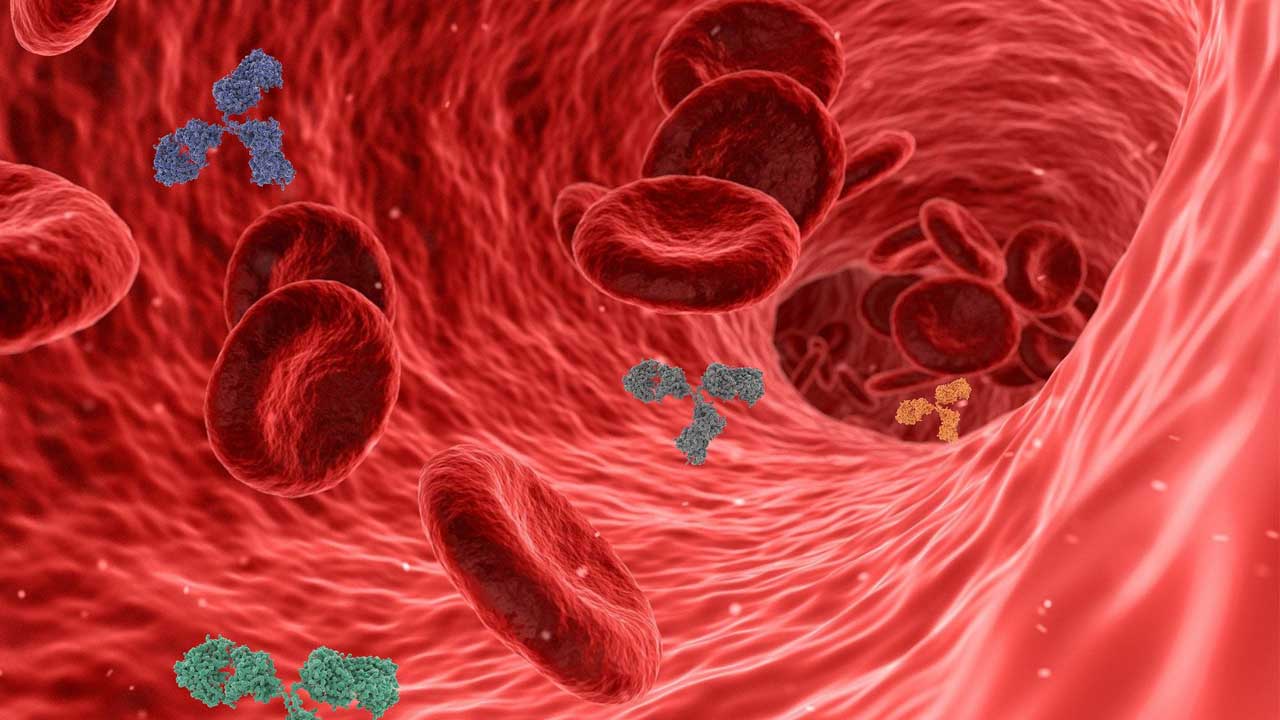
In comparison to the consistent finding that most people with natural immunity have persistent circulating antibodies that are likely to be highly protective against reinfection, antibody titers in people whose immune system were primed by vaccination wane more rapidly. We’ve already looked at one Israeli study comparing decay rates. Numerous additional studies support the conclusion that humoral immunity is much more durable with natural immunity.
In a study published on August 20 at medRxiv, researchers looked at antibody titers in healthcare workers and nursing home residents six months after receipt of the Pfizer-BioNTech COVID‑19 vaccine. The study found that 70 percent of the nursing home residents “had neutralization titers at or below the lower limit of detection” at six months since vaccination.
This finding suggests that individuals who are at the highest risk from COVID‑19 are also those for whom the humoral immunity induced by the vaccine is the shortest lived. By comparison to the elderly group, 16 percent of vaccinated health care workers had titers at or below the limit of detection.
As the authors commented, their data “demonstrate significant 6-month antibody decline” in both groups.[4]
The finding that 84 percent of vaccinated health care workers had detectable neutralizing antibodies at six months contrasts with findings from other studies that 89 percent to over 95 percent of people with natural immunity had detectable antibodies at twelve months.
A study published at the preprint server bioRxiv on September 30 found that “a significant proportion” of people who received Pfizer’s vaccine “have neutralizing titers below the detection limit” six months after administration of the second dose. They estimated the half-life of neutralizing antibodies to be 56 days, which compared with the finding of another study estimating the half-life of neutralizing antibodies induced by Moderna’s vaccine to be 68 days.
“In contrast,” the authors remarked, “the half-life of live-neutralizing antibody response was estimated as 150 days in COVID‑19 infected individuals.”[5]
Israeli researchers directly compared the decay rate of antibodies following vaccination with that following infection in a study published at medRxiv on August 22. They observed that, while peak antibody titers were initially higher in individuals who received two doses of Pfizer’s vaccine, titers in vaccinated subjects decreased by up to 40 percent each subsequent month, while titers decreased by less than 5 percent per month in those with natural immunity.
Only about 84 percent of subjects had detectable titers at six months since vaccination, compared to about 89 percent who had detectable levels after nine months since infection.
As the authors concluded, “This study demonstrates individuals who received the Pfizer-BioNTech mRNA vaccine have different kinetics of antibody levels compared to patients who had been infected with the SARS‑CoV‑2 virus, with higher initial levels but a much faster exponential decrease in the first group.”
Reiterating the point, they remarked that “the proportion of vaccinated individuals whose antibody levels drop below the threshold thought to be protective is increasing substantially by the fifth month, while it is uncommon in convalescent individuals.”
As explanation for this finding, they suggested that the more durable antibody response with natural immunity was an indication of stronger immunologic memory than that induced by vaccination.[6]
As already discussed in part six of this series, another study by Israeli researchers published at medRxiv on September 21 also compared the durability of antibodies in people with natural immunity with that of people who received the Pfizer vaccine. As they reported, “We found a significantly faster day in naïve vaccinees compared to recovered patients suggesting that the serological memory following natural infection is more robust compared to vaccination.”[7]
In sum, throughout the summer and fall of 2020, we were bombarded with deceitful media reports proclaiming that studies were finding that natural immunity was very short-lived. These claims were based on findings of waning antibodies in people who had recovered from COVID‑19.
On October 15, 2020, a commentary was published in The Lancet falsely claiming that there was “no evidence” that natural immunity would offer lasting protection and suggesting that vaccines would confer superior immunity that could be relied upon to achieve herd immunity. Among the authors of that article was Rochelle Walensky, now the CDC director.
Until December 30, 2020, the CDC was similarly claiming that “Early evidence suggests natural immunity from COVID‑19 may not last very long.”

In truth, an initial rapid decline from peak antibody levels is precisely what immunologists would expect to happen and was not evidence that people were rapidly losing their immunity; and at the same time the CDC was making that claim, studies had already shown that antibody levels in people with natural immunity were durable and strongly indicative of the induction of robust immunological memory.
In other words, the CDC was deliberately lying to the public in furtherance of its policy goal of achieving high vaccine uptake, which requires manufacturing consent through deceitful propaganda as opposed to providing people with truthful information to be able to make their own informed choice about whether to accept the risk of vaccination.
Studies have since continued to pile up demonstrating that natural immunity is robust and durable, yet the CDC continues to maintain that people who have already recovered from SARS‑CoV‑2 infection should still get fully vaccinated on the grounds that “Research has not yet shown how long you are protected from getting COVID‑19 again after you recover from COVID‑19” and that “people get better protection by being fully vaccinated compared with having had COVID‑19”.[8]
What the CDC is deliberately withholding from the public is the fact that the scientific evidence incontrovertibly shows that natural immunity is long-lived, with induction of immunologic memory and persistence of neutralizing antibodies in most people for as long as observations have been made; and if we apply the very same reasoning underlying the CDC’s false claim that “evidence suggests natural immunity from COVID‑19 may not last very long”, we must inescapably conclude that the immunity induced by COVID‑19 vaccines may not last very long and is certainly not as durable as natural immunity.
[1] Maria Skaalum Petersen et al., “SARS‑CoV‑2 Natural Antibody Response Persists for at Least 12 Months in a Nationwide Study From the Faroe Islands”, Open Forum Infectious Diseases, July 15, 2021, https://doi.org/10.1093/ofid/ofab378.
[2] Anu Haveri et al., “Persistence of neutralizing antibodies a year after SARS‑CoV‑2 infection”, medRxiv, July 16, 2021, https://doi.org/10.1101/2021.07.13.21260426. This study also found that the proportion of individuals with antibodies capable of neutralizing the “Delta” variant of SARS‑CoV‑2 in vitro was significantly lower than the proportion with neutralizing antibodies against the original strain of the virus. How protection against variants differs between natural and vaccine-induced immunity will be discussed in a future installment of this series.
[3] Jie Zhang et al., “One-year sustained cellular and humoral immunities of COVID‑19 convalescents”, Clinical Infectious Diseases, October 5, 2021, https://doi.org/10.1093/cid/ciab884.
[4] David H. Canaday et al., “Significant reduction in humoral immunity among healthcare workers and nursing home residents 6 months after COVID‑19 BNT162b2 mRNA vaccination”, medRxiv, August 20, 2021, https://doi.org/10.1101/2021.08.15.21262067.
[5] Mehul S. Suthar et al., “Durability of immune responses to the BNT162b2 mRNA vaccine”, bioRxiv, September 30, 2021, https://doi.org/10.1101/2021.09.30.462488. Notably, this study was funded by the National Institute of Allergy and Infectious Diseases (NIAID), which is the agency headed by Dr. Anthony Fauci, and the National Institutes of Health (NIH). The study referenced regarding the half-life of neutralizing antibodies induced by the Moderna vaccine is described in the correspondence: Nicole Doria-Rose et al., “Antibody Persistence through 6 Months after the Second Dose of mRNA-1273 Vaccine for Covid‑19”, New England Journal of Medicine, June 10, 2021, https://doi.org/10.1056/NEJMc2103916. The study referenced regarding the half-life of antibodies induced by infection is: Kristen W. Cohen, “Longitudinal analysis shows durable and broad immune memory after SARS‑CoV‑2 infection with persisting antibody responses and memory B and T cells”, Cell Reports Medicine, July 14, 2021, https://doi.org/10.1016/j.xcrm.2021.100354. See part six of this series for further discussion of the latter study: Jeremy R. Hammond, “Antibodies Persist with Natural Immunity to SARS‑CoV‑2”, JeremyRHammond.com, October 11, 2021, https://www.jeremyrhammond.com/2021/10/11/antibodies-persist-with-natural-immunity-to-sars-cov-2/.
[6] Ariel Israel et al., “Large-scale study of antibody titer decay following BNT162b2 mRNA vaccine or SARS‑CoV‑2 infection”, medRxiv, August 22, 2021, https://doi.org/10.1101/2021.08.19.21262111.
[7] T. Eyran et al., “The longitudinal kinetics of antibodies in COVID‑19 recovered patients over 14 months”, medRxiv, September 21, 2021, https://doi.org/10.1101/2021.09.16.21263693.
[8] Centers for Disease Control and Prevention, “Frequently Asked Questions about COVID-19 Vaccination”, CDC.gov, updated November 2, 2021, accessed and archived November 3, 2021, https://web.archive.org/web/20211103175257/https://www.cdc.gov/coronavirus/2019-ncov/vaccines/faq.html.
