

Why is the Omicron variant of SARS-CoV-2, the coronavirus that causes COVID-19, considered by global “public health” authorities to be a “variant of concern” (VOC)?
It’s not because this mutated version of the coronavirus is deadlier. The data are in. Officials are openly acknowledging (and the mainstream media are candidly reporting) that infection with Omicron is associated with a substantially reduced risk of severe disease.
Of course, at the time Omicron was dubbed a “VOC”, they didn’t yet know for certain that Omicron would be less virulent. Severe disease lags identification of infection, so although initial indications were that people infected with Omicron were having milder symptoms (or none at all), it was theoretically possible that, later in the course of the disease, people would become as sick (or sicker) than those infected with earlier variants.
Still, the early indications were that Omicron was associated with less severe disease. So, if it wasn’t out of fear that Omicron was going to cause a higher rate of hospitalizations and deaths, then why was Omicron deemed so particularly concerning as to warrant the VOC label?
A partial explanation is the speed at which Omicron was taking over as the predominantly circulating strain in the regions of South Africa where it was first identified. Indeed, once introduced into the United States, Omicron replaced Delta with astonishing speed and already accounts for over 98% of infections, according to genomic sequencing data from the Centers for Disease Control and Prevention (CDC).
While there could be other reasons for a variant to become predominant (including random chance), given the striking speed of the takeover, a reasonable conclusion could be drawn early on that Omicron is more highly transmissible than Delta (which, we were told, was more highly contagious than variants that preceded it). This increased transmissibility evidently gave it the selective advantage it needed to outcompete Delta.
But the fact that a variant is more transmissible is not by itself concerning. After all, if more people become infected but fewer people become severely ill or die from the virus, then that is a good thing. It means population immunity is building and the epidemiological outlook is changing from pandemic to endemic.
(While myopic policymakers in many countries foolishly aimed at the unattainable goal of “zero Covid”, it was clear to sensible observers from the start that SARS-CoV-2 was not going to go away, that we would have to adapt to live with it just as the virus would naturally adapt itself for the human host. Omicron appears at present to represent a leap toward endemicity, in which the virus constantly circulates but has a low infection fatality rate and typically causes mild symptoms, like a cold or mild flu.)
So, the evidently greater infectiousness of Omicron by itself does not explain the “variant of concern” status. What else is there?
Well, there is the related fact that a large number of mutations were identified with Omicron and that most of these mutations occurred in the spike protein.
That discovery caused concern to “public health” authorities for one obvious reason: the protection afforded by COVID-19 vaccines was dependent upon induction of immune responses against the spike protein of SARS-CoV-2.
Of course, responses against the spike protein are important with natural immunity, too, but the immunity induced by infection includes a much broader repertoire of immune responses that includes antibody and T cell responses to the nucleocapsid and membrane proteins of the coronavirus.
Transparently, the real concern was that Omicron would escape vaccine-induced immunity (while being more greatly conserved with natural immunity). In other words, the real concern was not that Omicron would cause more human devastation than prior variants but that it posed a threat to policymakers’ mass vaccination programs.
Indeed, it is becoming obvious from the emerging data that Omicron presents a real nightmare for “public health” officials. This variant certainly does represent a problem of pandemic proportions (pun intended).
As a stark indication of the true nature of the crisis, something extraordinary happened a week ago: the New York Times finally acknowledged the possibility that COVID-19 vaccines might be associated with an immunological phenomenon known as “original antigenic sin”. This was the first time I had ever seen any mainstream media source admitting that this could potentially occur with these vaccines.
While a welcome acknowledgement, the Times naturally failed to properly explain what the phenomenon is, much less to explain its true significance for mass vaccination programs. According to the Times’ description, “original antigenic sin” simply means that there is a mismatch between the antibodies induced by vaccination—which are specific to the spike protein of the original Wuhan strain of SARS-CoV-2—and the mutated spike protein of the infecting variant.
However, the Times failed to explain that there could be an antigenic mismatch and yet no phenomenon of original antigenic sin. This phenomenon does not simply mean that there is a mismatch; rather, it means that the immune system fails to adapt its responses to the newly infecting variant and instead persists in mounting ineffective immune responses.
The occurrence of original antigenic sin means that the initial priming of the immune system forever prejudices the immune responses to be suboptimal against subsequent variants of the virus, resulting in worse disease than if the individual was immunologically naïve (i.e., never vaccinated).
If original antigenic sin is occurring with COVID-19 vaccines, we would expect to see vaccine effectiveness that is not just near zero but negative.
And now, with the Omicron variant, that is precisely what we are starting to see. At least two studies have now found that two doses of an mRNA vaccine have very low initial effectiveness against infection with Omicron and, furthermore, that after just a few months the vaccines have statistically significant negative effectiveness. This finding is also echoed in a recent technical briefing from the UK government.
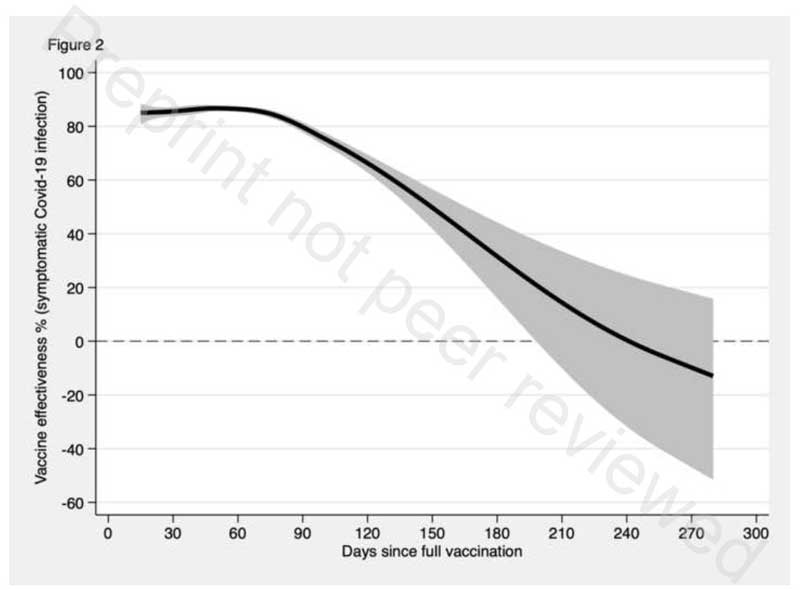
Even before Omicron emerged, data were suggesting that vaccine effectiveness against SARS-CoV-2 rapidly waned to become less than zero. In the context of predominant spread of the Delta variant, a Lancet preprint by Swedish researchers published on October 25, 2021, found that the effectiveness of two doses of the Pfizer-BioNTech COVID-19 vaccine waned from 92% during the first month to just 47% after six months, with no significant effectiveness after seven months. Effectiveness against hospitalization and death also waned significantly from 89% to just 42% after six months.
Moreover, by about eight months post-vaccination, the data indicated negative effectiveness. This result had confidence intervals on either side of zero and so was not a statistically significant finding, but the trend of continually falling vaccine effectiveness was clear.
On December 23, 2021, a study by researchers in Denmark was published on the preprint server medRxiv that found a statistically significant negative effectiveness of two doses of mRNA COVID-19 vaccines against the Omicron variant.
Their data showed that vaccine effectiveness waned rapidly from about 55% during the first month to no significant effectiveness after just one month. Just three months after completion of the two-dose regimen, effectiveness became significantly negative.
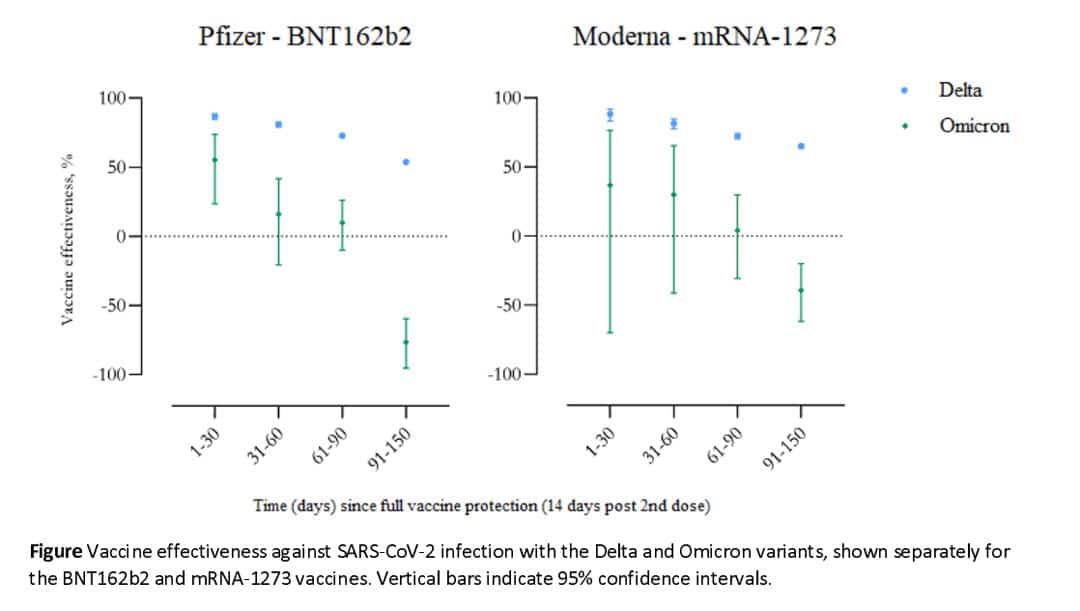
To be clear, negative effectiveness means that people who were fully vaccinated, according to the current CDC definition of having received two doses of an mRNA vaccine and being two weeks or more out since the administration of the second dose, were more likely to become infected with SARS-CoV-2 than people who were unvaccinated.
The authors of the study attributed the negative effectiveness to differences in behavior between vaccinated and unvaccinated individuals. That’s plausible.
Indeed, after I wrote about this study in my newsletter last week (you can sign up here to stay updated with my writings, including exclusive subscriber-only content), one of my readers, an American living in Denmark, replied to inform me that, during the study period, it was more difficult for unvaccinated people to participate in society due to government restrictions on activities based on immune status. Proof of vaccination, recovery from prior infection, or a negative test was being required for individuals to “enjoy polite society”, as my correspondent put it.
It is also plausible that the negative effectiveness is not attributable to unvaccinated individuals being less likely to be exposed to the virus in the first place. (For one, data collected during extreme “lockdown” measures suggest that, rather than stopping the spread, the transmission risk simply shifted from the community to the household—with implications for an increased risk to any elderly people with underlying medical conditions living in the home.)
Even assuming that behavioral differences do at least partly explain it, it is also plausible that the data is showing a true effect of the vaccine. In fact, this possibility is acknowledged in the second of the two studies finding COVID-19 vaccines to be associated with significantly negative effectiveness against the Omicron variant.
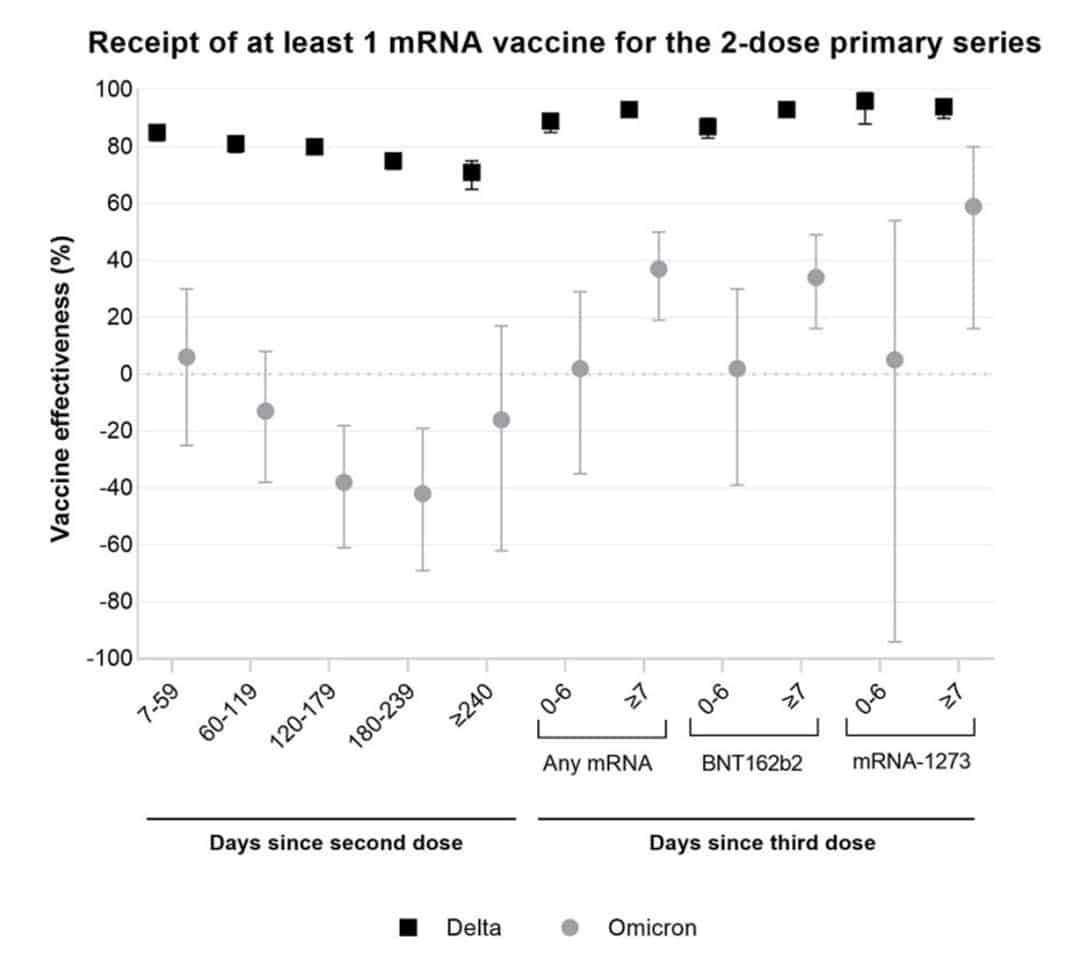
The second was a study by researchers in Canada published at medRxiv on January 1, 2022. They found that “receipt of 2 doses of COVID-19 vaccines was not protective against Omicron”, leading them to conclude that being fully vaccinated is “unlikely to protect against infection by Omicron.”
In other words, unlike the Danish study in which the data indicated that the vaccines did offer some protection during the first month, this second study found that “receipt of 2 doses of COVID-19 vaccines was not protective against Omicron at any point in time”.
Like the Danish study, the Canadian study found that a third dose, or a “booster” shot, did provide “some protection in the immediate term,” but even then, the effectiveness reached only 37%—and this modest effect is likely to wane rapidly just as the effectiveness of the primary doses wanes rapidly.
Even more concerningly, they similarly observed statistically significant negative effectiveness after just four months.
Like the Danish researchers, the Canadian authors noted that the negative effectiveness could be an artifact of behavioral differences between vaccinated and unvaccinated people. “However,” they added, “other hypotheses should also be considered, including the possibility that antigenic imprinting could impact the immune response to Omicron.”
What they are specifically referring to with that statement is the phenomenon of original antigenic sin. (This is made clear from their reference, which is a 2017 paper in the Journal of Infectious Diseases titled “The Doctrine of Original Antigenic Sin: Separating Good from Evil.”)
Supporting the plausibility of that hypothesis is additional evidence that original antigenic sin does occur with COVID-19 vaccines. It has been observed, for example, that vaccinated people who experience “breakthrough” infection fail to mount as robust an immune response against the nucleocapsid protein of SARS-CoV-2 in comparison to individuals whose immune systems were primed by infection.
This suggests that the vaccines prejudice the immune system to always favor responses against the spike protein of the original Wuhan strain, whereas, again, natural immunity includes balanced and coordinated responses not only against the spike but also against other parts of the coronavirus.
Whether the observed negative effectiveness of COVID-19 vaccines is at least in part due to original antigenic sin remains to be seen. For now, we must continue to regard it as a very real possibility, and so we must consider natural immunity to be an opportunity cost of vaccination.
And that is the real crisis for “public health” authorities who initially promised that just two doses of mRNA vaccines would be the path to ending the pandemic, that by stopping infection and transmission, vaccination would be the means to achieving herd immunity.
That promise was already proven false by the Delta variant. Now, with Omicron, the political goal of achieving and maintaining a high vaccination rate even among those at low risk from COVID-19, including children, and even among those who are already naturally immune is appearing all the more foolish and shortsighted.
And that is the true reason why Omicron is a “variant of concern” to “public health” authorities.
This new variant has illustrated once and for all what a phenomenal failure these pharmaceutical products have been with respect to the promises originally made by government officials in their coordinated efforts to manufacture consent for their political agenda of mass vaccination—which was from the very beginning the stated endgame of the authoritarian lockdown measures, in addition to being the aim of coercive mandates and “vaccine passport” policies.
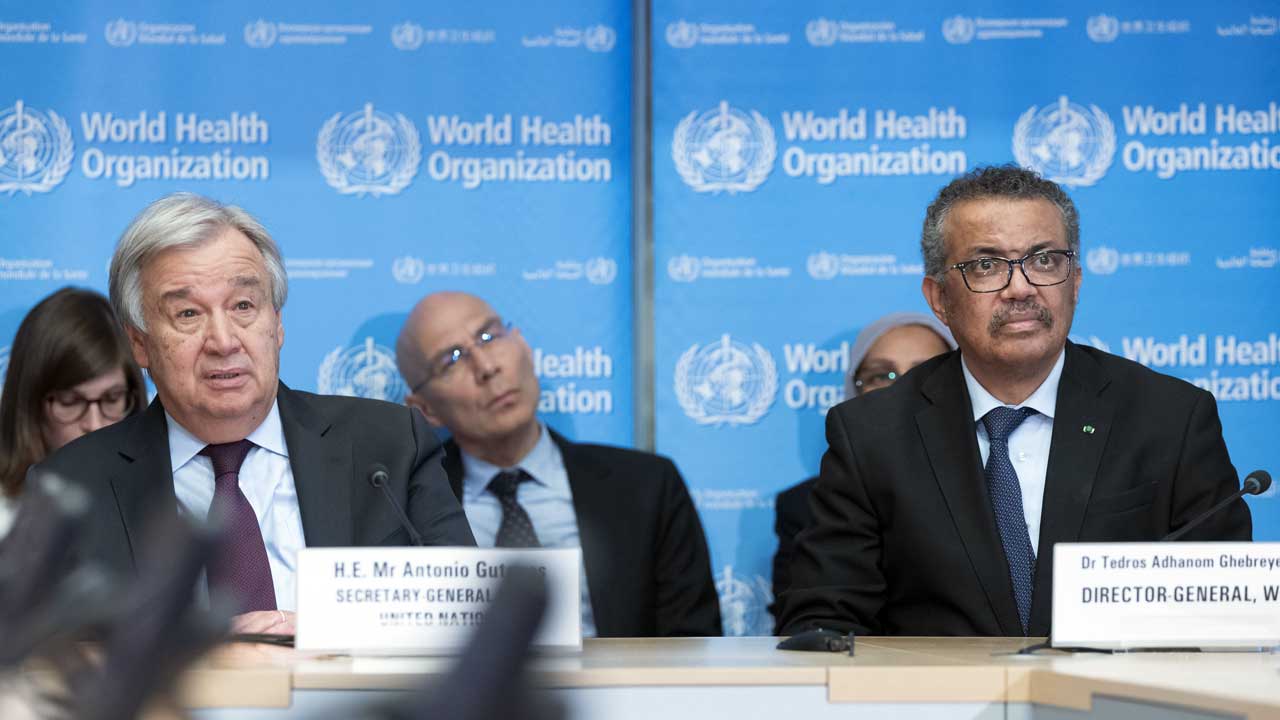
Indeed, the World Health Organization (WHO) just published a statement acknowledging the failure of COVID-19 vaccines to live up to the early promises of durable sterilizing immunity (meaning protection against infection and transmission). In the statement, released on January 11, 2022, the WHO called for the development of new vaccines capable of doing what the current vaccines cannot do, which is to “have high impact on prevention of infection and transmission”.
Moreover, in the context of data indicating that third doses still result in abysmal vaccine effectiveness that is likely to be as short-lived as the primary series, the WHO admitted that “a vaccination strategy based on repeated booster doses of the original vaccine composition is unlikely to be appropriate or sustainable.”
That admission was echoed by a top official with the European Medicines Agency (EMA), who went further and warned that repeated booster doses could detrimentally affect the immune system.
“While use of additional boosters can be part of contingency plans, repeated vaccinations within short intervals would not represent a sustainable long-term strategy,” said Marco Caveleri, head of the EMA’s Biological Health Threats and Vaccines Strategy division.
Caveleri further stated, “If we have a strategy in which we give boosters every four months approximately, we will end up potentially having problems with the immune response and the immune response may end up not being as good as we would like it to be, so we should be careful in not overloading the immune system with repeated immunization.”
Individuals with natural immunity from prior infection, by comparison, are far less likely to become infected with the Omicron variant and therefore far less likely to contribute to community transmission of the virus. There is no evidence for an “original antigenic sin” effect with natural immunity, indicating that the continually adaptive memory responses of individuals whose immune system was primed by infection with an earlier strain are capable of essentially being updated to include responses that have high affinity for the newly infecting variant.
The EMA cites data from South Africa indicating that, while protection against infection is abysmal, receipt of two doses of an mRNA COVID-19 vaccine continues to provide as high as 70% effectiveness against hospitalization. But that’s still less than the estimated effectiveness of natural immunity against infection from another South African study. The authors of that other study found prior infection to be 75% effective against reinfection with Omicron, which also means that protection against hospitalization would be even greater.
The EMA also cites data suggesting that a “booster” dose increases protection against hospitalization to 90%. That’s higher than the estimated protectiveness acquired with one prior infection, but then, a mild reinfection with Omicron will similarly serve as a safe natural booster. This is known as “exogenous boosting” in the literature and is an important phenomenon for the sustenance of natural population immunity with certain viruses such measles and varicella, helping to ensure protection for those at highest risk.
Incidentally, what is now being called “breakthrough” infection has traditionally been known in the literature as “vaccine failure”, with distinctions between “primary” and “secondary” failure, respectively meaning failure of the vaccine to induce a protective response in the first place and waning of protective immunity.
Note the cognitive dissonance inherent in the recent public messaging that exogenous boosting (“reinfection”) is bad, but vaccine failure (“breakthrough infection”) is good and induces “super immunity”—meaning that the infection naturally boosts neutralizing antibody titers.
The EMA’s 90% estimate is a rounded-up figure from a technical briefing from the UK government published on December 31, 2021, which placed the effectiveness of a booster dose against hospitalization at 88%. However, the briefing document also noted that this was the observed effect at just two weeks since administration of the booster and that the effectiveness of a booster shot against symptomatic infection rapidly waned from around 70% in the two to four weeks after administration to about 45% after just over two months.
The UK document further showed that two doses of mRNA vaccines resulted in significantly negative effectiveness against Omicron within six months.
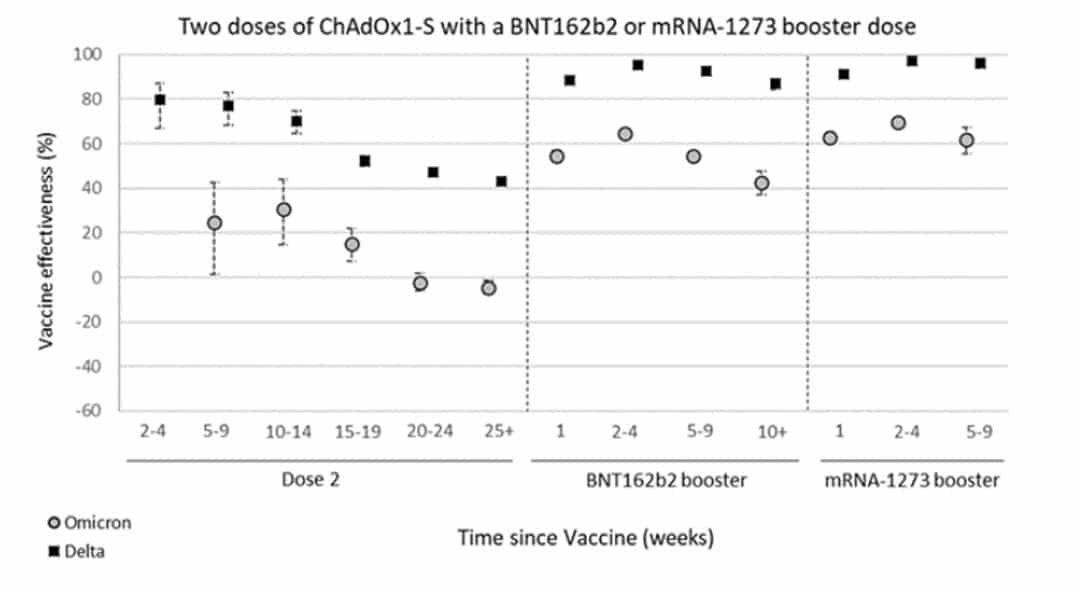
In sum, the UK data show that the boost in protective immune responses is not more durable than the immunity from the primary regimen but likewise wanes rapidly, and we can therefore expect protection to drop back into negative territory after several months.
Hence the acknowledgments that repeatedly administered booster shots are not a feasible long-term strategy to combat the problem of waning vaccine-induced immunity—as well as the admission that the effects of doing so on individuals’ immunity could actually be detrimental due to the phenomenon of immune exhaustion, which is a related but separate concern from the phenomenon of original antigenic sin.
A study in Qatar published at medRxiv on January 6, 2022, estimated the effectiveness of natural immunity against symptomatic infection with Omicron to be just 56%, which is considerably lower than the estimate from the South Africa study but still far better, obviously, than the negative effectiveness observed with a two-dose regimen of COVID-19 vaccines. The Qatar study also found immunity from prior infection to be 92% effective against infection with the Delta variant and about 88% effective against hospitalization or death due to infection with the Omicron variant.
That effectiveness of natural immunity is equivalent to the estimated effectiveness of a booster shot against hospitalization but, importantly, reflects more durable protection against severe disease than that induced by a third dose of an mRNA vaccine, which we can reasonably anticipate being extremely short-lived.
So, on one hand, we are still being told by authorities that the COVID-19 vaccines are “safe and effective” and that even people who are already naturally immune must still get fully vaccinated plus a booster dose. On the other hand, the same authorities are openly admitting that the vaccines are not doing a very good job and therefore must be replaced with new vaccines that are able to more closely mimic natural immunity.
One can indeed understand why policymakers consider the emergence of Omicron to be concerning: it demonstrates the complete lack of trustworthiness of “public health” authorities, who originally promised that these pharmaceutical products would offer protection that is superior to natural immunity and that would end the pandemic by conferring herd immunity. (This was, for example, what current CDC Director Rochelle Walensky told the public prior to the rollout of the COVID-19 vaccines.)
Furthermore, if the emerging data confirm that original antigenic sin does occur with these vaccines, policymakers will have been responsible for not just recommending but coercing people into getting injected with a pharmaceutical product that will forever prejudice their immune systems to respond suboptimally, thereby placing them at a relatively increased risk from COVID-19 throughout their lifetime (as is known to occur with acellular pertussis vaccines through a related immunologic phenomenon known as “linked epitope suppression”).
And yet, the policymakers remain stuck in their myopic paradigm of continued mass vaccination as the solution to the problem of the failure of mass vaccination. It seems that “public health” authorities will never learn the lesson from economics about the importance of considering opportunity costs as related in Frederic Bastiat’s famous parable about the “broken window” fallacy.
A few other important points not mentioned. The article that you quoted about the EMA stating repeated boosters could detrimentally affect the immune system, they go on to say boosters need to be spread out. So to keep the lie going they’re still pushing boosters as you’ve shown which will not stop the failure of these shots. I would have liked to have seen something said about just how dangerous these shots are when there’s millions of injuries and deaths occurring. There’s also the more alarming occurrences of waning immunity to other dormant diseases like cancer, shingles, etc. This is the other reason these shots must be stopped. Great article nonetheless. Thank you.
Yes, this gets into the important discussion of “non-specific effects” of vaccines and how vaccination can increase susceptibility to other diseases even if protective against the target disease, which I didn’t want to bring up here because it was already a fairly lengthy article.
Incredible fact finding analysis
Glad you appreciated it!
Insightful. Writing a follow-up on Substack ( https://victorazodoh.substack.com)
on some alternative view points.
As an unvaccinated person I really appreciated your meticulous article. For some reason doctors, mine included, don’t seem to think the VAERS report is important.
It’s certainly curious how on one hand we’re told that we don’t need to worry about vaccines causing harm because there is a robust adverse event surveillance system in place, but when that system shows concerning safety signals, suddenly we’re supposed to disregard it as worthless.