...

Archive

Health Freedom

Articles by Jeremy R. Hammond related to so-called “public health” policies and the need for individual liberty in the health marketplace.

The War on Informed Consent by Jeremy R. Hammond

How Medical Licensing Is Weaponized for Big Pharma

“extraordinary and riveting” — Robert F. Kennedy, Jr.

The War on Informed Consent documents how one courageous pediatrician was persecuted for achieving healthier outcomes by defying official vaccine policy.


FeaturedHealth FreedomNews & Analysis

The Questionable Contribution of Polio Vaccine to the Decline in Paralytic Disease

Yesterday, I exposed how the New York Times tries to deceive its readers into believing that the decline in infectious disease mortality that occurred in the twentieth century was caused by vaccines.

Citing a review of vital statistics in the journal Pediatrics, Secretary of Health and Human Services Robert F. Kennedy, Jr. informed a Senate committee on April 22 that the dramatic decline in measles and other disease mortality was mostly due to factors related to an increasing standard of living.

The author of the Times article, Sheryl Gay Stolberg, vainly tried to deny the truth of what Kennedy said and falsely accused him of mischaracterizing the study while herself doing precisely that. Talk about hypocrisy!

Kennedy is right. It is an incontrovertible point of fact from the historical data that vaccines couldn’t possibly have driven the decline in infectious disease mortality.

I provided an extensive quote from the Pediatrics paper showing in context how it does affirm that “90% of the decline in infectious disease mortality among US children occurred before 1940, when few antibiotics or vaccines were available.”

In addition to graphs for diphtheria and pertussis, I presented the following graph of the data on measles mortality that absolutely destroys the Times’ propaganda narrative:

Measles mortality rate

Here, I’d like to delve a bit deeper into the historical data, with a particular focus on the polio vaccine.

Vaccines Didn’t Save Us

In 1977, the Milbank Memorial Fund Quarterly: Health and Society published a paper by John B. McKinlay and Sonja M. McKinlay titled “The Questionable Contribution of Medical Measures to the Decline of Mortality in the United States in the Twentieth Century”.

In it, they focused on vaccinations and argued that, contrary to official dogma, most of the decline in infectious disease mortality had nothing to do with vaccines—an argument considered heretical at the time.

🔓Continue reading with a FREE or premium membership.

Log in below or choose your membership.

McKinlay-Mortality-vs-Health-Spending
FeaturedHealth FreedomLiberty & EconomyMultimediaSpecial Reports

The Great MAHA™ Glyphosate Betrayal

Audio and PDF Versions of This Article

🔒 The audio and PDF versions of this article are available to premium members. Log in or join today.

Trump’s Executive Order

On February 18, President Donald Trump issued an Executive Order (EO) aimed at effectively subsidizing the domestic production of glyphosate on grounds of “national security”.

Glyphosate is a chemical used in herbicides, including Bayer’s popular “Roundup” product, previously manufactured by Monsanto, which Bayer bought and absorbed in 2018.

The EO referenced Bayer as the only domestic producer of glyphosate, which has resulted in a dependency on imports from what the Trump administration described as “hostile foreign actors”.

That was a clear reference to China, which is the source of almost all imported glyphosate.

Bayer has been facing lawsuits alleging that Roundup causes cancer, and glyphosate is also known to disrupt the gut microbiome, which can lead to a multitude of health problems.

Eliminating glyphosate and other toxic chemicals from the food supply has been a key aim of the “Make America Healthy Again” or “MAHA” movement, whose members voted for Trump to get Robert F. Kennedy, Jr. into the position of Secretary of Health and Human Services (HHS).

Yet Kennedy himself defended the EO, and others in the MAHA leadership have similarly tried to reassure Trump’s critics that it’s just an unfortunate reality that farmers are dependent on glyphosate; and while a transition to regenerative and organic agriculture is necessary, it is a matter of “national security” that we take action in the meantime. Kennedy endorsed the EO as necessary to protect the food supply from “adversarial nations” and “hostile actors”.

So, who is right? Are the critics of the EO misguided, or has the MAHA leadership made a political compromise that elevates loyalty to Trump over the objectives of the health freedom movement?

The answer, I posit, is the latter. Let’s examine the opposing arguments.

The Arguments in Defense of Trump’s Executive Order

One of the leaders of the MAHA movement is Del Bigtree, host of The Highwire and founder of the Informed Consent Action Network (ICAN), which has done phenomenal work advocating the right of individuals to make their own health choices, including the right to informed consent for vaccinations.

Bigtree was also the communications director for Kennedy’s presidential campaign, before Kennedy dropped out of the race to form an alliance with Trump.

As discussed in more detail below, after joining Trump’s campaign, Kennedy registered a trademark application for “MAHA” that he then transferred to Bigtree. The MAHA trademark was transferred again last summer, with current ownership remaining unclear.

In an article by Tracy Beanz and Michelle Edwards described as an “editorial” by the show’s X account, The Highwire defended Trump’s EO.

Directing readers to the article, the Highwire’s X post firmly rejected the idea that “Trump betrayed MAHA”, suggesting that the EO was instead a necessary step on the path to eventually replacing glyphosate through innovation and reformation of the agricultural system.

“There’s a bigger fight worth having than this last week’s outrage news cycle”, the post stated.

The Highwire article characterized the EO’s critics as having acted irrationally based on a misunderstanding of its contents. By the Highwire’s account, “sheer panic ensued” when people “apparently briefly skimmed” the order and saw “the words ‘glyphosate’ and ‘immunity.’”

People thus misinterpreted the EO as “a permanent stamp of approval to chemicals in our food”; they “misread” it as providing “a magic immunity shield against product liability or cancer claims related to glyphosate.”

The Highwire averred that the EO was instead “a national-security procurement memo” that invoked authority from the Defense Production Act of 1950 to direct resources toward domestic mining of elemental phosphorus, which is used to make glyphosate. Other uses of phosphorus include incendiary weapons, semiconductors, and lithium-ion batteries.

The EO did not give “blanket immunity”, as critics claimed, but instead provided “a compliance shield that prevents a company from being punished simply for prioritizing a federal order over ordinary contracts.” The immunity clause “is tied to compliance with the order, not a blanket pardon for toxic tort claims.”

The “backlash” was also misguided, the Highwire argued, because the EO did not “permanently stamp SAFE on glyphosate”; it was merely “an access and supply decision, not a health verdict.”

The article concluded that, yes, we certainly need to get glyphosate out of our food, but we shouldn’t “turn anti-farmer or anti-Trump” because of an Executive Order that is necessary for national security.

The editorial cited Secretary Kennedy’s own defense of the EO, paraphrasing his argument that “our nation is dependent on something it suspects is making us sick, and the question is how to transition off of that toxic path without putting farmers out of business.”

The EO strikes an appropriate balance, The Highwire argued, between “the MAHA instinct (stop poisoning people) and the national-interest instinct (don’t collapse domestic agriculture)”.

The article concluded that, yes, we certainly need to get glyphosate out of our food, but we shouldn’t “turn anti-farmer or anti-Trump” because of an Executive Order that is necessary for national security.

In sum, instead of criticizing the EO, The Highwire defended it, expressing a clear position of loyalty to Trump and characterizing critics as not merely “anti-Trump” but also “anti-farmer”.

Similarly, The MAHA™ Report, a Substack publication of MAHA Action, Inc., issued a call for “unity” in support of the EO.

“We take President Trump at his word”, the organization said in an official statement on February 20, “that this executive order is about national security and reducing dependence on China. We support that objective.”

The statement similarly characterized the EO as striking an appropriate balance between “supply chain security” and “health security”.

The central message from those defending the EO is that we are supposed to be good team players and get on board with MAHA™ and whatever its leadership decides is best, which also means being a Trump loyalist.

If Trump says his EO is for “national security”, then we ought to believe him, and we ought not become both “anti-Trump” and “anti-farmer” by opposing it.

However, these defenses offered by the MAHA leadership to excuse Trump’s EO are based on three fundamental errors.

🔓Continue reading with a FREE or premium membership.

Log in below or choose your membership.

Donald Trump's Executive Order on glyphosate was endorsed by HHS Secretary Robert F. Kennedy, Jr.
FeaturedHealth FreedomLiberty & EconomySpecial Reports

Why Medical Licensing Should Be Abolished

Audio And PDF Versions of This Article

🔒 The audio and PDF versions of this article are available to premium members. Log in or join today.

Introduction

We’re supposed to believe that medical licensing exists to protect health care consumers from quack doctors pushing fake remedies and harmful treatments. The purpose, we’re told, is to improve the quality of health care.

Evidence that medical licensing achieves that result is lacking.

Instead of protecting the interests of health care consumers, licensing transparently serves to protect medical trade organizations whose financial interests are inseparable from those of the pharmaceutical industry.

The effective result is a government-enforced medical cartel that masquerades as a “health care” system.

That explains today’s astronomical costs and disastrous health outcomes in the US, with alarming rates of chronic diseases among both the adult and childhood populations.

In my book The War on Informed Consent: The Persecution of Dr. Paul Thomas by the Oregon Medical Board, I provide a case study of how medical licensing is weaponized.

As I document, the state’s policy goal of a high vaccination rate superseded Dr. Thomas’s goal of achieving a healthy patient population.

His approach was to respect parents’ right to make their own informed choice about childhood vaccinations.

Published in a peer-reviewed journal, his patient data clearly showed that this approach was working.[1]

The medical board claimed that Dr. Thomas posed a threat to public health, but the truth is that he posed a threat to the “public health” establishment.

That is sufficiently illustrated by the fact that the board’s “emergency” meeting to suspend his license occurred mere days after the publication of his study showing that his completely unvaccinated patients were far healthier.[2]

Dr. Thomas’s story is not an isolated case of medical licensing being weaponized.

On the contrary, weaponization against physicians who dissent from regime-approved “standard of care” is the very purpose of medical licensing.

These standards are determined by powerful medical trade organizations like the American Medical Association (AMA), American Dental Association (ADA), and American Academy of Pediatrics (AAP).

The AMA played a central role in the establishment of medical licensing in the United States.

It does not issue medical licenses or control state medical boards, yet it wields vast power to determine who does or does not qualify to legally practice medicine.

On the contrary, weaponization against physicians who dissent from regime-approved “standard of care” is the very purpose of medical licensing.

Since the early twentieth century, state licensing boards have required graduation from an accredited medical school, with accreditation standards heavily shaped by the AMA.

For over a century now, the AMA has had effective control over medical school curriculum, and by this means it also steers the direction of medical research.

It does this, of course, not out of some angelic benevolent intent, but to secure its own financial interests, the interests of its members, and the interests of the pharmaceutical industry with which it has always been allied.

Indeed, the AMA’s whole purpose from the start was to protect the financial interests of practitioners who favored chemical drug treatments over more natural and holistic approaches to health care.

The scarcely concealed aim of the AMA was to establish an effective monopoly over the practice of medicine.

The goal was to reduce the supply of doctors by eliminating competition, thus increasing profits for its own members by limiting consumer choice and increasing the costs for health care.

The scarcely concealed aim of the AMA was to establish an effective monopoly over the practice of medicine.

It’s no great mystery why medical costs are so high today. They are designed to be.

It’s also no mystery why this system doesn’t perform well when it comes to achieving good health outcomes.

It wasn’t designed to do that, either.

My goal with this article is to persuade you to join a movement to end this medical cartel by demanding the elimination of medical licensing.

It starts with the story of how the current regime of medical licensing came into existence.

A medical license on the wall of a modern doctor's office (Image generated by Jeremy R. Hammond using Sora AI.)

The Era of Free Trade in Medicine

Early in US history, various medical licensing laws were enacted to restrict the practice of medicine to individuals deemed worthy by the state.[3]

As related by Lester S. King, MD, in an article published in 1982 in the Journal of the American Medical Association (JAMA), the effect of these early licensing laws was largely to restrict “regular medical practice” to treatments like bloodletting and administration of chemical drugs.

While writing in the AMA’s own journal from the perspective of mainstream medicine, King conceded that “medical care that the regular physicians had provided was not strikingly successful”.

He nevertheless lamented what he called “attacks” on mainstream medicine by alternative practitioners who preferred more natural approaches, like herbal remedies and steam baths.

One key truth, King conceded, was that “the regular practitioners had a protective legal umbrella that gave them alone the right to practice medicine”.

These dissidents criticized “the regular medical profession for their bloodlettings and chemical poisons, for their monopolistic practices, their efforts to hold and retain special privileges, and their rapacity and high fees.”

Such “propaganda”, as King described it, “was remarkably effective”—no doubt because the criticisms were “not without some truth”, he understatedly admitted.

Indeed, King didn’t identify any aspect of that characterization of mainstream medicine that isn’t accurate.

One key truth, King conceded, was that “the regular practitioners had a protective legal umbrella that gave them alone the right to practice medicine”.

Then during the 1820s and 1830s, “the whole concept of special privilege came under heavy political attack.”

As a result, “restrictive regulations that granted privileges to regular medicine” were repealed throughout the US, resulting in an era known as “free trade in medicine.”

It was that turn of events, King informs, that “led directly to the formation of the American Medical Association.”[4]

The central role of the AMA in lobbying state governments to impose legislative and regulatory restrictions on the practice of medicine was detailed by historian Ronald Hamowy in the Journal of Libertarian Studies in 1979.

From the early to mid-1800s, health care practitioners in the US were generally not required to obtain a medical license to diagnose and treat patients.

Standard approaches to medicine included a heavy reliance on barbaric practices like bloodletting and administering doses of toxic substances like mercury and arsenic.

Medical schools abounded, and the large supply of physicians and market competition between different sects of practitioners kept costs low.

Standard approaches to medicine included a heavy reliance on barbaric practices like bloodletting and administering doses of toxic substances like mercury and arsenic.

Mainstream medicine, Hamowy remarked, “certainly killed large numbers of patients unfortunate enough to undergo treatment at the hands of its practitioners.”

Competing with the mainstream quacks were practitioners of alternative medicine whose approaches included the use of botanical remedies, adequate rest, sunshine and fresh air, a nutritional diet, and personal hygiene.

The focus of alternative practitioners “on the natural healing powers of the organism itself” was gaining in popularity among the public.

But practitioners of “regular medicine” disregarded any methods other than their own and felt threatened by the competition.[5]

The situation during the era of “free trade in medicine” was also summarized by Lawrence D. Wilson in an article titled “The Case against Medical Licensing”, published by The Future of Freedom Foundation in 1994.

The US at the time had one of the healthiest populations on the planet, with the lowest infant mortality rate in the world—whereas today it ranks near the bottom of the list among developed countries.[6]

Costs were low, and health care was widely accessible. Consumers were protected by laws against fraud and negligence.

But then the AMA was formed “to protect the interests of one group of doctors—the drug healers, or allopaths.”[7]

Since the free market posed an obstacle to achieving its financial goals, the AMA set out to eliminate it.

The practice of bloodletting (Image generated by Jeremy R. Hammond using Sora AI)

The Rise of the Medical Cartel

In 1847, to put a stop to the dangerous ideas that the human body has an innate ability to heal and that simple natural approaches can be taken to maintain good health and recover from illness, the American Medical Association was founded.

The AMA’s aim was to establish a virtual monopoly over the practice of medicine. Its financial goal was to increase profits for AMA members by strictly limiting the supply of doctors.

This would be done by limiting the number of medical schools, controlling the curriculum, and establishing a licensing regime to restrict the practice of medicine to physicians adhering to the AMA-approved standard of care.

In other words, the goal was for mainstream practitioners to eliminate the competition from physicians taking more natural approaches, and whose care was often more effective and less expensive.

To circumvent the market in pursuit of a monopoly power, the AMA intensely lobbied the government, including by working to get its representatives into Congress.

The AMA’s aim was to establish a virtual monopoly over the practice of medicine. Its financial goal was to increase profits for AMA members by strictly limiting the supply of doctors.

As Hamowy observed, the AMA “sought medical licensing legislation which established as a precondition for examination by the state boards of examiners, graduation from an approved medical institution.”[8]

What qualified as “approved” curriculum, of course, would be determined by the AMA.

The AMA scarcely concealed its malevolent aim beneath a thin veil of rhetoric about protecting patients from “quacks” and “charlatans”.

In 1887, the first vice-president of the AMA, Dr. Perry Millard, complained how the medical profession had suffered from “a competition that is intolerable to an educated man.”[9]

Millard pleaded for his fellow mainstream practitioners to “cooperate in obtaining at the hands of the legislatures of the different States such regulations of the practice of our profession as will place the standard thereof upon a citadel of greater strength and power.”[10]

The same year, the Journal of the American Medical Association argued that the policies advocated by the AMA would result in increased costs for a medical education.

The journal considered this a good outcome because it would deter individuals from entering the practice and thereby “aid in lessening the evil of overcrowding the professional ranks.”[11]

Of course, racial minorities seeking employment as physicians were disproportionately harmed by that policy.

In 1889, Millard boasted how Minnesota’s state regulations had resulted in “a smaller ratio of physicians to the population than any State in the Union. Instead of one physician to every 750 inhabitants, the last medical census shows but one to every 1,300.”[12]

As Hamowy remarks,

Why the public should applaud a law which effectively cut the availability of physicians by forty percent in two years we are not told, although it is clear why the remaining practitioners would be delighted with this change. [13]

The same “specious identification of the profession’s interests with those of the public at large” was evident again in a statement by Millard in 1889, in which he professed market omniscience by claiming to know that “there are twice as many practitioners of medicine in this country as are commensurate with its legitimate wants.”[14]

In 1891, JAMA boasted how effective the organization’s strategy had been in Illinois: the “efficacy” of the state’s laws for regulating medical practice was proven by the fact that “The total number of physicians in the State is less than it was twelve years ago.”[15]

The AMA was successfully solving the problem of free market competition by reducing the supply of doctors and increasing the costs for health care.

🔓Continue reading with a FREE or premium membership.

Log in below or choose your membership.

The AMA, Big Pharma, and medical licensing - a government-enforced medical cartel
FeaturedHealth FreedomNews & Analysis

How Medical ‘Experts’ Deceive the Public about Vaccine Safety

Audio and PDF Versions of This Article

🔒 The audio and PDF versions of this article are available to premium members. Log in or join today.

Introduction

Parents concerned about the long-term health effects of vaccines are constantly gaslit by the corrupt medical establishment, including doctors and scientists. We’re told to trust the “experts”, but the problem is that experts have consistently proven their untrustworthiness.

Take Jake Scott, MD, an infectious disease specialist at Stanford University School of Medicine.

As I noted in my December 8 article “Scientific Data Show Unvaccinated Children Are Healthier”, Dr. Scott testified in defense of Big Pharma at Senator Ron Johnson’s September 9 hearing on how the corruption of medical science has impacted public perceptions about vaccine safety.

Introduced onto the record at that hearing was a study out of Henry Ford Health that was never published because it produced the wrong results—showing that unvaccinated children have far lower rates of diagnoses for chronic health conditions.

Scott tried to dismiss the study on the grounds it was too fatally flawed to take seriously, which is an argument too fatally flawed to take seriously.

For the details, see my prior article. The gist of it is that the “flaws” cited are typical limitations for this type of observational study, and other studies with similar or even worse flaws do not receive the same level of scrutiny as long as they find no association between vaccines and chronic childhood illnesses.

The Henry Ford Health study was provided to the Senate by attorney Aaron Siri, who has worked closely with the Informed Consent Action Network (ICAN), which in 2017 approached the health care company’s head of infectious diseases, Dr. Marcus Zervos, about doing the study.

Zervos agreed because, from his perspective, it could finally put to rest widespread parental concerns about vaccine safety and boost confidence in public vaccine policies. But when it produced the opposite result, he refused to publish it, telling ICAN founder and The Highwire host Del Bigtree that it would risk his career to do so.

On December 18, Scott published a Substack article titled “The Myth of the Missing Study”, in which he takes issue with the following statement that he attributed to Bigtree:

There is not a single study in the entire world—not from a single health department in any nation—that has compared vaccinated kids to unvaccinated kids and shown that the vaccinated are the ones who have better health outcomes.

What Bigtree means, as anyone familiar with the vaccine controversy knows, is that no studies have compared long-term health outcomes between children vaccinated according to schedule and completely unvaccinated children.

Scott claims that this is “false” because observational studies comparing “vaccinated and unvaccinated kids” have been done.

He also presents the usual argument for why no randomized controlled trial has ever been done to determine the safety of vaccinating children according to the recommendations of the US Centers for Disease Control and Prevention (CDC).

(To be clear, the CDC’s schedule is now being updated, but I’m referring in this context to the historic schedule involving upwards of 72 vaccine doses.)

The argument is that it would be “unethical” to withhold vaccines from children because they could be exposed to diseases the vaccines are designed to prevent.

That, of course, is the fallacy of begging the question (petitio principii, formally). It presumes the very proposition to be proven as its premise, which is that the benefits of vaccination outweigh any possible risks and lead to better health outcomes.

After rolling out the usual circular argument for not safety testing the CDC’s schedule with gold standard science, Scott proceeds to cite studies he claims belie Bigtree’s assertion.

The problem with Scott’s argument is that none of the studies he cites actually support his counterclaim.

Bigtree is right. Scott is wrong. Let’s examine.

🔓Continue reading with a FREE or premium membership.

Log in below or choose your membership.

Dr. Jake Scott testifying at a Senate hearing on September 9, 2025
FeaturedHealth FreedomNews & Analysis

Danish Study Claiming Safety of Aluminum in Vaccines Slammed in New Peer-Reviewed Paper

Audio and PDF Versions of This Article

🔒 The audio and PDF versions of this article are available to premium members. Log in or join today.

Crépeaux et al. Challenge Andersson et al.

On July 15, 2025, a study was published that the media hailed as conclusively proving that aluminum-adjuvanted vaccines do not cause chronic illnesses in children.

Written by Niklas Worm Andersson and coauthors and published in Annals of Internal Medicine, the study was titled “Aluminum-Adsorbed Vaccines and Chronic Diseases in Childhood: A Nationwide Cohort Study”.

Immediately upon publication, it was met with criticisms by independent researchers, including myself, for fatal flaws in study design that systematically biased its findings in favor of finding no association.

Articles criticizing the study include the following:

Additionally, a correction to the study’s supplement was issued, which was analyzed by Dr. Karl Jablonowski and Dr. Brian Hooker in a paper at PrePrints.org titled “Neurodevelopmental Disease Associated with Aluminum-Absorbed Vaccines: A Nationwide Cohort Study”.

The preprint paper observed that the corrected data showed statistically significant associations between the highest exposure group and some neurodevelopmental disorders, including autism.

Now a peer-reviewed paper has been published criticizing Andersson et al. for “major methodological and conceptual flaws” that “prevent meaningful conclusions” about the safety of aluminum-adjuvanted vaccines.

The paper is titled “Aluminium adjuvants and childhood health: a call for science”, published in the Journal of Trace Elements in Medicine and Biology on December 29.

The lead author is Dr. Guillemette Crépeaux, and the senior author is Dr. Christopher Exley. The other coauthors are Jonathan B. Handley, Dr. Brian Hooker, Dr. Karl Jablonowski, Dr. Lluís Luján, Dr. James Lyons-Weiler, Dr. Marika Nosten-Bertrand, Dr. Christopher A. Shaw, Dr. Yehuda Shoenfeld, and Lucija Tomljenovic.

(My name also appears in the byline, and I am honored to have been invited to work with the team Dr. Crépeaux assembled for this important effort to set the record straight. My contribution was modest, but a few observations from my own analysis were incorporated.)

The paper describes “major concerns that critically undermine” the conclusions of Andersson et al., which fall into three main categories: (1) a “striking lack of knowledge” regarding aluminum adjuvants; (2) “critical shortcomings” in study design and statistical analysis; and (3) “insufficient transparency and potential conflicts of interest.”

I encourage you to read the paper, but here is my own layperson summary.

No Established ‘Safe’ Limit for Aluminum Adjuvant Exposure

Crépeaux et al. point out that aluminum-based adjuvants (ABAs) have been used in vaccines since the 1920s, and they have regulatory approval still today “without any scientifically established safe limit”.

This refers to how the limit of 0.85 mg per dose used by the US Food and Drug Administration (FDA) was based on immunogenicity and not safety data, as documented in a paper published in Environmental Toxicology and Pharmacology in October, for which Dr. Crépeaux was senior author.

the limit of 0.85 mg per dose used by the US Food and Drug Administration (FDA) was based on immunogenicity and not safety data

(I reported on that paper for The Defender in an article that also briefly summarized key problems with the Danish study by Andersson et al.)

As noted by Crépeaux et al., this regulatory status quo for aluminum adjuvants remains “despite burgeoning experimental evidence in animals and humans concerning the biopersistence and neurotoxicity of ABAs and their links to chronic inflammatory conditions such as neurodevelopmental disorders and Auto Immune/inflammatory Syndrome Induced by Adjuvants (ASIA).”

Concerns about biopersistence include animal studies showing translocation of aluminum into the brain and findings of aluminum accumulation in human brain tissue.

Citing an Outdated and Discredited FDA Study

The new paper notes how Andersson et al. “seemingly disregard” this body of scientific literature, which is a “glaring omission” that starkly contrasts with their  referencing of “outdated and largely irrelevant studies.”

Most specifically, to support the claim of adjuvant safety, they cite a 2011 FDA study by Mitkus et al. that is “outdated” and “discredited”.

One core problem is that the FDA researchers inappropriately adopted a “minimal risk level” (MRL) defined for daily oral intake of soluble aluminum in mice—not the insoluble particulate form of aluminum injected into children.

the FDA researchers inappropriately adopted a “minimal risk level” (MRL) defined for daily oral intake of soluble aluminum in mice

Apart from being an irrelevant comparison, the MRL was also by that time already outdated, with animal studies having shown adverse effects at much lower levels of exposure.

And the FDA researchers considered only the amount of aluminum absorbed into the bloodstream as contributing to the body burden of aluminum toxicity, whereas studies have indicated that particulate aluminum can be taken up by macrophages and transported into tissues and organs throughout the body, including the brain, where it accumulates and can cause neuroinflammation.

Studies exposing the reckless inadequacy and scientific invalidity of the Mitkus et al. FDA analysis include:

🔓Continue reading with a FREE or premium membership.

Log in below or choose your membership.

Danish study by Andersson et al. implausibly found aluminum-adjuvanted vaccines negatively associated with chronic illnesses.
FeaturedHealth FreedomMultimediaSpecial Reports

Scientific Data Show Unvaccinated Children Are Healthier

Audio and PDF Versions of This Article

🔒 The audio and PDF versions of this article are available to premium members. Log in or join today.

An Inconvenient Study

On September 9, 2025, Senator Ron Johnson, Chair of the Permanent Subcommittee on Investigations, held a hearing titled “How the Corruption of Science Has Impacted Public Perception and Policies Regarding Vaccines”.

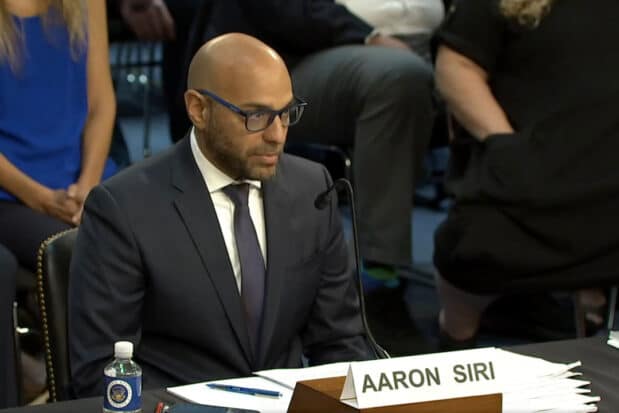
Among those testifying was attorney Aaron Siri, whose firm has worked closely with the organization Informed Consent Action Network (ICAN), which has been at the forefront of legal efforts to compel government disclosures about vaccines via Freedom of Information Act (FOIA) requests.

For instance, in 2020, ICAN filed a request with the US Centers for Disease Control and Prevention (CDC) to release all documents in its possession “which compare the health outcomes of children that have received vaccines with children that have never received any vaccines.”

The background context is that back in 2013, the Institute of Medicine (IOM) issued a review titled “The Childhood Immunization Schedule and Safety”, which acknowledged the widespread parental concern that no studies had ever been designed to test the safety of the CDC’s routine childhood vaccine schedule as a whole.

The IOM advised the CDC to allay these concerns by using patient data from its Vaccine Safety Datalink (VSD), a collaboration with several major health care providers, to compare long-term health outcomes between fully vaccinated and completely unvaccinated children—or a “vaxxed vs. unvaxxed” study, for colloquial shorthand.

Instead, the CDC produced a White Paper suggesting that such a study wouldn’t be feasible—because any control group would already have been vaccinated away—and proposing to carry on with only more vaxxed vs. vaxxed studies.

CDC White Paper

ICAN’s 2020 FOIA request sought to confirm that the CDC never did the type of study that so many parents have long been demanding and that the IOM advised it to do.

The result was an admission that “The CDC has not conducted a study of health outcomes in vaccinated vs unvaccinated populations.”

This leads independently thinking parents to believe that the real reason for the CDC’s refusal to do such a study is the fear that it would produce the wrong results.

Senator Ron Johnson
Aaron Siri

During his testimony at the congressional hearing chaired by Senator Ron Johnson, Siri introduced into the Congressional record a vaxxed vs. unvaxxed study out of Henry Ford Health, a health care company headquartered in Detroit, Michigan.

The study had been headed up by the company’s division head of infectious diseases, Dr. Marcus Zervos, whom ICAN had approached in 2017 about doing such a study.

Dr. Zervos was receptive to the idea because, from his perspective, it could finally put to rest widespread parental concerns about vaccine safety and boost confidence in public vaccine policies.

Marcus Zervos

The study was completed in 2020 but never published because it did not produce the results that Dr. Zervos was anticipating—and he feared that to publish it would be career suicide.

This is not speculative. Dr. Zervos plainly explained his reason for not wanting to publish the study to ICAN founder Del Bigtree, who secretly recorded their conversations.

These exchanges are documented in the film An Inconvenient Study, which was released on October 12 at the Malibu Film Festival.

An Inconvenient Study

(Watch the YouTube video at the top of this article. It’s also available on Rumble, and you can watch and download the full film at AnInconvenientStudy.com.)

During his Senate testimony, Siri summarized the study’s key findings as follows (bold emphasis added):

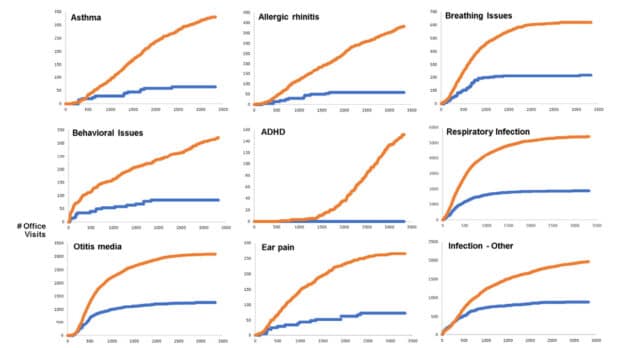
The Henry Ford study found that vaccinated children had a statistically significant increased rate of various serious chronic diseases. For example, vaccinated children had 3.03 times the rate of atopic disease (a group of allergic conditions); 4.29 times the rate of asthma; 5.53 times the rate of neurodevelopmental disorder, which included 3.28 times the rate of developmental delay and 4.47 times the rate of speech disorder; and 5.96 times the rate of autoimmune disease. All of these findings were statistically significant.

There were other conditions for which a rate could not be calculated because, while many cases existed among the vaccinated children, there were no cases among the unvaccinated children. For example, while there were many cases of ADHD, learning disability, and tics in the vaccinated group, there were none in the unvaccinated group.

The foregoing is obviously extremely troubling, especially because almost all these chronic diseases that showed an increased risk result from some form of immune system dysregulation.

The study, which is available to download on the Senate’s website, is titled “Impact of Vaccination on Short and Long-Term Chronic Health Outcomes in Children: A Birth Cohort Study”. The lead author is Lois Lamerato, with Zervos listed as senior author (whose name is typically listed last on scientific papers).

Henry Ford study

Here is the conclusion drawn by Lamerato et al. (bold emphasis added):

This study found that exposure to vaccination was independently associated with an overall 2.5-fold increase in the likelihood of developing a chronic health condition, when compared to children unexposed to vaccination.  This association was primarily driven by asthma, atopic disease, eczema, autoimmune disease and neurodevelopmental disorders. This suggests that in certain children, exposure to vaccination may increase the likelihood of developing a chronic health condition, particularly for one of these conditions.

The findings are most starkly illustrated by the following graph comparing the probability of children remaining free of chronic disease by vaccination status.

Henry Ford vaccinated vs. unvaccinated study

As Siri explained during his testimony, the study found that “after 10 years, 57% of the vaccinated children had been diagnosed with one or more chronic health conditions, whereas only 17% of the unvaccinated children were diagnosed with one or more chronic health conditions.”

If the study had found that vaccinated children were healthier, Siri reasonably supposed, it surely would have been published.

Indeed, Siri’s conclusion is supported not only by Dr. Zervos’s admission that the study was suppressed because of its findings but also by hysterical reactions to it by public vaccine policy apologists.

The Henry Ford Study’s ‘Fatal Flaws’

According to the damage-control narrative, the idea that the study was suppressed is a conspiratorial fantasy invented by Aaron Siri and ICAN, and the real reason it was never published is because it is so fatally flawed that its findings are completely worthless.

We can see how absurd this counter-narrative is by simply examining the methodological limitations that we are supposed to consider fatal flaws making the study unpublishable.

What this exercise reveals is the sheer intellectual dishonesty of those defending public vaccine policies that result in the systematic violation of the right to informed consent.

The claimed reasons why we ought to dismiss the study outright cannot withstand scrutiny.

Studies producing the right results somehow manage to avoid the same intense scrutiny as those that don’t align with official dogma.

Instead, what these efforts illuminate is the institutionalized bias in favor of the CDC’s aggressive childhood vaccine schedule—and the sheer hypocrisy of the propagandists attempting vainly to defend it.

Indeed, parents are routinely gaslighted into believing that every study finding an association between vaccines and harms is so fatally “flawed” that it must be dismissed and scoffed at, whereas every study finding no association is uncritically trumpeted as yet more conclusive proof that vaccines are “safe and effective”.

Studies producing the right results somehow manage to avoid the same intense scrutiny as those that don’t align with official dogma.

This phenomenon is clearly illustrated by the characterizations of the Henry Ford study as junk science that’s completely unworthy of our consideration.

🔓Continue reading with a FREE or premium membership.

Log in below or choose your membership.

Dr. Paul Thomas's published data indicate that his completely unvaccinated patients are the healthiest children in his practice.
About the Author

About the Author

I am an independent researcher, journalist, and author dedicated to exposing mainstream propaganda that serves to manufacture consent for criminal government policies.

I write about critically important issues including US foreign policy, economic policy, and so-called "public health" policies.

My books include Obstacle to Peace: The US Role in the Israeli-Palestinian Conflict, Ron Paul vs. Paul Krugman: Austrian vs. Keynesian Economics in the Financial Crisis, and The War on Informed Consent.

To learn more about my mission and core values, visit my About page.

>