Interview: US-Israeli War on Iran and US Policy in the Israel-Palestine Conflict
I was on the Croatian podcast Slobodni to explain the historical context for the US-Israel war on Iran and the Israel-Palestine conflict.


I was on the Croatian podcast Slobodni to explain the historical context for the US-Israel war on Iran and the Israel-Palestine conflict.

A New York Times editorial criticizes Trump not for waging an illegal war of aggression but for making “strategic” errors in its execution.

Americans choosing to support Trump’s criminal aggression have allowed themselves to be deceived by routine war propaganda.

Israel and its superpower benefactor refuse to learn the lessons from their past acts of aggression.

The Islamic Republic News Agency (IRNA) interviewed me this week about the negotiations over Iran's nuclear program.
Why does the New York Times so persistently refuse to disclose that Iran is correct: the NPT does recognize it has a right to enrich uranium.

A Reuters headline reads "Iran says to continue building at Arak nuclear site despite deal", thus implying that its ongoing construction would be in violation of its recent agreement with the U.S. and its Western allies. But a State Department spokesperson acknowledged that "building work" is allowable under the deal.
There are a couple points worth noting about recent reporting on the recent talks between the U.S. and its Western allies and Iran over its nuclear program. The first is that the media effectively accepts the U.S. government's framework that Iran's rights derive from Washington, D.C. The second point to note about recent reporting is how meaninglessly the word "diplomacy" is being used. The full spectrum of opinion on the subject ranges from support for the Obama administration's efforts to bully Iran into surrendering its rights to criticisms of Obama for not doing even more to punish the Iranians into submission. That's it.
What Americans mustn't be naive about is their own government and the false pretexts it uses to manufacture consent for its policies.
We're supposed to believe that Iran is trying to pursue a nuclear weapon by using plutonium from its Arak reactor and that it is concealing this activity from the IAEA through its non-cooperation.
The problem with this is that not only is there no credible evidence that Ahmadinejad won through fraud, but all indications are that he won legitimately.
What the Times is really saying in this editorial, translated from newspeak, is that the U.S. should go on punishing Iran with sanctions until it surrenders its right to enrich uranium for peaceful purposes
Bob Schieffer on CBS Face the Nation interviewed Israeli Prime Minister Benjamin Netanyahu, opening by asserting as fact that there is a "continued push for nuclear weapons in Iran", even though there is no evidence Iran has a nuclear weapons program.
In truth, what the Times is actually describing here as a "hard line" is the insistence of Iranian presidential candidates that Iran will not surrender its rights under the NPT.
Jacques E. C. Hymans urges that it is time for the U.S. and Israel to stop overreacting about Iran’s nuclear program, which might otherwise be a welcome departure from the usual fearmongering, but for the fact that the reason he offers is just a new spin on the same old propaganda
The claim that the IAEA report from November suggested that Iran was “closer to the ability to produce the 90 percent uranium needed to provide fissile material for atomic bombs” is categorically false.
What other conclusion may we draw but that Ban Ki-moon has allowed himself to become a propagandist for the U.S. and Israel?
The January/February issue of Foreign Affairs features an article titled "Getting to Yes With Iran: The Challenges of Coercive Diplomacy" by Robert Jervis.
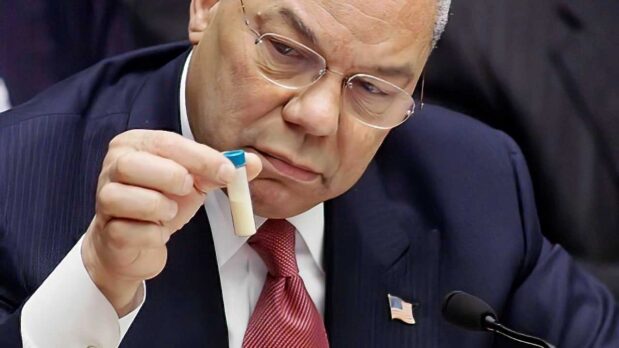
The claim of an "intelligence failure" obscures the truth that the government lied by making evidenceless claims to manufacture consent for the war on Iraq.
Steven Aftergood at Secrecy News obtained a copy of a Department of Defense report to Congress that has some interesting bits.
What Washington says goes, regardless of what international law has to say about it.
The Washington Post has no problem whatsoever with publishing articles that advocate criminal acts of violence.
The result of these talks is already known. Iran will not do obey Washington’s dictats, but will insist on its rights under the NPT. Iran will then be blamed for the failure for its “intransigence”.
Michael Oren, Israel’s ambassador to the U.S., had an op-ed in the Wall Street Journal this week with a headline asking “What Happened to Israel’s Reputation?”
James Risen is probably one of the Times’ better reporters. But this is not reporting. It is propaganda, period, and there’s no excuse for it.
It is a disturbing development in Ron Paul’s campaign to see him sounding on this issue more rather than less like his establishment opponents.
U.S. policy towards Iran has about as much to do with its nuclear program as its policy towards Iraq with WMD and ties to al Qaeda.
This is "negotiation", a euphemism for issuing ultimatums and threatening violence if not obeyed.
Foreign Policy has had a troubling record that goes beyond one or two guest op-eds. There has been a pattern of what can be termed irresponsible reporting at best.
The mainstream media are fulfilling their usual function by manufacturing consent for an attack on Iran.


I am an independent researcher, journalist, and author dedicated to exposing mainstream propaganda that serves to manufacture consent for criminal government policies.
I write about critically important issues including US foreign policy, economic policy, and so-called "public health" policies.
My books include Obstacle to Peace: The US Role in the Israeli-Palestinian Conflict, Ron Paul vs. Paul Krugman: Austrian vs. Keynesian Economics in the Financial Crisis, and The War on Informed Consent.
To learn more about my mission and core values, visit my About page.